Sustainable wellness women over 40: 12-week science-backed plan
الصحة المستدامة للنساء فوق 40: خطة 12 أسبوعاً لبناء عادات تدوم
Author: Feras Alayed - Therapeutic & Behavioral Nutrition Specialist
Published:
Updated:
Category: sustainable-health
Reading Time: 8 minutes
Key Takeaways
- A pragmatic 12-week plan for women over 40 focused on sustainable habits rather than quick fixes.
- Resistance training, adequate daily protein, and a Mediterranean-style / balanced diet may support muscle mass, bone health and cardiometabolic risk reduction. ([pubmed.ncbi.nlm.nih.gov](https://pubmed.ncbi.nlm.nih.gov/40420105/?utm_source=openai))
- Sleep quality and stress management are critical to hormonal balance, mood and metabolic health. ([pure.northampton.ac.uk](https://pure.northampton.ac.uk/files/49477120/Salara_et_al_2023_Global_prevalence_of_sleep_disorders_during_menopause_a_meta_analysis.pdf?utm_source=openai))
- Small, well-tracked behavior changes that build on one another (habit stacking, tracking, social support) increase long-term adherence. ([pmc.ncbi.nlm.nih.gov](https://pmc.ncbi.nlm.nih.gov/articles/PMC11161714/?utm_source=openai))
- Personal medical review (including discussion of menopausal hormone therapy when appropriate) is essential for safe, tailored planning. ([mayoclinic.org](https://www.mayoclinic.org/diseases-conditions/menopause/in-depth/hormone-therapy/art-20046372?utm_source=openai))
TL;DR
This 12-week science-informed plan for sustainable wellness in women over 40 combines progressive resistance training, balanced nutrition with adequate protein, sleep and stress strategies, and evidence-based habit change techniques. It emphasizes safety, personalization, and long-term habit formation rather than short-term fixes. ([pubmed.ncbi.nlm.nih.gov](https://pubmed.ncbi.nlm.nih.gov/35608815/?utm_source=openai))
Sustainable wellness for women over 40: a science-backed, practical 12-week plan to build lasting health habits
Why a targeted plan for women over 40?
Women in midlife often face physiological changes — shifting hormones, gradual loss of muscle mass (sarcopenia), and decreasing bone density — along with changing life roles and time constraints. Targeting interventions to these realities helps create effective, sustainable routines that support long-term health. ([pubmed.ncbi.nlm.nih.gov](https://pubmed.ncbi.nlm.nih.gov/40420105/?utm_source=openai))
Core scientific principles
- Progressive resistance training is effective for maintaining/increasing muscle and bone strength when appropriately programmed. ([pubmed.ncbi.nlm.nih.gov](https://pubmed.ncbi.nlm.nih.gov/35608815/?utm_source=openai))
- Adequate protein intake distributed across meals helps preserve lean mass and supports recovery. ([pubmed.ncbi.nlm.nih.gov](https://pubmed.ncbi.nlm.nih.gov/32517211/?utm_source=openai))
- A Mediterranean-style dietary pattern supports cardiovascular health and reduces inflammation. ([pubmed.ncbi.nlm.nih.gov](https://pubmed.ncbi.nlm.nih.gov/35896850/?utm_source=openai))
- Sleep and stress management are non-negotiables for metabolic and mental health. ([pure.northampton.ac.uk](https://pure.northampton.ac.uk/files/49477120/Salara_et_al_2023_Global_prevalence_of_sleep_disorders_during_menopause_a_meta_analysis.pdf?utm_source=openai))
- Behavior-change techniques (habit formation, self-monitoring, social support) increase adherence and maintenance. ([pmc.ncbi.nlm.nih.gov](https://pmc.ncbi.nlm.nih.gov/articles/PMC11161714/?utm_source=openai))
The 12-week framework — overview
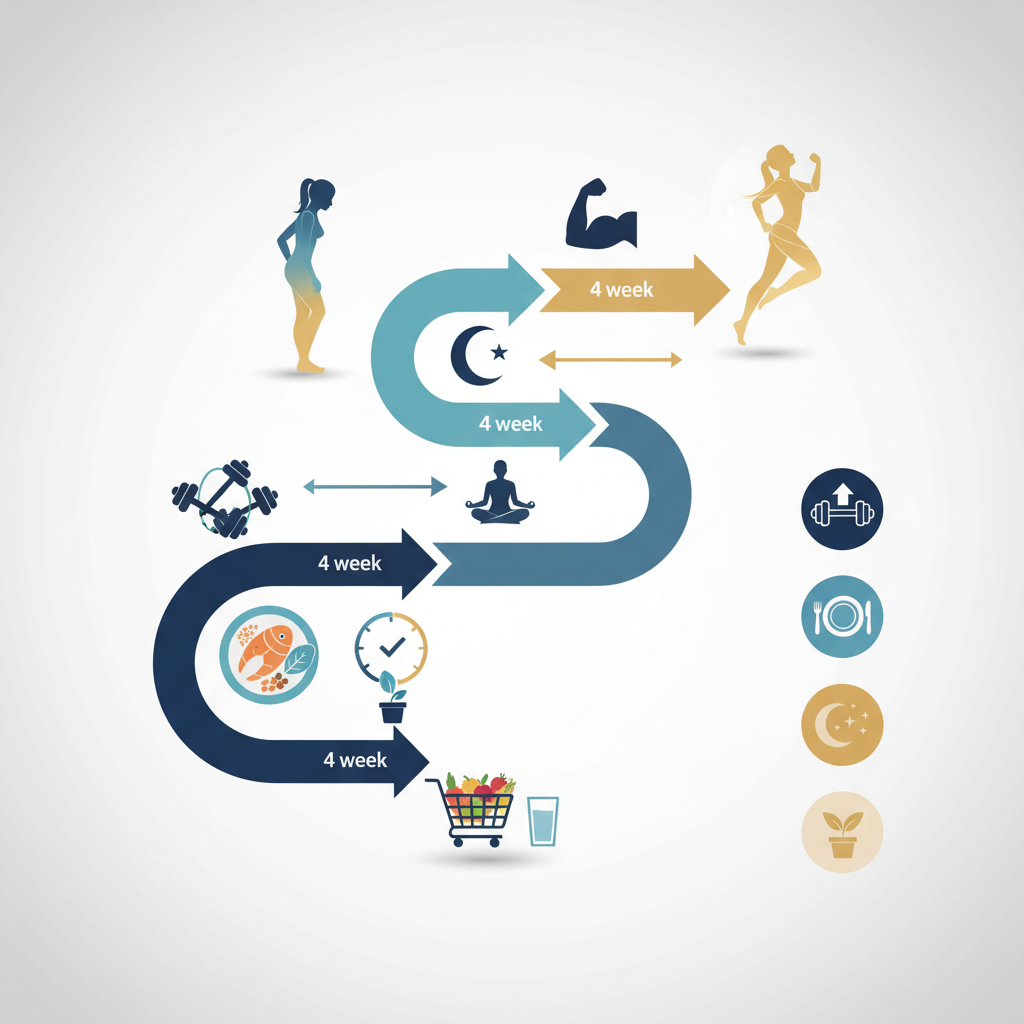
The plan is split into three 4-week blocks: Foundation (weeks 1–4), Progression (weeks 5–8), and Consolidation (weeks 9–12). Each block focuses on physical activity, nutrition, sleep/stress, and behavior-change strategies to build durable habits.
Weeks 1–4: Foundation
- Exercise: 2–3 resistance-training sessions per week (full-body) + 2 moderate aerobic sessions (e.g., walking 30–45 minutes). Start with low-to-moderate loads to learn movement mechanics. ([health.harvard.edu](https://www.health.harvard.edu/healthy-aging-and-longevity/add-strength-training-to-your-fitness-plan?utm_source=openai))
- Nutrition: Aim for ~1.0–1.2 g/kg/day protein as a starting target (tailor to needs). Focus on whole foods, vegetables, and routine meal structure. ([pubmed.ncbi.nlm.nih.gov](https://pubmed.ncbi.nlm.nih.gov/32517211/?utm_source=openai))
- Sleep & stress: Fix bed/wake times, practice short nightly wind-down routines, and try brief breathing or guided relaxation. ([pure.northampton.ac.uk](https://pure.northampton.ac.uk/files/49477120/Salara_et_al_2023_Global_prevalence_of_sleep_disorders_during_menopause_a_meta_analysis.pdf?utm_source=openai))
- Behavior: Select one small, specific habit (e.g., 30 minutes of brisk walking 5 days/week) and track it daily. ([pubmed.ncbi.nlm.nih.gov](https://pubmed.ncbi.nlm.nih.gov/31529279/?utm_source=openai))
Weeks 5–8: Progression
- Exercise: Increase resistance (more weight or sets) and consider adding variety (single-leg work, pulling movements). Optionally add 1 short interval session if appropriate. ([pubmed.ncbi.nlm.nih.gov](https://pubmed.ncbi.nlm.nih.gov/35608815/?utm_source=openai))
- Nutrition: Move to a Mediterranean-style plate (vegetables, legumes, whole grains, healthy fats) while keeping protein distribution. ([pubmed.ncbi.nlm.nih.gov](https://pubmed.ncbi.nlm.nih.gov/35896850/?utm_source=openai))
- Sleep & stress: Add 5–10 minutes daily of mindfulness or progressive muscle relaxation; monitor sleep quality. ([pure.northampton.ac.uk](https://pure.northampton.ac.uk/files/49477120/Salara_et_al_2023_Global_prevalence_of_sleep_disorders_during_menopause_a_meta_analysis.pdf?utm_source=openai))
- Behavior: Habit-stack new behaviors onto established routines (e.g., strength after morning coffee) and use weekly progress reviews. ([pmc.ncbi.nlm.nih.gov](https://pmc.ncbi.nlm.nih.gov/articles/PMC11161714/?utm_source=openai))
Weeks 9–12: Consolidation & sustainability
- Exercise: Aim for 3–4 sessions/week with compound lifts and balance/functional movements. Integrate recovery strategies. ([pubmed.ncbi.nlm.nih.gov](https://pubmed.ncbi.nlm.nih.gov/35608815/?utm_source=openai))
- Nutrition: Create a repeatable weekly meal plan that aligns with preferences and lifestyle for long-term adherence. ([pubmed.ncbi.nlm.nih.gov](https://pubmed.ncbi.nlm.nih.gov/35896850/?utm_source=openai))
- Sleep & stress: Prioritize at least one full recovery day and maintain social connection for resilience. ([pmc.ncbi.nlm.nih.gov](https://pmc.ncbi.nlm.nih.gov/articles/PMC11161714/?utm_source=openai))
- Behavior: Build a 90-day follow-up plan to maintain momentum after week 12. ([pubmed.ncbi.nlm.nih.gov](https://pubmed.ncbi.nlm.nih.gov/31529279/?utm_source=openai))
Sample weekly micro-schedule (comparison)
| Day | Activity | Nutrition Focus |
|---|---|---|
| Mon | Upper-body strength (30–40 min) | Protein-rich breakfast (20–35 g) |
| Tue | Brisk walk 30–45 min | Vegetable-forward meals |
| Wed | Lower-body strength | Protein post-workout |
| Thu | Active recovery / mobility | Healthy fats focus |
| Fri | Full-body strength + balance | Moderate carbohydrates |
| Sat | Social activity (walk/class) | Balanced snacks |
| Sun | Rest / planning | Meal prep |
Behavior change: what works?
Evidence shows habit-based interventions, self-monitoring, and techniques that support autonomy and intrinsic motivation produce better maintenance of health behaviors. Digital tools can help but must be paired with simple, clear goals. ([pmc.ncbi.nlm.nih.gov](https://pmc.ncbi.nlm.nih.gov/articles/PMC11161714/?utm_source=openai))
Myth vs Fact
Myth: Women over 40 can’t build new muscle.
Fact: With appropriate resistance training and nutrition women can gain strength and improve body composition. ([pubmed.ncbi.nlm.nih.gov](https://pubmed.ncbi.nlm.nih.gov/35608815/?utm_source=openai))
Myth: Cutting all fats speeds weight loss.
Fact: Healthy fats support satiety and heart health; total caloric balance and food quality matter. ([pubmed.ncbi.nlm.nih.gov](https://pubmed.ncbi.nlm.nih.gov/35896850/?utm_source=openai))
Myth: All women need menopausal hormone therapy.
Fact: MHT is an individualized option that may relieve symptoms but requires medical discussion due to benefits and risks. ([mayoclinic.org](https://www.mayoclinic.org/diseases-conditions/menopause/in-depth/hormone-therapy/art-20046372?utm_source=openai))
Expert Tips
- Prioritize technique over load early; consistency beats intensity for months 1–3. ([health.harvard.edu](https://www.health.harvard.edu/healthy-aging-and-longevity/add-strength-training-to-your-fitness-plan?utm_source=openai))
- Distribute protein across meals (target 20–35 g/meal) to maximize muscle protein synthesis. ([pubmed.ncbi.nlm.nih.gov](https://pubmed.ncbi.nlm.nih.gov/32517211/?utm_source=openai))
- Start with one small habit and expand; avoid overwhelming multi-goal approaches. ([pubmed.ncbi.nlm.nih.gov](https://pubmed.ncbi.nlm.nih.gov/31529279/?utm_source=openai))
- Use social accountability — classes or training partners increase adherence. ([pmc.ncbi.nlm.nih.gov](https://pmc.ncbi.nlm.nih.gov/articles/PMC11161714/?utm_source=openai))
- Check baseline labs (vitamin D, fasting glucose/lipids, thyroid) when appropriate to personalize recommendations.
When to seek medical assessment
Seek immediate medical advice for chest pain, acute shortness of breath, or acute injury. For planning a long-term wellness program, discuss menopausal symptoms, cardiovascular risks, and any chronic conditions with your clinician. Menopausal hormone therapy may be discussed as an individualized option. ([mayoclinic.org](https://www.mayoclinic.org/diseases-conditions/menopause/in-depth/hormone-therapy/art-20046372?utm_source=openai))
Clinical examples from practice
Case A: A 54-year-old woman with early menopause increased resistance training frequency and protein intake and experienced measurable strength gains and improved energy after 12 weeks.
Case B: A 47-year-old woman aiming to reduce cardiometabolic risk adopted a Mediterranean-style eating pattern plus 150 minutes/week aerobic activity; her blood pressure and inflammatory markers improved at follow-up.
These vignettes illustrate personalization and reasonable expectations; outcomes vary by baseline health and adherence.
References and evidence base
- Optimal resistance training parameters for improving bone mineral density in postmenopausal women: systematic review & meta-analysis. ([pubmed.ncbi.nlm.nih.gov](https://pubmed.ncbi.nlm.nih.gov/40420105/?utm_source=openai))
- Effects of physical exercise on bone mineral density in older postmenopausal women: systematic review & meta-analysis. ([pubmed.ncbi.nlm.nih.gov](https://pubmed.ncbi.nlm.nih.gov/35896850/?utm_source=openai))
- Progressive resistance training for concomitant increases in muscle strength and bone mineral density: systematic review & meta-analysis. ([pubmed.ncbi.nlm.nih.gov](https://pubmed.ncbi.nlm.nih.gov/35608815/?utm_source=openai))
- Amount of protein required to improve muscle mass in older adults. ([pubmed.ncbi.nlm.nih.gov](https://pubmed.ncbi.nlm.nih.gov/32517211/?utm_source=openai))
- Association of dietary protein intake with skeletal muscle mass in older adults: systematic review. ([pubmed.ncbi.nlm.nih.gov](https://pubmed.ncbi.nlm.nih.gov/34643981/?utm_source=openai))
- Global prevalence of sleep disorders during menopause: meta-analysis. ([pure.northampton.ac.uk](https://pure.northampton.ac.uk/files/49477120/Salara_et_al_2023_Global_prevalence_of_sleep_disorders_during_menopause_a_meta_analysis.pdf?utm_source=openai))
- Mayo Clinic: Hormone therapy for menopause — overview of benefits & risks. ([mayoclinic.org](https://www.mayoclinic.org/diseases-conditions/menopause/in-depth/hormone-therapy/art-20046372?utm_source=openai))
- Harvard T.H. Chan: Strength training may boost longevity and improve healthspan. ([hsph.harvard.edu](https://hsph.harvard.edu/news/moderate-amount-of-strength-training-each-week-could-boost-longevity/?utm_source=openai))
- Harvard Health: Practical guidance to add strength training to your routine. ([health.harvard.edu](https://www.health.harvard.edu/healthy-aging-and-longevity/add-strength-training-to-your-fitness-plan?utm_source=openai))
- Digital Behavior Change Interventions for habit formation: systematic review. ([pmc.ncbi.nlm.nih.gov](https://pmc.ncbi.nlm.nih.gov/articles/PMC11161714/?utm_source=openai))
- Efficacy of habit-based weight loss interventions: systematic review & meta-analysis. ([pubmed.ncbi.nlm.nih.gov](https://pubmed.ncbi.nlm.nih.gov/31529279/?utm_source=openai))
These resources combine peer-reviewed literature and evidence summaries from trusted clinical organizations to inform the practical plan above.
People Also Ask
How much strength training do I need each week?
Aim for at least 2–3 sessions of resistance training per week to preserve and build muscle; increasing to 3–4 sessions can produce greater gains if recovery and nutrition are adequate. ([health.harvard.edu](https://www.health.harvard.edu/healthy-aging-and-longevity/add-strength-training-to-your-fitness-plan?utm_source=openai))
What’s a reasonable protein target for women over 40?
Many sources suggest ~1.0–1.2 g/kg/day as a practical starting point for active midlife women, with distribution across meals to support muscle protein synthesis. Individual needs vary. ([pubmed.ncbi.nlm.nih.gov](https://pubmed.ncbi.nlm.nih.gov/32517211/?utm_source=openai))
Is intermittent fasting recommended?
Intermittent fasting can work for some women but may not suit everyone due to individual hormonal status, energy needs, and lifestyle. If trying time-restricted eating, monitor energy, menstrual/menopausal symptoms, and performance.
FAQ
Do I need supplements to see results?
Supplements aren’t required if diet meets needs; vitamin D, calcium, or targeted protein supplementation may be useful in specific contexts — check labs and consult your clinician. ([pubmed.ncbi.nlm.nih.gov](https://pubmed.ncbi.nlm.nih.gov/32517211/?utm_source=openai))
Can I start strength training if I've never done it before?
Yes. Start with bodyweight or light resistance under professional guidance, focus on technique, and progress gradually. ([health.harvard.edu](https://www.health.harvard.edu/healthy-aging-and-longevity/add-strength-training-to-your-fitness-plan?utm_source=openai))
How quickly will I notice changes?
Subjective improvements in energy and mood often appear within weeks; measurable strength and body composition changes typically appear within 8–12 weeks with consistent adherence.

Ready to Transform Your Health Sustainably?
Connect with Feras Alayed - Therapeutic & Behavioral Nutrition Specialist - for a free health assessment and personalized wellness plan.
Learn more about Sustainable Health | Business Opportunities
النقاط الرئيسية
- برنامج عملي مستدام لمدة 12 أسبوعاً لبناء عادات صحية متناسبة مع التحولات الفسيولوجية بعد الأربعين.
- التركيز على تدريبات القوة، البروتين الكافي، ونظام غذائي متوسطي أو متوازن قد يدعم كتلة العضلات وصحة العظام والقلب. ([pubmed.ncbi.nlm.nih.gov](https://pubmed.ncbi.nlm.nih.gov/40420105/?utm_source=openai))
- جودة النوم وإدارة الإجهاد مهمة لتحسين المزاج والتمثيل الغذائي أثناء فترة ما قبل وما بعد سن اليأس. ([pure.northampton.ac.uk](https://pure.northampton.ac.uk/files/49477120/Salara_et_al_2023_Global_prevalence_of_sleep_disorders_during_menopause_a_meta_analysis.pdf?utm_source=openai))
- تغييرات سلوكية صغيرة ومحددة ومتبعة تقنياً (تتضمن تتبع، تحفيز ذاتي، ودعم اجتماعي) تزيد من فرص الاستمرار. ([pmc.ncbi.nlm.nih.gov](https://pmc.ncbi.nlm.nih.gov/articles/PMC11161714/?utm_source=openai))
- المتابعة الطبية الشخصية (بما في ذلك مناقشة علاج هرموني إن دعت الحاجة) وتقييم عوامل الخطر القلبية والتمثيل الغذائي يساعدان على تكييف الخطة بشكل آمن وفعال. ([mayoclinic.org](https://www.mayoclinic.org/diseases-conditions/menopause/in-depth/hormone-therapy/art-20046372?utm_source=openai))
TL;DR
خطة 12 أسبوعاً عملية ومُصممة للنساء فوق 40 تدمج تدريبات القوة والتمارين الهوائية، نظام غذائي غني بالبروتين وخيارات غذائية متوازنة، تحسين النوم وإدارة الإجهاد، وتقنيات تغيير السلوك لبناء عادات تدوم. لا تدعي الخطة علاجات جذرية بل تسعى لدعم صحة العظام والعضلات والتمثيل الغذائي وجودة الحياة. ([pubmed.ncbi.nlm.nih.gov](https://pubmed.ncbi.nlm.nih.gov/40420105/?utm_source=openai))
الصحة المستدامة للنساء فوق 40: دليل علمي وعملي لمدة 12 أسبوعاً لبناء عادات تدوم
التحوّلات الجسدية والنفسية بعد سن الأربعين — بما في ذلك التغيرات الهرمونية، تراجع الكتلة العضلية، وتزايد مخاطر الأمراض القلبية والتمثيل الغذائي — تجعل من تبنّي نمط حياة مستدام أمراً أساسياً. هذا الدليل يقدم خطة عملية ومدعومة بالأدلة لمدة 12 أسبوعاً، مع نصائح قابلة للتنفيذ، جداول مقارنة، واستراتيجيات سلوكية لبناء عادات تدوم.
لماذا الخطة مستهدفة للنساء فوق 40؟
بعد الأربعين يبدأ الجسم بتجربة تغيّرات في الهرمونات، انخفاض تدريجي في كتلة العضلات وكثافة العظام، وتحول في توزيع الدّهون — عوامل تؤثر في الطاقة، النقل الأيضي، والمخاطر المرضية. التدخل المبكر عبر تغييرات سلوكية قابلة للتطبيق قد يدعم الصحة على المدى الطويل. ([pubmed.ncbi.nlm.nih.gov](https://pubmed.ncbi.nlm.nih.gov/40420105/?utm_source=openai))
مبادئ الخطة العلمية
- تدريبات القوة والتحميل التدريجي للحفاظ على العضلات والعظام. ([pubmed.ncbi.nlm.nih.gov](https://pubmed.ncbi.nlm.nih.gov/35608815/?utm_source=openai))
- توزيع بروتين يومي كافٍ لتعزيز تركيب البروتين العضلي (مجموعاً ومع كل وجبة). ([pubmed.ncbi.nlm.nih.gov](https://pubmed.ncbi.nlm.nih.gov/32517211/?utm_source=openai))
- نظام غذائي متوازن (نمط متوسطي أو مشابه) لدعم القلب والالتهابات وضبط الوزن. ([pubmed.ncbi.nlm.nih.gov](https://pubmed.ncbi.nlm.nih.gov/35896850/?utm_source=openai))
- جودة نوم وإدارة إجهاد فعّالتان لتحسين المزاج وتنظيم الهرمونات. ([pure.northampton.ac.uk](https://pure.northampton.ac.uk/files/49477120/Salara_et_al_2023_Global_prevalence_of_sleep_disorders_during_menopause_a_meta_analysis.pdf?utm_source=openai))
- استراتيجيات سلوكية مبنية على الأدلة: هدفية صغيرة، روتين يومي، تتبع، ودعم اجتماعي لزيادة الالتزام. ([pmc.ncbi.nlm.nih.gov](https://pmc.ncbi.nlm.nih.gov/articles/PMC11161714/?utm_source=openai))
الخطة العملية: ما الذي ستفعله خلال 12 أسبوعاً؟
الخطة مقسمة إلى 3 مراحل (كل مرحلة 4 أسابيع): تأسيس، تقدم، تكثيف واستدامة. الهدف أن تكون مرنة، قابلة للتعديل طبياً، ومبنية على عادات صغيرة متراكمة.
المرحلة A — أسابيع 1–4: بناء الأساس
- نشاط: 3 اجتماعات أسبوعية من تدريبات القوة منخفضة إلى متوسطة الشد (全الجسم، 30–40 دقيقة) + 2 جلسات مشي معتدل 30 دقيقة. ([health.harvard.edu](https://www.health.harvard.edu/healthy-aging-and-longevity/add-strength-training-to-your-fitness-plan?utm_source=openai))
- تغذية: زيادَة البروتين إلى ≈1.0–1.2 غ/كغ/يوم مع توزيع عبر الوجبات، تجنب الحميات القاسية. ([pubmed.ncbi.nlm.nih.gov](https://pubmed.ncbi.nlm.nih.gov/32517211/?utm_source=openai))
- نوم وإجهاد: روتين نوم ثابت، تمارين استرخاء قصيرة قبل النوم، تقليل الشاشات 60 دقيقة قبل النوم. ([pure.northampton.ac.uk](https://pure.northampton.ac.uk/files/49477120/Salara_et_al_2023_Global_prevalence_of_sleep_disorders_during_menopause_a_meta_analysis.pdf?utm_source=openai))
- سلوك: اختيار هدف سلوكي واحد (مثلاً: 30 دقيقة مشي 5 مرات/أسبوع) وتتبع يومي. ([pubmed.ncbi.nlm.nih.gov](https://pubmed.ncbi.nlm.nih.gov/31529279/?utm_source=openai))
المرحلة B — أسابيع 5–8: التقدّم المقصود
- نشاط: زيادَة شدة تدريبات القوة (مقاومة أكبر أو مجموعات إضافية)، إضافة 1 جلسة HIIT خفيفة أسبوعياً إذا كانت مناسبة. ([pubmed.ncbi.nlm.nih.gov](https://pubmed.ncbi.nlm.nih.gov/35608815/?utm_source=openai))
- تغذية: إدخال نمط غذائي متوسطي مع تشديد على الخضراوات، الحبوب الكاملة، الدهون الصحية، وتوازن السعرات. ([pubmed.ncbi.nlm.nih.gov](https://pubmed.ncbi.nlm.nih.gov/35896850/?utm_source=openai))
- نوم وإجهاد: تقنية 'تنفّس صندوقي' أو تأمل موجّه 5–10 دقائق يومياً، متابعة جودة النوم. ([pure.northampton.ac.uk](https://pure.northampton.ac.uk/files/49477120/Salara_et_al_2023_Global_prevalence_of_sleep_disorders_during_menopause_a_meta_analysis.pdf?utm_source=openai))
- سلوك: ربط عادة جديدة مع روتين يومي (مثلاً: تمارين القوة بعد القهوة الصباحية)، واستخدام سجل تقدم أسبوعي. ([pmc.ncbi.nlm.nih.gov](https://pmc.ncbi.nlm.nih.gov/articles/PMC11161714/?utm_source=openai))
المرحلة C — أسابيع 9–12: التكثيف والاستدامة
- نشاط: 3–4 جلسات قوة/أسبوع مع تركيز على حركات مركبة (قرفصاء، دفع، سحب)، وممارسة توازن/مرونة. ([pubmed.ncbi.nlm.nih.gov](https://pubmed.ncbi.nlm.nih.gov/35608815/?utm_source=openai))
- تغذية: وضع خطة وجبات أسبوعية قابلة للتكرار، التركيز على بروتين في كل وجبة، وتقليل الوجبات المعالجة. ([pubmed.ncbi.nlm.nih.gov](https://pubmed.ncbi.nlm.nih.gov/32517211/?utm_source=openai))
- نوم وإجهاد: دمج يوم "استرجاع" وصيانة اجتماعية (مشي مع صديقة، مجموعة تدريب). ([pmc.ncbi.nlm.nih.gov](https://pmc.ncbi.nlm.nih.gov/articles/PMC11161714/?utm_source=openai))
- سلوك: مراجعة أهداف الـ12 أسبوعاً، إعداد خطة 90 يوم تالية للحفاظ على المكاسب. ([pubmed.ncbi.nlm.nih.gov](https://pubmed.ncbi.nlm.nih.gov/31529279/?utm_source=openai))
جدول أسبوع نموذجي (مقارنة بسيطة)
| اليوم | نشاط | تغذية تركيز |
|---|---|---|
| الاثنين | قوة (أجزاء الجسم العلوية) | بروتين 25–35 غ في الفطور |
| الثلاثاء | مشَي معتدل 30–45 د | خضار + حبوب كاملة |
| الأربعاء | قوة (أجزاء الجسم السفلية) | وجبة غنية بالبروتين بعد التدريب |
| الخميس | راحة نشطة / تأمل | دهون صحية (زيتون، زيت زيتون، أفوكادو) |
| الجمعة | قوة متكاملة + توازن | وجبة متوسطة الكربوهيدرات |
| السبت | نشاط اجتماعي (مشى/دروس) | وجبات خفيفة متوازنة |
| الأحد | راحة/مرونة | تخطيط الوجبات للأسبوع |
طرق التقييم: كيف تعرفين التقدم؟
استخدمي مزيجاً من مقاييس الأداء والذاتية: القوة (زيادة الوزن/تكرار في الحركات الرئيسية)، محيط الخصر، جودة النوم (مقيّم ذاتي)، طاقة يومية، ومؤشرات دم عند الحاجة (سكر صائم، بروتين كلي، فيتامين د بحسب التوجيه الطبي). تتبّع هذه المقاييس يساعد على تعديل الخطة.
لمزيد حول قياس التقدم طويل المدى، راجعي دليلنا الداخلي: How to measure long-term health progress.
Myth vs Fact — خرافات مقابل حقائق
الخرافة: بعد الأربعين لا يمكنك بناء عضلات جديدة.
الحقيقة: يمكن للنساء بناء قوة وكتلة عضلية عبر تدريبات المقاومة المناسبة والتغذية، حتى في منتصف العمر. ([pubmed.ncbi.nlm.nih.gov](https://pubmed.ncbi.nlm.nih.gov/35608815/?utm_source=openai))
الخرافة: يجب الامتناع عن جميع الدهون لتخفيف الوزن.
الحقيقة: الدهون الصحية جزء أساسي من نظام متوازن ويساعد على صحة القلب والشعور بالشبع. ([pubmed.ncbi.nlm.nih.gov](https://pubmed.ncbi.nlm.nih.gov/35896850/?utm_source=openai))
الخرافة: كل النساء تحتاجن علاج هرموني بعد انقطاع الطمث.
الحقيقة: العلاج الهــرموني خيار قد يساعد الأعراض لكنه يحتاج مناقشة فردية للمخاطر والفوائد مع الطبيب. ([mayoclinic.org](https://www.mayoclinic.org/diseases-conditions/menopause/in-depth/hormone-therapy/art-20046372?utm_source=openai))
نصائح خبراء (Expert Tips)
- ابدأي بالأساس: إتقان التقنية في تدريبات القوة أهم من رفع أوزان كبيرة. ([health.harvard.edu](https://www.health.harvard.edu/healthy-aging-and-longevity/add-strength-training-to-your-fitness-plan?utm_source=openai))
- وزعي البروتين عبر الوجبات (20–35 غ/وجبة) بدلاً من جمعة بروتين كبيرة مرة يومياً. ([pubmed.ncbi.nlm.nih.gov](https://pubmed.ncbi.nlm.nih.gov/32517211/?utm_source=openai))
- اتخذي مقاربة "عادات صغيرة" — اختر عادة واحدة قابلة للتطبيق لمدة 2 أسابيع ثم أضيفي الأخرى. ([pubmed.ncbi.nlm.nih.gov](https://pubmed.ncbi.nlm.nih.gov/31529279/?utm_source=openai))
- ناقشي الفحوصات الأساسية (فيتامين د، وظائف درقية، سكر صائم) قبل البدء لتخصيص الخطة.
- ابحثي عن دعم اجتماعي — الزميلات أو مجموعات التمرين تزيد الالتزام والمتعة. ([pmc.ncbi.nlm.nih.gov](https://pmc.ncbi.nlm.nih.gov/articles/PMC11161714/?utm_source=openai))
People Also Ask / أسئلة شائعة سريعة
ما مقدار التدريب القوة الذي أحتاجه أسبوعياً؟
الهدف العمومي 2–3 جلسات قوة أسبوعياً لبناء وصيانة العضلات، ويمكن زيادتها تدريجياً إلى 3–4 جلسات حسب التحمل والأهداف. ([health.harvard.edu](https://www.health.harvard.edu/healthy-aging-and-longevity/add-strength-training-to-your-fitness-plan?utm_source=openai))
كم من البروتين أحتاج بعد الأربعين؟
تستفيد العديد من النساء من هدف تقريبي 1.0–1.2 غ/كغ/يوم، مع تركيز على بروتين في كل وجبة. التوصيات قد تختلف حسب الحالة الصحية والنشاط. ([pubmed.ncbi.nlm.nih.gov](https://pubmed.ncbi.nlm.nih.gov/32517211/?utm_source=openai))
هل الصوم المتقطع مناسب؟
الصوم المتقطع قد يناسب بعض النساء لكنه ليس ضرورياً. يجب موازنته مع الأهداف، الصحة الهرمونية، وجود انقطاع الطمث، وتفضيلات الشخص. راجعي الموارد المتخصصة إذا رغبتِ بالتجربة.
حالات سريرية من الممارسة (Clinical vignettes)
1) مريضة عمرها 52 عاماً، بداية انقطاع الطمث، تراجع طاقة وصعوبة في زيادة كتلتها العضلية. بدأت خطة تدريجية للقوة 3 جلسات/أسبوع وزيادة بروتين إلى ~1.2 غ/كغ. بعد 12 أسبوعاً لاحظت تحسناً في القوة والطاقة وتحسنًا طفيفاً في محيط الخصر.
2) مريضة عمرها 45 عاماً تهدف إلى تقليل مخاطر القلب؛ دمجت نظام متوسطي مع 150 دقيقة نشاط هوائي أسبوعياً وتدريبات قوة. بعد 3 أشهر كانت علامات الالتهاب أقل وتحسنت القدرة على التحمل.
هذه الأمثلة توضح أن التخصيص والمتابعة هما مفتاح النجاح، وأن النتائج قد تتفاوت بين الأفراد.
متى تطلبين الرعاية الطبية أو التقييم المتقدم؟
- ألم حاد أو إصابة أثناء التدريب.
- أعراض متعلقة بالقلب (ألم صدر، ضيق تنفّس مفاجئ).
- أعراض انقطاع الطمث الشديدة التي تؤثر على جودة الحياة — راقبي مع طبيبك خيار العلاج الهرموني ومخاطره. ([mayoclinic.org](https://www.mayoclinic.org/diseases-conditions/menopause/in-depth/hormone-therapy/art-20046372?utm_source=openai))
المراجع العلمية والموثوقة
- Optimal resistance training parameters for improving bone mineral density in postmenopausal women: systematic review & meta-analysis. ([pubmed.ncbi.nlm.nih.gov](https://pubmed.ncbi.nlm.nih.gov/40420105/?utm_source=openai))
- Effects of physical exercise on bone mineral density in older postmenopausal women: systematic review & meta-analysis. ([pubmed.ncbi.nlm.nih.gov](https://pubmed.ncbi.nlm.nih.gov/35896850/?utm_source=openai))
- Progressive resistance training for concomitant increases in muscle strength and bone mineral density: systematic review & meta-analysis. ([pubmed.ncbi.nlm.nih.gov](https://pubmed.ncbi.nlm.nih.gov/35608815/?utm_source=openai))
- Amount of protein required to improve muscle mass in older adults. ([pubmed.ncbi.nlm.nih.gov](https://pubmed.ncbi.nlm.nih.gov/32517211/?utm_source=openai))
- Association of dietary protein intake with skeletal muscle mass in older adults: systematic review. ([pubmed.ncbi.nlm.nih.gov](https://pubmed.ncbi.nlm.nih.gov/34643981/?utm_source=openai))
- Global prevalence of sleep disorders during menopause: meta-analysis. ([pure.northampton.ac.uk](https://pure.northampton.ac.uk/files/49477120/Salara_et_al_2023_Global_prevalence_of_sleep_disorders_during_menopause_a_meta_analysis.pdf?utm_source=openai))
- Mayo Clinic: Hormone therapy for menopause — risks and benefits overview. ([mayoclinic.org](https://www.mayoclinic.org/diseases-conditions/menopause/in-depth/hormone-therapy/art-20046372?utm_source=openai))
- Harvard T.H. Chan: Strength training linked to longevity and healthspan. ([hsph.harvard.edu](https://hsph.harvard.edu/news/moderate-amount-of-strength-training-each-week-could-boost-longevity/?utm_source=openai))
- Harvard Health: Add strength training to your fitness plan (practical guidance). ([health.harvard.edu](https://www.health.harvard.edu/healthy-aging-and-longevity/add-strength-training-to-your-fitness-plan?utm_source=openai))
- Digital Behavior Change Intervention designs for habit formation: systematic review. ([pmc.ncbi.nlm.nih.gov](https://pmc.ncbi.nlm.nih.gov/articles/PMC11161714/?utm_source=openai))
- Efficacy of habit-based weight loss interventions: systematic review & meta-analysis. ([pubmed.ncbi.nlm.nih.gov](https://pubmed.ncbi.nlm.nih.gov/31529279/?utm_source=openai))
ملاحظة: أدرجنا مراجع من قواعد بيانات طبية ومراكز موثوقة (PubMed, Mayo Clinic, Harvard) لدعم التوجيهات العملية أعلاه. راجعي طبيبك قبل بدء أي برنامج جديد خاصةً إذا كان لديك حالات طبية مزمنة.
روابط داخلية مفيدة
- Why doctors recommend Unicity products: evidence & practice
- Intermittent fasting & time-restricted eating insights
- Obesity trends in Canada 2026
- Dutch diet & blood sugar guide
- How to build sustainable health habits (90-day plan)
- Personal branding for health entrepreneurs
- Belgian diet & blood sugar balance
- Insulin resistance testing in Canada (2026 guide)
- Heart disease prevention — Belgium (2026)
- How to measure long-term health progress
الخلاصة والدعوة للعمل
الصحة المستدامة بعد الأربعين تتطلب مزيجاً من الأنشطة المادية المناسبة، تغذية كافية مع بروتين، نوم وجيـد، وإستراتيجيات سلوكية ذكية. ابدئي بخطة 12 أسبوعاً قابلة للتعديل، تابعي التقدم، واطلبي المساعدة الطبية عند الحاجة. ابدئي بخطوة صغيرة اليوم — حتى الإجراءات البسيطة المتكررة تحدث فرقاً كبيراً على المدى الطويل.
الأسئلة المتكررة (FAQ)
هل أحتاج استشارة طبية قبل البدء؟
نعم، خاصةً إذا كنتِ تعانين من أمراض مزمنة أو تتناولين أدوية أو لديكِ أعراض قلبية أو مشاكل صحية كبيرة. مناقشة فحوصات أساسية وخيارات مثل العلاج الهرموني مع الطبيب تساعد على تخصيص الخطة بأمان. ([mayoclinic.org](https://www.mayoclinic.org/diseases-conditions/menopause/in-depth/hormone-therapy/art-20046372?utm_source=openai))
ما الفرق بين تدريب القوة والتمارين الهوائية؟
تدريب القوة يركّز على مقاومة لتحفيز زيادة/حفظ العضلات والعظام؛ التمارين الهوائية تحسّن صحة القلب والتحمل. كلاهما مهم وكلاهما يدخل في هذه الخطة. ([hsph.harvard.edu](https://hsph.harvard.edu/news/moderate-amount-of-strength-training-each-week-could-boost-longevity/?utm_source=openai))
كيف أتعامل مع آلام المفاصل؟
ابدئي بحركات منخفضة التأثير، ركّزي على التقنية، وتحدثي مع اختصاصي علاج طبيعي لتعديل التمارين. التمارين المناسبة قد تقلل الألم على المدى الطويل.
هل أحتاج مكملات بروتين؟
ليست أساسية إذا كان النظام الغذائي يوفر بروتين كافٍ؛ لكن المكملات قد تكون مفيدة للنساء اللواتي يجدن صعوبة في الوصول لمستويات البروتين المطلوبة من الطعام وحده. استشيري اختصاصي تغذية أو طبيبك. ([pubmed.ncbi.nlm.nih.gov](https://pubmed.ncbi.nlm.nih.gov/32517211/?utm_source=openai))
هل تريد تحسين صحتك بشكل مستدام؟
تواصل مع فراس العايد - أخصائي التغذية العلاجية والسلوكية - للحصول على تقييم صحي مجاني وخطة مخصصة لك.
اقرأ المزيد عن الصحة المستدامة | فرص الاستثمار
Frequently Asked Questions
هل أحتاج استشارة طبية قبل البدء؟
ابدئي بخطوة صغيرة، وتتبعي التقدم، وراجعي طبيبك قبل البدء إذا كانت لديك حالات مزمنة.
كم مقدار تدريب القوة المطلوب؟
هدف 2–3 جلسات قوة أسبوعياً كحد أدنى، والتدرج في الشدة مهم.
كم من البروتين أحتاج؟
1.0–1.2 غ/كغ/يوم يعتبر نقطة بداية شائعة للنساء النشطات منتصف العمر، مع تخصيص حسب الاحتياجات.
لماذا النوم والإجهاد مهمان؟
جودة النوم والإدارة الفعّالة للإجهاد قد تدعم المزاج والتمثيل الغذائي وتحسن الالتزام بالروتين.
هل يمكنني بناء عضلات بعد الأربعين؟
نعم، يمكن للنساء بناء قوة وعضلات باستخدام تدريبات مناسبة وتغذية كافية حتى بعد الأربعين.
ما أفضل نمط غذائي؟
النظام المتوسطي أو نمط غذائي متوازن مع بروتين كافٍ ودهون صحية يدعم القلب والصحة العامة.
كيف أحافظ على الالتزام؟
ابدأي بعادة واحدة قابلة للقياس، استخدمي التتبع والدعم الاجتماعي لزيادة الالتزام.
متى أحتاج فحوصات طبية أو مناقشة علاج هرموني؟
اطلبي فحوصات أساسية (فيتامين د، سكّر صائم) ومناقشة العلاج الهرموني مع الطبيب إن كانت الأعراض شديدة.