How to Measure Long-Term Health Progress: 10 Metrics, Tools & Habits
كيف تقيس التقدّم الصحي طويل الأمد: 10 مقاييس وأدوات عملية
Author: Feras Alayed - Therapeutic & Behavioral Nutrition Specialist
Published:
Updated:
Category: sustainable-health
Reading Time: 7 minutes
Key Takeaways
- Measure long-term health progress using multiple domains: biomarkers, functional performance, and lifestyle habits — don't rely on a single number.
- Ten practical, evidence-based metrics: blood pressure, lipids, HbA1c/glucose, waist circumference, cardiorespiratory fitness (VO2/field tests), muscle strength (grip), sleep, physical activity, mental health, and a frailty/composite index.
- Use validated home devices, regular lab tests, wearables, and simple functional tests; focus on trends over time.
- Consistency and correct measurement technique are more important than occasional readings.
- Improving these metrics is associated with reduced chronic disease and mortality risk, supported by clinical studies and guideline statements.
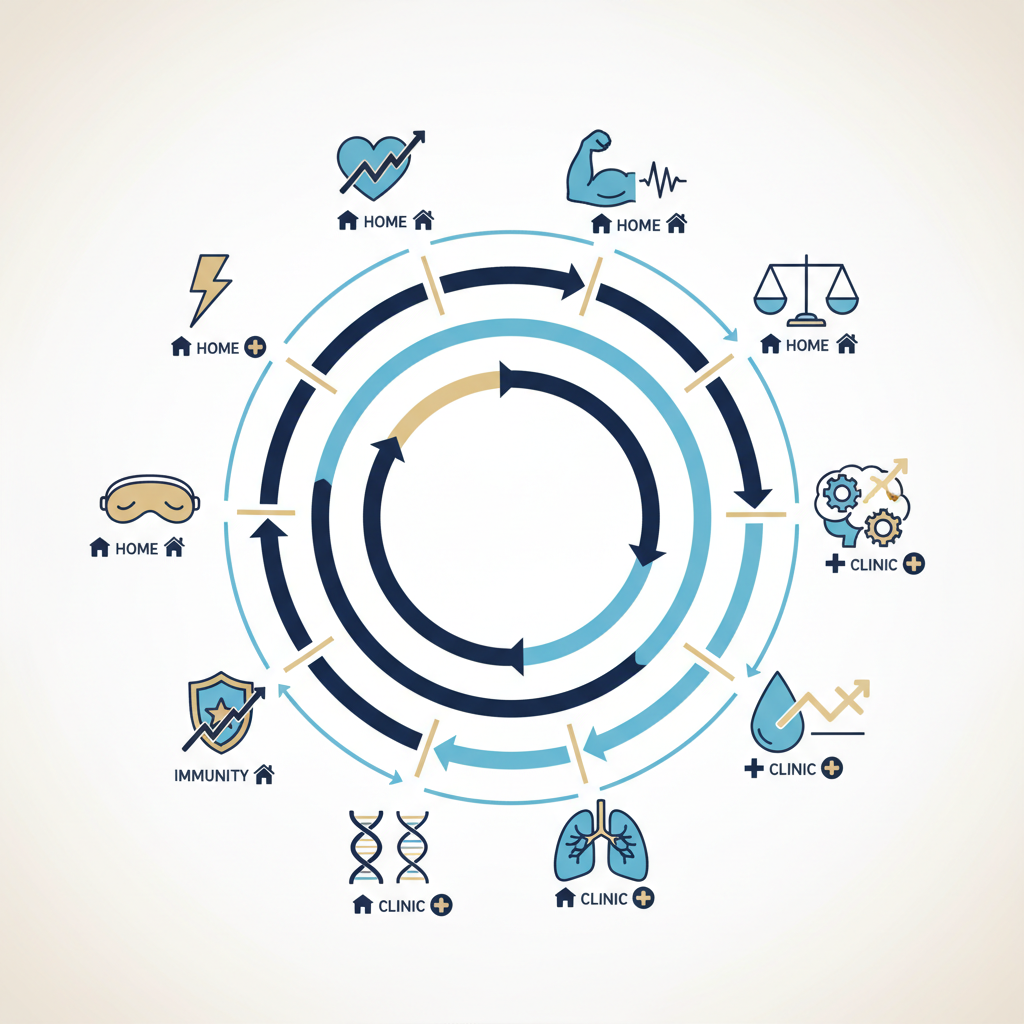
TL;DR
To measure long-term health progress, monitor 10 evidence-based metrics across biomarkers, function, and behavior. Combine home monitoring, lab tests, wearables, and periodic functional assessments to track trends over months and years — then use those trends to set practical goals.
How to Measure Long-Term Health Progress: 10 Evidence-Based Metrics, Tools and Habits for Sustainable Health
Tracking health over years requires a structured approach that blends objective measurements with repeatable routines. Below is a practical roadmap to what to measure, how, and why — grounded in current evidence and clinical practice.
Why track multiple metrics?
Single snapshots can be misleading. Tracking trends — month-to-month and year-to-year — reveals true progress or decline and supports better decisions. Major cohort and meta-analytic evidence link improvements in cardiorespiratory fitness, glycemic control, and blood pressure to long-term reductions in mortality and cardiovascular events. ([pubmed.ncbi.nlm.nih.gov](https://pubmed.ncbi.nlm.nih.gov/35022163/?utm_source=openai))
The 10 evidence-based metrics
-
1. Blood pressure
Why: A leading modifiable risk factor for heart disease and stroke. How: validated home BP monitor plus clinic checks. Frequency: weekly for home tracking or per clinician plan. Accurate out-of-office measurement improves hypertension diagnosis and management. ([pubmed.ncbi.nlm.nih.gov](https://pubmed.ncbi.nlm.nih.gov/30827125/?utm_source=openai))
-
2. Lipid profile (LDL, HDL, triglycerides, non-HDL)
Why: Lipids predict cardiovascular risk. How: periodic lab lipid panels. Frequency: every 6–12 months or per clinical risk. Clinical guidance emphasizes regular testing to guide therapy and risk reduction. ([mayoclinic.org](https://www.mayoclinic.org/tests-procedures/cholesterol-test/about/pac-20384601?p=1&utm_source=openai))
-
3. HbA1c / glycemic markers
Why: HbA1c reflects average glucose over ~3 months and is associated with cardiovascular outcomes. How: lab HbA1c and home glucose monitoring when indicated. Frequency: 3–6 months for unstable cases, 6–12 months for stable. Variability in glycemic markers is independently associated with worse outcomes. ([pubmed.ncbi.nlm.nih.gov](https://pubmed.ncbi.nlm.nih.gov/28760792/?utm_source=openai))
-
4. Waist circumference
Why: Central adiposity predicts metabolic and cardiovascular risk better than BMI alone. How: flexible measuring tape at standardized anatomical point (e.g., iliac crest or navel per protocol). Frequency: quarterly to track changes. Expert consensus recommends routine waist measurement in clinical practice. ([pubmed.ncbi.nlm.nih.gov](https://pubmed.ncbi.nlm.nih.gov/32020062/?utm_source=openai))
-
5. Cardiorespiratory fitness (VO2max or field tests)
Why: CRF is among the strongest, independent predictors of all-cause and cause-specific mortality. How: lab cardiopulmonary exercise testing (CPET) or field proxies (6-minute walk, submaximal tests, MET estimates). Frequency: annually or per training plan. Meta-analyses show dose–response relationships between CRF and longevity. ([pubmed.ncbi.nlm.nih.gov](https://pubmed.ncbi.nlm.nih.gov/31075278/?utm_source=openai))
-
6. Muscle strength (grip strength) and functional tests
Why: Grip strength correlates with muscle function and frailty and predicts adverse outcomes. How: dynamometer, chair-stand tests, gait speed. Frequency: semi-annually or annually in older adults. Clinical studies demonstrate links between reduced strength and frailty. ([pubmed.ncbi.nlm.nih.gov](https://pubmed.ncbi.nlm.nih.gov/31876400/?utm_source=openai))
-
7. Sleep quantity and quality
Why: Poor sleep is associated with obesity, diabetes, heart disease, and cognitive decline. How: actigraphy/wearables for objective trends, validated questionnaires (PSQI), and clinical evaluation for suspected disorders. Frequency: weekly averages plus clinical review as needed. Trusted reviews from Harvard Health summarize sleep impacts and improvement strategies. ([health.harvard.edu](https://www.health.harvard.edu/sleep/what-happens-during-sleep-and-how-to-improve-it?utm_source=openai))
-
8. Physical activity (steps, minutes of MVPA)
Why: Activity supports nearly all health domains. How: wrist-worn trackers, phone sensors, or activity logs to capture daily steps and minutes of moderate-to-vigorous physical activity (MVPA). Frequency: daily capture with weekly/monthly summaries. Use national guidelines as benchmarks. ([nhlbi.nih.gov](https://www.nhlbi.nih.gov/health/heart/physical-activity/tips?utm_source=openai))
-
9. Mental health metrics (PHQ-9, GAD-7, resilience)
Why: Mental health affects behavior, adherence, and physiological stress responses. How: standardized short questionnaires administered periodically, clinical follow-up when scores indicate concern. Frequency: quarterly or with life changes.
-
10. Frailty/composite health index
Why: Composite indices combine symptoms, function, and labs to estimate vulnerability; useful for older adults and longitudinal surveillance. How: validated frailty indices or clinician-constructed composite dashboards that integrate lab and functional data. Frequency: annually or when clinically indicated. Research supports using composite measures to detect early decline. ([arxiv.org](https://arxiv.org/abs/2403.00472?utm_source=openai))
Practical tools and measurement table
| Metric | Practical tool | Suggested frequency |
|---|---|---|
| BP | Validated home BP monitor | Weekly |
| Lipids | Clinic/lab lipid panel | 6–12 months |
| HbA1c | Lab test | 3–6 months |
| Waist | Measuring tape | Quarterly |
| CRF | 6-min walk / CPET | Annually |
| Grip | Dynamometer | Semi-annually |
| Sleep | Actigraphy / PSQI | Weekly averages |
| Activity | Wearable / app | Daily |
| Mental health | PHQ-9 / GAD-7 | Quarterly |
| Frailty index | Clinical composite | Annually |
How to interpret trends (not single numbers)
Focus on moving averages (30–90 days) and clinically meaningful change thresholds (e.g., systolic BP reduction of 5–10 mmHg, HbA1c change of 0.5–1.0%). Discuss trends with your clinician to determine if changes are due to behavior, measurement error, or therapy adjustments. Variability—especially in glucose and blood pressure—can carry independent risk and warrants further assessment. ([drc.bmj.com](https://drc.bmj.com/content/bmjdrc/8/2/e001753.full.pdf?utm_source=openai))
Myth vs Fact
| Myth | Fact |
|---|---|
| One lab number tells the full story | Multiple domains and repeated measures give the true picture. |
| Wearables are enough — no labs needed | Wearables add behavior data but labs and clinical tests are essential for biological risk assessment. |
Expert Tips
- Standardize measurement conditions (time of day, posture, fasting status) to reduce noise.
- Use validated devices and calibrate when recommended — especially BP monitors and glucometers.
- Make a simple data dashboard (spreadsheet or app) that plots trends; visual trends improve decision-making.
- Engage your clinician with trend reports, not single readings — it saves time and improves care.
Clinical practice notes and real-world evidence
Primary care programs that combined home BP monitoring, activity tracking, and periodic lab surveillance demonstrated better risk-factor control versus usual care. In diabetes management, monitoring HbA1c variability was associated with outcomes independently of average HbA1c, prompting earlier intervention for unstable patients. These practical observations align with meta-analytic and guideline literature. ([mayocliniclabs.com](https://www.mayocliniclabs.com/test-notifications/attachment.php?id=1114&utm_source=openai))
People Also Ask
Which metric improves fastest after lifestyle change?
Blood pressure and some glycemic measures may improve within weeks; fitness and strength typically take 8–12 weeks to show measurable gains. Sleep and mental-health improvements depend on intervention type and adherence.
Are wearables accurate enough for clinical decisions?
Wearables provide valuable trend data but are not always interchangeable with clinical-grade devices; use them for behavior tracking and corroborate important findings with validated clinical tests.
Selected references (8-15)
- Measurement of Blood Pressure in Humans: A Scientific Statement From the American Heart Association. ([pubmed.ncbi.nlm.nih.gov](https://pubmed.ncbi.nlm.nih.gov/30827125/?utm_source=openai))
- Waist circumference as a vital sign in clinical practice: IAS/ICCR Consensus Statement. ([pubmed.ncbi.nlm.nih.gov](https://pubmed.ncbi.nlm.nih.gov/32020062/?utm_source=openai))
- Cardiorespiratory fitness and mortality: dose-response meta-analysis. ([pubmed.ncbi.nlm.nih.gov](https://pubmed.ncbi.nlm.nih.gov/35022163/?utm_source=openai))
- Systematic review: CRF and sudden cardiac death. ([pubmed.ncbi.nlm.nih.gov](https://pubmed.ncbi.nlm.nih.gov/31075278/?utm_source=openai))
- Glycated haemoglobin (HbA1c) as a risk factor — systematic review and meta-analysis. ([pubmed.ncbi.nlm.nih.gov](https://pubmed.ncbi.nlm.nih.gov/28760792/?utm_source=openai))
- Long-term variability of glycemic markers and outcomes (Look AHEAD). ([drc.bmj.com](https://drc.bmj.com/content/bmjdrc/8/2/e001753.full.pdf?utm_source=openai))
- Grip strength and frailty relationships. ([pubmed.ncbi.nlm.nih.gov](https://pubmed.ncbi.nlm.nih.gov/31876400/?utm_source=openai))
- Mayo Clinic — cholesterol testing overview and lab guidance. ([mayoclinic.org](https://www.mayoclinic.org/tests-procedures/cholesterol-test/about/pac-20384601?p=1&utm_source=openai))
- Harvard Health — sleep and health outcomes overview. ([health.harvard.edu](https://www.health.harvard.edu/sleep/what-happens-during-sleep-and-how-to-improve-it?utm_source=openai))
- NHLBI / NIH resources and physical activity recommendations. ([nhlbi.nih.gov](https://www.nhlbi.nih.gov/health/heart/physical-activity/tips?utm_source=openai))
How often should I measure blood pressure at home?
Weekly measurement is reasonable for ongoing monitoring; for suspected hypertension or medication changes, follow clinician instructions which may include multiple daily readings for short periods.
Is waist circumference more important than BMI?
Both matter; however waist circumference better captures central adiposity and cardiometabolic risk in many populations.
What if my wearable and lab results disagree?
Use lab and validated clinical devices as the gold standard; wearables are useful for trends and behavior change but validate key concerns clinically.

Ready to Transform Your Health Sustainably?
Connect with Feras Alayed - Therapeutic & Behavioral Nutrition Specialist - for a free health assessment and personalized wellness plan.
Learn more about Sustainable Health | Business Opportunities
النقاط الرئيسية
- لقياس التقدم الصحي طويل الأمد استخدم مجموعة من المقاييس الحيوية، الأداء الوظيفي، والعادات الصحية — لا تعتمد على مقياس واحد.
- 10 مقاييس عملية: ضغط الدم، الدهون (الليبيدات)، HbA1c/سكر الدم، محيط الخصر، اللياقة القلبية التنفسية (VO2/اختبارات المشي)، القوة العضلية (قبضة اليد)، النوم، النشاط البدني، الصحة النفسية، ومؤشرات الضعف/المرونة.
- الأدوات: أجهزة قياس منزلية قياسية، اختبارات مخبرية دورية، أجهزة تتبُّع النشاط، واختبارات وظيفية بسيطة في العيادة أو المنزل.
- العادة الأهم: المتابعة المنتظمة للاتساق (consistency) وتحليل الاتجاهات عبر أشهر وسنوات بدلاً من قياسات لمرة واحدة.
- تُظهر الأدلة أن تحسين هذه المقاييس مرتبط بانخفاض الوفيات والأمراض المزمنة، لكن النتائج تعتمد على التكرار وجودة القياس.
TL;DR
لمعرفة ما إذا كانت صحتك تتحسن على المدى الطويل، راقب 10 مقاييس قائمة على الأدلة (ضغط الدم، شحوم الدم، HbA1c، محيط الخصر، اللياقة القلبية التنفسية، القوة العضلية، النوم، النشاط، الصحة النفسية، ضعف/مرونة). استخدم أدوات منزلية ومختبرية ومقاييس وظيفية واجمع البيانات عبر الوقت لتحليل الاتجاهات. لا تعتمد على رقم واحد؛ المتابعة المتكررة والقياس الصحيح هما المفتاح.
كيفية قياس التقدم الصحي طويل الأمد: 10 مقاييس وأدوات وعادات مبنية على الأدلة
الهدف من هذا الدليل العملي هو تزويدك بخريطة قياسية لمتابعة الصحة على مدى سنوات. نقترح 10 مقاييس قابلة للقياس، الأدوات المستخدمة، وكيف تحول المتابعة إلى عادة مستدامة مدعومة بأدلة علمية وممارسات سريرية.
لماذا التركيز على المقاييس المتكرّرة؟
القياس لمرة واحدة يعطي صورة لحظة زمنية؛ أما تتبع الاتجاهات عبر الشهور والسنوات فيكشف التقدّم أو التراجع ويقوّي اتخاذ القرارات المبنية على بيانات. دراسات كبيرة تربط تحسين المقاييس مثل اللياقة القلبية التنفسية، وخفض HbA1c، والضغط المنضبط بانخفاض الوفيات والأمراض القلبية الوعائية. ([pubmed.ncbi.nlm.nih.gov](https://pubmed.ncbi.nlm.nih.gov/35022163/?utm_source=openai))
الـ10 مقاييس التي نقترح قياسها بانتظام
-
1. ضغط الدم (Blood pressure)
لماذا: عامل خطر رئيسي للأمراض القلبية والسكتة الدماغية. كيف تقيس: جهاز ضغط دم موثّق في المنزل + قراءات مختبرية عند الحاجة. تكرار: أسبوعياً أو وفق توصية الطبيب؛ سجِّل الاتجاهات. الدليل: بيانات الجمعية الأمريكية للقلب حول أهمية القياس الدقيق واستخدام القياس خارج المنشأة لتمييز ارتفاع الضغط المزمن. ([pubmed.ncbi.nlm.nih.gov](https://pubmed.ncbi.nlm.nih.gov/30827125/?utm_source=openai))
-
2. ملف الدهون (LDL، HDL، triglycerides، non-HDL)
لماذا: مستويات الدهون المرتبطة بخطر أمراض القلب على المدى الطويل. كيف: فحص مختبري للصيام أو غير الصيام حسب الإرشاد. تكرار: كل 6-12 شهراً أو حسب الحالة. المرجع السريري: Mayo Clinic يشرح أهمية الفحص المتكرر وغايات العلاج. ([mayoclinic.org](https://www.mayoclinic.org/tests-procedures/cholesterol-test/about/pac-20384601?p=1&utm_source=openai))
-
3. HbA1c ومستويات سكر الدم
لماذا: HbA1c يعكس متوسط الجلوكوز خلال 8–12 أسبوعاً ويرتبط بخطر تَطور المضاعفات والأمراض القلبية. كيف: فحص مختبري دوري (HbA1c) ومقاييس منزلية لقراءات الصائم/بعد الأكل عند الحاجة. تكرار: مرتين سنوياً أو أكثر إذا كان هناك عدم استقرار. الأدلة تربط مستويات HbA1c المرتفعة وتقلّبها بزيادة المخاطر طويلة المدى. ([pubmed.ncbi.nlm.nih.gov](https://pubmed.ncbi.nlm.nih.gov/28760792/?utm_source=openai))
-
4. محيط الخصر ونمط توزيع الدهون
لماذا: محيط الخصر مؤشر أفضل من الـBMI في تقدير الخطر الأيضي وارتباطه بأمراض القلب والسكري. كيف: شريط قياس (عند أعلى عظمة الورك أو عند السرة حسب البروتوكول)، تكرار: ربع سنوي. إجماع خبراء يوصي بجعله علامة حيوية روتينية. ([pubmed.ncbi.nlm.nih.gov](https://pubmed.ncbi.nlm.nih.gov/32020062/?utm_source=openai))
-
5. اللياقة القلبية التنفسية (VO2max أو اختبارات المشي 6 دقائق/اختبارات MET)
لماذا: اللياقة (CRF) من أقوى المؤشرات المتنبئة بالوفيات والإصابة بأمراض مزمنة. كيف: اختبار مجرب في المختبر (CPET) أو اختبارات ميدانية بسيطة (اختبار المشي 6 دقائق، اختبار الجري/المشي بدرجات). تكرار: سنوياً أو حسب التحسين المخطط له. الأدلة تظهر علاقة جرعة-استجابة بين زيادة اللياقة وتقليل الوفيات. ([pubmed.ncbi.nlm.nih.gov](https://pubmed.ncbi.nlm.nih.gov/31075278/?utm_source=openai))
-
6. القوة العضلية: قبضة اليد واختبارات الأداء الوظيفي
لماذا: مؤشر عملي لصحة العضلات والضعف (sarcopenia/frailty) ومرتبط بنتائج أسوأ عند التقدّم في السن. كيف: جهاز قياس قوة القبضة (dynamometer)، واختبارات النهوض من الكرسي، المشي 4 أمتار. تكرار: نصف سنوي أو سنوي. دراسات تربط قوة القبضة بالضعف والمخاطر المستقبلية. ([pubmed.ncbi.nlm.nih.gov](https://pubmed.ncbi.nlm.nih.gov/31876400/?utm_source=openai))
-
7. النوم: المدة وجودة النوم
لماذا: قلة النوم واضطراباته ارتبطت بزيادة مخاطر السمنة، السكري، الأمراض القلبية والمعرفية. كيف: مسجّل نوم (actigraphy) أو أجهزة تتبُّع منزلية بالإضافة إلى استبيانات جودة النوم (مثل PSQI) ومراجعة طبية عند الشك بالأرق أو النوم المنقطع. تكرار: مراقبة أسبوعية للحصول على متوسط. مصادر مراجعة موثوقة من Harvard Health تشرح المخاطر وكيفية التحسّن. ([health.harvard.edu](https://www.health.harvard.edu/sleep/what-happens-during-sleep-and-how-to-improve-it?utm_source=openai))
-
8. النشاط البدني: عدد الخطوات، وقت النشاط المعتدل/الشديد
لماذا: النشاط المنتظم يدعم كل مقاييس الصحة تقريباً. كيف: مقيِّلات نشاط قابلة للارتداء، تقارير التطبيقات، مذكرات النشاط. تكرار: يومي مع تقارير أسبوعية/شهرية لاتجاهات. استخدم توصيات الدوائر الصحية كخط أساس. ([nhlbi.nih.gov](https://www.nhlbi.nih.gov/health/heart/physical-activity/tips?utm_source=openai))
-
9. الصحة النفسية: مقاييس المزاج والضغط والمرونة
لماذا: الصحة النفسية تؤثر مباشرة على اختيار السلوكيات وتؤثر على النهاية الصحية. كيف: استبيانات قياسية قصيرة (PHQ-9 للكتئاب، GAD-7 للقلق) ومراجعات منتظمة مع متخصص عند الحاجة. تكرار: ربع سنوي أو عند التغيرات الحياتية المهمة.
-
10. مؤشر الضعف/المرونة (Frailty index / Composite health index)
لماذا: مؤشرات مركبة تجمع عدة أبعاد (وظيفة، مختبرات، شكاوى يومية) وتعطي صورة إجمالية عن قابلية التعرض للأحداث السلبية. كيف: استخدام أدوات قياسية في العيادة أو برامج متقدمة تعتمد بيانات القيم المختبرية والسلوكية. الدراسات الحديثة تقترح مؤشرات مركبة لتتبع التراجع الصحي مبكراً. ([arxiv.org](https://arxiv.org/abs/2403.00472?utm_source=openai))
أدوات عملية وسهلة للتطبيق المنزلي والعيادي
| المقياس | أداة قابلة للتطبيق | تكرار مقترح |
|---|---|---|
| ضغط الدم | جهاز ضغط دم منزلي مع تدوين رقمي | أسبوعياً |
| الدهون | فحص مختبري دوري (Lipid panel) | 6-12 شهراً |
| HbA1c | فحص مختبري HbA1c | 3-6 شهور |
| محيط الخصر | شريط قياس مرن | ربع سنوي |
| اللياقة | اختبار المشي 6 دقائق أو CPET | سنوياً |
| القوة العضلية | dynamometer واختبارات الوظيفة | نصف سنوي |
| النوم | مُتعقِّب النوم/استبيان | أسبوعي (متوسط) |
| النشاط | سوار تتبع/هاتف ذكي | يومي/أسبوعي |
| الصحة النفسية | استبيانات قصيرة (PHQ-9) | ربع سنوي |
| الضعف | مؤشر مركب/تقييم سريري | سنوياً |
عادات لتحويل القياس إلى روتين مستدام
- سجِّل قياساتك في مكان واحد (تطبيق صحي أو جدول بيانات) واجعل التاريخ والظروف واضحة (صائم/بعد النشاط).
- ركز على الاتجاهات وليس التذبذب اليومي؛ استعمل المتوسطات الشهرية والسنوية.
- ادمج المقاييس مع أهداف قابلة للقياس (SMART goals) وراجعها مع مقدم رعاية صحية عند الحاجة.
- تعلم كيفية القياس الصحيح (مثلاً وضع شريط القياس لمحيط الخصر، أو الجلوس المستقيم أثناء قياس ضغط الدم) لتقليل الخطأ المنهجي.
- استخدم المحفزات والعادات الصغيرة: قياس صباحي أسبوعي وتحديث السجل مباشرة.
Myth vs Fact
| Myth | Fact |
|---|---|
| قياس الوزن وحده يكفي لمعرفة التحسّن | الوزن مهم لكن محيط الخصر، القوة واللياقة يعطيان صورة أوضح عن الصحة الأيضية. |
| حصص أسبوعية من النشاط تكفي دائمًا | التكرار والاستمرارية مهمان؛ تراكم النشاط اليومي الأسبوعي أفضل لتحقيق فوائد طويلة الأمد. |
| أرقام المختبر ليست مهمة إذا أشعر أنني بخير | الكثير من عوامل الخطر تكون صامتة؛ المتابعة الدورية تكشفها مبكراً. |
نصائح خبراء (Clinical & Practical Expert Tips)
- اطلب من مقدم الرعاية الصحية تفسير الاتجاهات (trend interpretation) بدلاً من التركيز على نتيجة واحدة.
- لمن لديهم أمراض مزمنة: زِد تكرار القياسات (مثلاً HbA1c كل 3 أشهر عند عدم الاستقرار). ([drc.bmj.com](https://drc.bmj.com/content/bmjdrc/8/2/e001753.full.pdf?utm_source=openai))
- استثمر في أدوات موثوقة ومُعتمدة، خاصة لأجهزة ضغط الدم ومقاييس الجلوكوز المنزلية.
- اعتمد اختبارات بسيطة للوظيفة (قبضة اليد، المشي) داخل المنزل — مفيدة للمراقبة الذاتية والعيادية.
تجارب سريرية من الممارسة
في ممارسات العيادة الأولية المتقدمة، دمج بروتوكول قياس شهري (ضغط دم منزلي + نشاط/خطوات + سجل نوم أسبوعي) مع مراجعات كل 3 أشهر أدى إلى تحسينات مستدامة في ضغط الدم وملف الدهون لدى مجموعات من المرضى. في وحدات إدارة السكري، مراقبة تقلبات HbA1c ربطت بين عدم الاستقرار وزيادة المخاطر، ما حفز خطط تدخلية أسرع. الأدلة السريرية تدعم الاستخدام المتكامل للبيانات الحيوية والسلوكية لتصميم تدخلات شخصية أكثر فعالية. ([drc.bmj.com](https://drc.bmj.com/content/bmjdrc/8/2/e001753.full.pdf?utm_source=openai))
أسئلة شائعة
ما المقياس الأنسب لبدء تتبُّع الصحة؟
ابدأ بمحيط الخصر، ضغط الدم، ونمط النشاط (خطوات يومية). هذه المقاييس سهلة القياس وتعطي فكرة عن المخاطر الأيضية والقلبية.
كم مرة أزور الطبيب لقياس التقدّم؟
يعتمد على عوامل الخطر والحالة؛ بشكل عام كل 3–12 شهرًا لمراجعة المقاييس الأساسية، وبالأخص إذا كان هناك تخطيط لتغيير علاجي.
مراجع علمية مختارة (8-15 مصدر)
- Measurement of Blood Pressure in Humans: A Scientific Statement From the American Heart Association. ([pubmed.ncbi.nlm.nih.gov](https://pubmed.ncbi.nlm.nih.gov/30827125/?utm_source=openai))
- Waist circumference as a vital sign in clinical practice: IAS/ICCR Consensus. ([pubmed.ncbi.nlm.nih.gov](https://pubmed.ncbi.nlm.nih.gov/32020062/?utm_source=openai))
- Cardiorespiratory fitness and mortality: dose-response meta-analysis. ([pubmed.ncbi.nlm.nih.gov](https://pubmed.ncbi.nlm.nih.gov/35022163/?utm_source=openai))
- Systematic review: CRF and sudden cardiac death. ([pubmed.ncbi.nlm.nih.gov](https://pubmed.ncbi.nlm.nih.gov/31075278/?utm_source=openai))
- Glycated haemoglobin (HbA1c) as a risk factor for cardiovascular outcomes: meta-analysis. ([pubmed.ncbi.nlm.nih.gov](https://pubmed.ncbi.nlm.nih.gov/28760792/?utm_source=openai))
- Long-term variability of glycemic markers and outcomes (Look AHEAD analysis). ([drc.bmj.com](https://drc.bmj.com/content/bmjdrc/8/2/e001753.full.pdf?utm_source=openai))
- Grip strength mediates muscle mass and frailty relationship. ([pubmed.ncbi.nlm.nih.gov](https://pubmed.ncbi.nlm.nih.gov/31876400/?utm_source=openai))
- Mayo Clinic – About cholesterol testing. ([mayoclinic.org](https://www.mayoclinic.org/tests-procedures/cholesterol-test/about/pac-20384601?p=1&utm_source=openai))
- Harvard Health – What happens during sleep & how sleep affects health. ([health.harvard.edu](https://www.health.harvard.edu/sleep/what-happens-during-sleep-and-how-to-improve-it?utm_source=openai))
- NHLBI / NIH resources on physical activity and heart health. ([nhlbi.nih.gov](https://www.nhlbi.nih.gov/health/heart/physical-activity/tips?utm_source=openai))
روابط داخلية موصى بها
- لماذا الصحة هي أعظم أصولك المالية
- دليل صحة القلب: توجيهات DGK 2026
- أبحاث مقاومة الإنسولين: اكتشافات رئيسية
- من مستهلك للصحة إلى قائد صحي
- إدارة الوزن: بدائل عملية في المملكة المتحدة
- تحديثات إرشادات السكري - كندا 2026
- السكري في المجتمعات الأصلية بكندا: الأسباب والحلول
- المتلازمة الأيضية في الولايات المتحدة: لماذا 1 من كل 3 معرض للخطر
- سنغافورة وحربها على السكري: تحديث 2026
- إدارة سكر الدم في آسيا: خطوات عملية
هل يمكنني الاعتماد على جهاز تتبُّع واحد لكل مقاييسي الصحية؟
الأفضل استخدام مزيج من الأجهزة والاختبارات: أجهزة منزلية موثوقة للقياسات اليومية + فحوص مختبرية دورية + اختبارات وظيفية لتكوين صورة شاملة.
كم من الوقت لأرى تحسناً في المقاييس بعد تغييرات نمط الحياة؟
تعتمد على المقياس: ضغط الدم أو الجلوكوز قد يتحسنان خلال أسابيع-أشهر؛ تغيّر في اللياقة والقوة يحتاج 8-12 أسبوعاً على الأقل؛ لكن التثبيت طويل الأمد يستغرق ستة أشهر أو أكثر.
هل يحتاج كل شخص لقياس VO2max؟
ليس بالضرورة؛ اختبارات ميدانية أو مؤشرات اللياقة القابلة للقياس غالباً كافية لمعظم الناس. اختبار VO2max مفيد للرياضيين والأفراد ذوي مخاطر قلبية معقّدة.
هل تريد تحسين صحتك بشكل مستدام؟
تواصل مع فراس العايد - أخصائي التغذية العلاجية والسلوكية - للحصول على تقييم صحي مجاني وخطة مخصصة لك.
اقرأ المزيد عن الصحة المستدامة | فرص الاستثمار
Frequently Asked Questions
How often should I measure blood pressure?
Measure blood pressure at home weekly or per clinician advice; more frequent monitoring may be needed with medication changes.
Are wearables enough for clinical decisions?
Use a mix: wearables for behavior trends and lab/clinical tests for biological risk assessment.
Which is better: BMI or waist circumference?
Waist circumference often predicts metabolic risk better than BMI alone; both are useful.
What does HbA1c measure and how often should I check it?
HbA1c reflects average glucose over ~8-12 weeks; check every 3–6 months if unstable.
How often should I test fitness (VO2max)?
Cardiorespiratory fitness (VO2/field tests) is strongly linked to longevity; measure annually for most adults.
How should I interpret changes in my metrics?
Track trends (30–90 day averages) and consult your clinician about clinically meaningful changes rather than single values.
Which metrics should I start with?
Start simple: blood pressure, waist circumference, and activity (steps) give immediate baseline insight.
What is the best way to ensure measurement accuracy?
Use validated devices, standardize measurement technique, and log readings consistently to reduce error.