7 Mindful Eating Exercises to Stop Cravings and Emotional Eating
7 تمارين يقظة أثناء الأكل لوقف الرغبات والأكل العاطفي — دليل عملي
Author: Feras Alayed - Therapeutic & Behavioral Nutrition Specialist
Published:
Updated:
Category: behavioral-nutrition
Reading Time: 7 minutes
Key Takeaways
- Mindful eating exercises can help people distinguish emotional craving from physical hunger and may reduce craving-driven eating.
- Simple practices (three breaths, sensory check-in, slow bite) are practical and can be used in daily life to interrupt automatic eating patterns.
- Clinical and systematic evidence shows moderate benefits of mindfulness-based approaches—especially structured programs like MB-EAT and some app-based interventions—for reducing binge or craving-related eating.
- Digital tools and group-based MB-EAT increase accessibility, but outcomes vary by program fidelity and participant engagement.
- Consistency and gradual practice are more important than perfect technique—start small and build a sustainable routine.
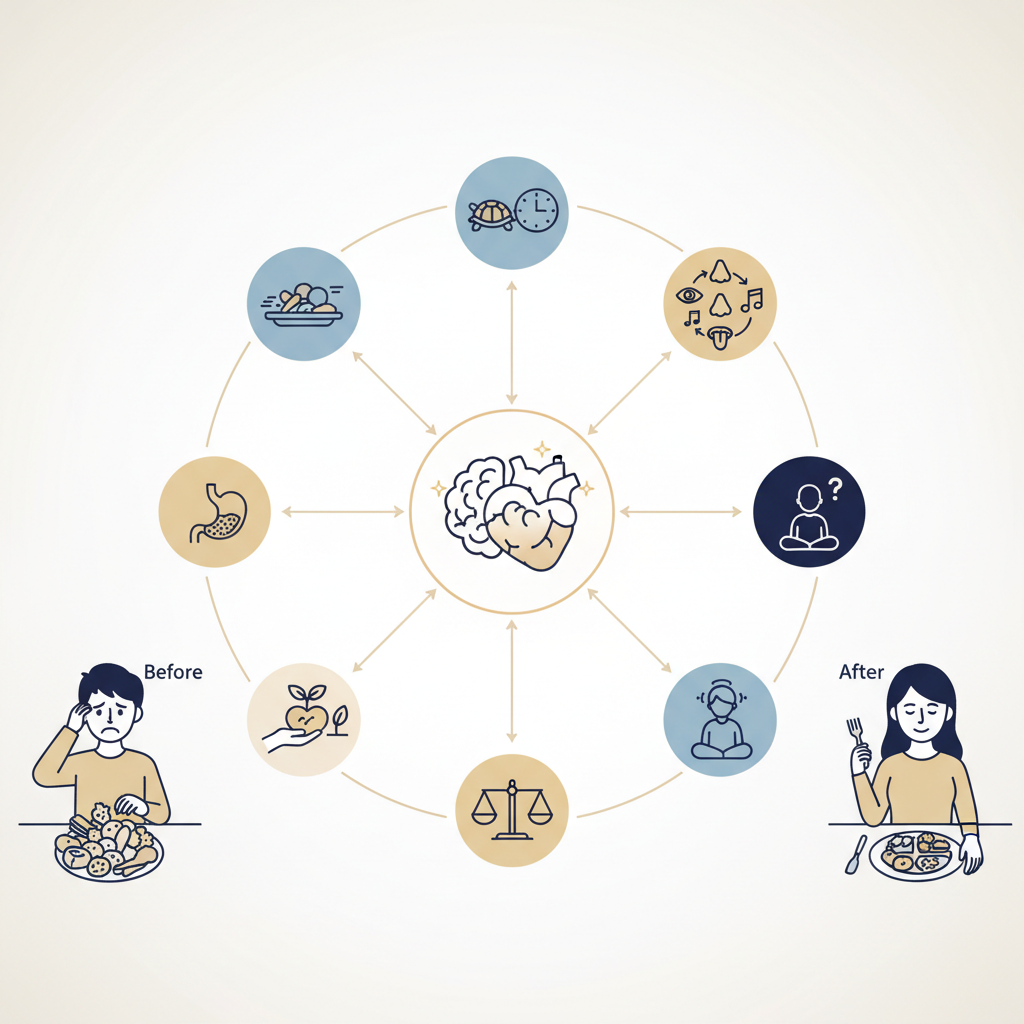
TL;DR
Seven evidence-informed mindful eating exercises—from 3 deep breaths to urge surfing—may help reduce cravings and emotional eating when practiced consistently. Research supports benefits from structured programs (e.g., MB-EAT) and app-based mindfulness training, though results vary and sustained practice is key. ([pubmed.ncbi.nlm.nih.gov](https://pubmed.ncbi.nlm.nih.gov/24854804/?utm_source=openai))
7 Mindful Eating Exercises to Stop Cravings and Emotional Eating — A Behavioral Nutrition Guide
Emotional eating and craving-driven snacking are common and often undermine dietary goals. This practical guide presents seven mindful eating exercises you can use immediately, explains the supporting evidence, shares clinical vignettes, and offers expert tips to help you integrate the practices into daily life. This content does not make therapeutic claims; these approaches may help or support improved eating behaviors. ([mayoclinic.org](https://www.mayoclinic.org/healthy-lifestyle/weight-loss/in-depth/weight-loss/art-20047342?utm_source=openai))
Why mindful eating can reduce cravings
Mindful eating increases interoceptive awareness (sensations inside the body), helps people notice triggers, and creates a small pause between an urge and the action of eating. Mechanistically, awareness can reduce automatic reward-driven responses to food cues and give room for alternative coping strategies. Systematic reviews and RCTs support these mechanisms with moderate effect sizes for reducing binge and craving-related eating. ([pubmed.ncbi.nlm.nih.gov](https://pubmed.ncbi.nlm.nih.gov/24854804/?utm_source=openai))
The 7 exercises (what to do, when, and why)
- Three-Breath Pause — Before your first bite, take three slow, full breaths, tracking the sensations of inhalation and exhalation. Purpose: Calm the nervous system and create a brief gap to choose a response.
- Sensory Check-In — Look at the food, smell it, touch a small piece and take one slow taste with full attention. Purpose: Sharpen sensory experience and reduce mindless eating.
- Slow Bite Practice — Aim to chew each bite 20–30 times or until textures and flavors change. Purpose: Increase oral sensory satiety and allow internal satiety signals to register.
- 10-Minute Delay — When a craving hits, delay responding for 10 minutes while practicing breathing or sipping water. Purpose: Teach delay tolerance; many urges decline in intensity after a short time.
- Craving Log — Record time, intensity (1–10), emotion, and outcome for each craving episode. Purpose: Identify patterns and test alternative behaviors.
- Body Scan Before Eating — Quickly scan from head to toes asking: "Am I physically hungry? When did I last eat?" Purpose: Distinguish physiological hunger from emotional triggers.
- Urge Surfing — When a craving arises, observe it like a wave: notice peak and fall without acting on it. Purpose: Increase distress tolerance and break habit loops.
Practical tips to choose and sequence exercises
Start with micro-practices (3-breath pause, 10-minute delay) and add sensory check-ins and slow-bite during one meal per day. If you prefer structured support, programs like MB-EAT or app-based interventions such as the Eat Right Now program have feasibility data showing reduced craving-driven eating. ([pmc.ncbi.nlm.nih.gov](https://pmc.ncbi.nlm.nih.gov/articles/PMC5844778/?utm_source=openai))
Clinical vignettes from practice
Case A: A 38-year-old office worker found that a 10-minute delay plus drinking water reduced her mid-afternoon chocolate binges over two weeks—she used a craving log to notice that stress after meetings was the main trigger.
Case B: A 52-year-old patient with type 2 diabetes incorporated sensory check-ins into meal times and reported improved portion control and better post-meal satisfaction after three months when combined with diabetes self-management education. Such combined approaches mirror trials comparing MB-EAT to standard diabetes education. ([pubmed.ncbi.nlm.nih.gov](https://pubmed.ncbi.nlm.nih.gov/23102183/?utm_source=openai))
Evidence snapshot: what the research shows
Systematic reviews indicate mindfulness-based approaches show benefit for binge and emotional eating; however, results are heterogeneous. MB-EAT—an established group program—has RCT evidence showing reductions in binge episodes and improvements in eating regulation. Mobile interventions, including the Eat Right Now app, show promising reductions in craving-related eating in feasibility and proof-of-concept trials. These findings support mindful eating as a useful behavioral tool, especially when delivered with fidelity and ongoing practice. ([pubmed.ncbi.nlm.nih.gov](https://pubmed.ncbi.nlm.nih.gov/24854804/?utm_source=openai))
Comparison table: approaches and expected impact
| Approach | Research Support | Accessibility | Expected Outcome |
|---|---|---|---|
| Micro-practices (breath, delay) | Supported by behavioral theory; smaller direct RCT evidence | High | Immediate reduction in impulsive responding |
| MB-EAT (group) | RCTs and clinical trials | Moderate (requires trained facilitator) | Reduced binge episodes, improved eating regulation |
| App-based programs | Feasibility and pilot RCT data (e.g., Eat Right Now) | High | Reduced craving-related eating in many users |
Myth vs Fact
- Myth: Mindful eating is a quick fix. Fact: It’s a skill—benefit grows with repeated practice and often with structured support. ([pmc.ncbi.nlm.nih.gov](https://pmc.ncbi.nlm.nih.gov/articles/PMC5844778/?utm_source=openai))
- Myth: Mindful eating replaces medical care. Fact: It complements care and should not replace treatment for eating disorders or complex medical conditions.
Expert tips for sustainable change
- Make it tiny: choose one exercise and commit for two weeks.
- Track outcomes simply (craving frequency/week) rather than weight alone.
- Combine with social support or an app for accountability if you struggle with adherence. ([pmc.ncbi.nlm.nih.gov](https://pmc.ncbi.nlm.nih.gov/articles/PMC8997232/?utm_source=openai))
- If you have an eating disorder or severe mood disorder, consult a clinician before self-directed changes.
People Also Ask
Do mindful eating exercises cause weight loss?
Direct weight loss is variable. Some trials show modest weight or glycemic improvements when mindful eating is combined with nutrition education or diabetes self-management; primary outcomes are often reduced binge/craving behavior rather than weight alone. ([pubmed.ncbi.nlm.nih.gov](https://pubmed.ncbi.nlm.nih.gov/23102183/?utm_source=openai))
How often should I practice?
Daily micro-practices (even 1–5 minutes) plus mindful practice at meals several times per week are a realistic starting point. Consistency predicts benefit more than long single sessions.
Can apps replace group programs?
Apps increase accessibility and show promising results, but group programs with trained facilitators may deliver stronger effects for some people. Choose based on needs and access. ([pmc.ncbi.nlm.nih.gov](https://pmc.ncbi.nlm.nih.gov/articles/PMC5844778/?utm_source=openai))
FAQ
Are these exercises evidence-based?
Yes—there is a growing evidence base including systematic reviews and randomized trials that support mindful eating and mindfulness-based interventions for reducing binge and craving-related eating. Evidence strength varies by intervention and outcome. ([pubmed.ncbi.nlm.nih.gov](https://pubmed.ncbi.nlm.nih.gov/24854804/?utm_source=openai))
Will mindful eating eliminate cravings completely?
No single approach eliminates cravings entirely. Mindful eating can reduce frequency and severity for many people and increase control over responses to cravings.
Where can I learn MB-EAT?
MB-EAT is offered by trained facilitators in clinics and some community programs; there are also structured online versions. Look for programs affiliated with recognized institutions. ([mb-eat.com](https://www.mb-eat.com/?utm_source=openai))
Quick 4-week plan (summary)
Week 1: Three-breath pause + 10-minute delay. Week 2: Add sensory check-in and one slow meal/day. Week 3: Start craving log. Week 4: Add urge surfing and evaluate progress.
Selected scientific references
- Katterman SN et al. Mindfulness meditation as an intervention for binge eating, emotional eating, and weight loss: A systematic review. Eat Behav. 2014. ([pubmed.ncbi.nlm.nih.gov](https://pubmed.ncbi.nlm.nih.gov/24854804/?utm_source=openai))
- Kristeller JL, Wolever RQ. Mindfulness-Based Eating Awareness Training (MB-EAT) for Binge Eating: A Randomized Clinical Trial. Mindfulness. 2014. ([scienceopen.com](https://www.scienceopen.com/document?vid=fbe1b151-fc79-4ec1-be5f-6c279ae7fb38&utm_source=openai))
- Mason AE et al. Testing a mobile mindful eating intervention targeting craving-related eating: feasibility and proof of concept. J Behav Med. 2018. ([pmc.ncbi.nlm.nih.gov](https://pmc.ncbi.nlm.nih.gov/articles/PMC5844778/?utm_source=openai))
- Taylor VA et al. Awareness drives changes in reward value which predict eating behavior change. (Mobile mindfulness experience sampling). 2021. ([pubmed.ncbi.nlm.nih.gov](https://pubmed.ncbi.nlm.nih.gov/34264854/?utm_source=openai))
- Grider HS et al. The Influence of Mindful Eating and/or Intuitive Eating Approaches on Dietary Intake: A Systematic Review. J Acad Nutr Diet. 2021. ([pubmed.ncbi.nlm.nih.gov](https://pubmed.ncbi.nlm.nih.gov/33279464/?utm_source=openai))
- Harvard Health: Slow down—and try mindful eating. ([health.harvard.edu](https://www.health.harvard.edu/healthy-aging-and-longevity/slow-downand-try-mindful-eating?utm_source=openai))
- Harvard Health: Struggling with emotional eating? ([health.harvard.edu](https://www.health.harvard.edu/diet-and-weight-loss/struggling-with-emotional-eating?utm_source=openai))
- Mayo Clinic: Weight loss — Gain control of emotional eating. ([mayoclinic.org](https://www.mayoclinic.org/healthy-lifestyle/weight-loss/in-depth/weight-loss/art-20047342?utm_source=openai))
- Updated systematic review/meta-analysis on mindfulness-based interventions for binge eating (2024). ([pmc.ncbi.nlm.nih.gov](https://pmc.ncbi.nlm.nih.gov/articles/PMC11893636/?utm_source=openai))
- Comparative remote MB-EAT vs behavioral weight loss counseling (COVID-19 era RCT). ([pmc.ncbi.nlm.nih.gov](https://pmc.ncbi.nlm.nih.gov/articles/PMC10229895/?utm_source=openai))
Disclaimer: This article is informational and not a substitute for individualized medical or psychological care. If cravings or eating behaviors significantly affect your life, seek professional support.

Ready to Transform Your Health Sustainably?
Connect with Feras Alayed - Therapeutic & Behavioral Nutrition Specialist - for a free health assessment and personalized wellness plan.
Learn more about Behavioral Nutrition | Business Opportunities
النقاط الرئيسية
- التمارين الواعية لِلأكل تساعد على التمييز بين الجوع العاطفي والجوع الجسدي وقد تقلل الرغبات المفاجئة في الأكل.
- تمارين بسيطة (التنفس، المسح الحسي، تناول لقمة ببطء) قابلة للتطبيق في الحياة اليومية وتدعم ضبط الانفعالات المتعلقة بالطعام.
- الأدلة البحثية تُظهر فوائد متوسطة لنهج اليقظة في خفض نوبات الشراهة وتحسين التحكم في الرغبة والأكل المتهور، لكن النتائج متباينة حسب الشكل والمدة.
- تطبيق التمارين عبر التطبيقات أو مجموعات MB-EAT يمكن أن يقلّل الرغبات ويعزّز الوعي الداخلي، مع أدلة أولية من دراسات عيادية وعبر الإنترنت.
- التمرُّس المنتظم ومستوى الداعم السريري أو الجماعي يَزيد فرص التغيير السلوكي المستدام—ابدأ بخطواتٍ صغيرة وواقعية.
TL;DR
7 تمارين فعّالة لليَقظة أثناء الأكل — مثل تمرين الثلاث نَفَس، المسح الحسي، والتأخير المؤقت — قد تساعد في كبح الرغبات والأكل العاطفي عند ممارستها بانتظام. الأدلة تشير إلى فوائد متوسطة عبر تدخلات مثل MB-EAT والتطبيقات الهاتفية، لكن لا توجد «حلول سحرية»؛ اليقظة هي مهارة تحتاج تدريبًا مستمرًا. ([pubmed.ncbi.nlm.nih.gov](https://pubmed.ncbi.nlm.nih.gov/24854804/?utm_source=openai))
7 تمارين اليقظة أثناء الأكل لوقف الرغبات والأكل العاطفي — دليل التغذية السلوكية
الأكل العاطفي والرغبات المفاجئة في الأكل شائعة وتؤثر على نوعية الحياة والصحة. هذا الدليل العملي يقدّم 7 تمارين قابلة للتطبيق يوميًا، يشرح الأدلة العلمية الداعمة، ويضم أمثلة سريرية ونصائح من الخبراء لدمجها في روتينك الغذائي دون ادعاءات علاجية صارمة — فالتدخلات قد تساعد أو تدعم التحكم وليس علاجًا مضمونًا. ([mayoclinic.org](https://www.mayoclinic.org/healthy-lifestyle/weight-loss/in-depth/weight-loss/art-20047342?utm_source=openai))
لماذا تعمل تمارين اليقظة على الرغبات والأكل العاطفي؟
اليقظة تساعد على زيادة الوعي الجسدي (مثل الجوع والشبع) وتقليل «الرد الآلي» على المثيرات العاطفية. نماذج بحثية وتقارير سريرية تشير إلى أن تدريب اليقظة يمكن أن يُقلّل تكرار الأكل كرد فعل للرغبات ويُحسّن القدرة على تأجيل الاستجابة حتى يخف الانفعال. الأدلة من مراجعات ونِصُوص سريرية تدعم ذلك، ولكن تأثيرها يتفاوت حسب طول وصرامة البرنامج. ([pubmed.ncbi.nlm.nih.gov](https://pubmed.ncbi.nlm.nih.gov/24854804/?utm_source=openai))
التمارين السبعة — ماذا تفعل ومتى ولماذا
| التمرين | الخطوات الأساسية | المدة/التكرار | الهدف |
|---|---|---|---|
| 1. تمرين الثلاث نَفَس | خذ 3 أنفاس عميقة مع الانتباه للشهيق والزفير قبل أول لقمة. | 5–10 ثوانٍ قبل الأكل | مَهدي الجهاز العصبي وتأخير الاستجابة التلقائية. |
| 2. المسح الحسي (Sensory Check-In) | انظر، شمّ، تلمّس، وتذوّق قطعة صغيرة بتركيز كامل. | 1–2 دقيقة/وجبة | إحياء الخبرة الحسية وتقليل الأكل المندفع. |
| 3. لقمة ببطء (Slow Bite) | امضغ كل لقمة 20–30 مرة وركّز على الملمس والنكهات. | خلال كل لقمة | زيادة الشبع وتقليل كمية الطعام. |
| 4. فاصل الـ10 دقائق | عند ظهور رغبة قوية، انتظر 10 دقائق مع التنفّس أو شرب ماء. | 10 دقائق/كل رغبة | تعليم الدماغ تأجيل الاستجابة وتقليل نوبات الأكل العاطفي. |
| 5. مسجل الرغبة (Craving Log) | سجّل الوقت، شدة الرغبة (1–10)، العاطفة والبديل الممكن. | بعد كل رغبة | التعرّف على المحفزات وتطوير استراتيجيات بديلة. |
| 6. جسم-ملاحظة (Body Scan before eating) | فحص سريع للجسم: هل أنا جائع جسديًا؟ متى أكلت آخر مرة؟ | 1–3 دقائق قبل الوجبة | تمييز الجوع الحقيقي عن الرغبات العاطفية. |
| 7. تمرين المقبض الذهني (Mindful Urge Surfing) | راقب الرغبة دون التصرف، تصوّرها كَموجة تمرُّ وتزول. | 2–10 دقائق عند الحاجة | بناء قدرة تحمل الانزعاج وتقليل الاندفاع. |
كيف تختار التمرين المناسب لك
ابدأ بالتمارين القصيرة (ثلاث نَفَس أو فاصل 10 دقائق) ثم أضف المسح الحسي أو سجل الرغبة. التدريج والالتزام اليومي أهم من طول كل جلسة — التدخلات الرقمية أو مجموعات MB-EAT قد تساعد على الالتزام. ([pmc.ncbi.nlm.nih.gov](https://pmc.ncbi.nlm.nih.gov/articles/PMC5844778/?utm_source=openai))
دليل الخِبرة السريرية: قصص من الممارسة
قصة 1 — «سارة، 38 سنة، موظفة»:
كانت سارة تلجأ للشوكولاتة بعد كل اجتماع مرهق. بدأت بتطبيق فاصل 10 دقائق وسجلت الرغبة. بعد أسبوعين، لاحظت أنها غالبًا ما تهدأ الرغبة بعد كوب ماء وتمرين تنفّس. لم تقطع الشوكولاتة تمامًا لكن تكرار الاندفاعات انخفض. (تجربة مبنية على ممارسات سريرية شائعة وتعدل حسب كل حالة).
قصة 2 — «أحمد، 52 سنة، مصاب بداء سكري نوع 2»:
أُدخل تمرينات المسح الحسي في برنامج التثقيف الغذائي، وبيّن أحمد تحسنًا في وعيه بالكمية التي يتناولها وتراجعًا طفيفًا في استهلاك الوجبات السريعة بعد ثلاثة أشهر من المراقبة والدعم الجماعي. النتائج هنا تعكس بيانات تجريبية لصالح برامج اليقظة المتكاملة. ([pubmed.ncbi.nlm.nih.gov](https://pubmed.ncbi.nlm.nih.gov/23102183/?utm_source=openai))
الجدول المقارن: قوة الأدلة لكل تمرين/نهج
| النهج | دعم بحثي | سهولة التنفيذ | أثر متوقع |
|---|---|---|---|
| تمارين التنفّس والفاصل | دعم من بحوث اليقظة والتدخلات قصيرة المدى. | سهل جدًا | تأثير معتدل في تأجيل الاستجابة |
| المسح الحسي واللقمة البطيئة | مذكور في إرشادات مستشفَوية ومقالات إكلينيكية. | سهل إلى متوسط | تحسين الشبع وتقليل الأكل المندفع |
| سجلات الرغبة | مدعوم بأدلة سلوكية على كشف المحفزات. | متوسط | تحسين الوعي وخلق بدائل |
| MB-EAT ومجموعات اليقظة | دراسات عيادية ومراجعات تدعم تقليل نوبات الشراهة. | يتطلب تدريبًا وقدرة تنظيمية | تحسن أكبر عند التزام كامل |
| تطبيقات الهاتف (مثل 'Eat Right Now') | بيانات أولية ودراسات إثبات مفهوم تُظهر خفض الرغبات. | سهل الوصول | تأثير واعد لكنه يتفاوت بين المستخدمين |
كيف تدمج هذه التمارين في برنامجك الغذائي (خطة 4 أسابيع)
- الأسبوع 1: تمرين الثلاث نَفَس + فاصل 10 دقائق عند كل رغبة.
- الأسبوع 2: أضف المسح الحسي ولقمة ببطء لوجبة واحدة يوميًا.
- الأسبوع 3: ابدأ سجل الرغبة وراجع الأنماط يوميًا.
- الأسبوع 4: جرّب تمرين «موجة الرغبة» وقيّم التقدم مع شريك أو مزود رعاية.
Myth vs Fact — سَبعة مفاهيم خاطئة حول اليقظة والأكل
| الخرافة | الواقع |
|---|---|
| اليقظة تمنعك من الأكل تمامًا | الحقيقة: اليقظة تزيد الوعي، لكنها لا تمنع الجوع الحقيقي؛ تساعد على تفريق الجوع عن العاطفة. ([health.harvard.edu](https://www.health.harvard.edu/healthy-aging-and-longevity/8-steps-to-mindful-eating?utm_source=openai)) |
| تحتاج ساعات يوميًا لتنجح | حتى تمارين قصيرة متكررة يمكن أن تكون فعالة وتُبنَى مع الوقت. ([pmc.ncbi.nlm.nih.gov](https://pmc.ncbi.nlm.nih.gov/articles/PMC5844778/?utm_source=openai)) |
| هي بدعة ليست لها أدلة | هناك مراجعات وتجارب إكلينيكية تدعم فوائدها لخفض الشراهة والرغبات. ([pubmed.ncbi.nlm.nih.gov](https://pubmed.ncbi.nlm.nih.gov/24854804/?utm_source=openai)) |
نصائح الخبراء
- ابدأ بخمس دقائق يوميًّا وبنِظام بسيط يمكنك الالتزام به؛ الاستمرار أهم من المثالية. ([health.harvard.edu](https://www.health.harvard.edu/healthy-aging-and-longevity/slow-downand-try-mindful-eating?utm_source=openai))
- استخدم سجلًا قصيرًا لتحديد المحفزات العاطفية (ضغط عمل، ملل، تعب) وابحث عن بدائل عملية.
- جرّب تطبيقًا موثوقًا أو مجموعة تدريبية مدعومة بحثيًا إذا كنت بحاجة للدعم المنهجي. ([pmc.ncbi.nlm.nih.gov](https://pmc.ncbi.nlm.nih.gov/articles/PMC8997232/?utm_source=openai))
- اطلب مساعدة متخصص عند وجود اضطرابات أكل سريرية أو إذا كان الأكل العاطفي مصحوبًا بالاكتئاب الشديد.
أسئلة شائعة
هل فعلاً تخفف اليقظة من الرغبات؟
نعم، أبحاث متعددة تشير إلى أن تمارين اليقظة يمكن أن تخفف من شدة وتكرار الرغبات لدى بعض الأشخاص، خصوصًا عندما تُمارس بانتظام أو ضمن برامج مدعومة مثل MB-EAT أو تطبيقات مدعومة بحثيًا. ([pubmed.ncbi.nlm.nih.gov](https://pubmed.ncbi.nlm.nih.gov/24854804/?utm_source=openai))
كم من الوقت أحتاج لرؤية تحسن؟
بعض الناس يرون فروقًا خلال أسابيع قليلة؛ دراسات تطبيقية تشير إلى تغييرات في 4–12 أسبوعًا، لكن الاتساق الضروري يختلف بين الأفراد. ([pmc.ncbi.nlm.nih.gov](https://pmc.ncbi.nlm.nih.gov/articles/PMC5844778/?utm_source=openai))
هل يمكن استخدام تمارين اليقظة مع حمية أخرى؟
نعم، اليقظة ليست نظامًا غذائيًا بحد ذاتها؛ يمكن دمجها مع خطط غذائية صحية أو إدارة السكري أو برامج فقدان الوزن لتحسين الوعي والالتزام. ([pubmed.ncbi.nlm.nih.gov](https://pubmed.ncbi.nlm.nih.gov/23102183/?utm_source=openai))
الأسئلة الشائعة (FAQ)
هل تمارين اليقظة تمنع نوبات الشراهة؟
قد تدعم تقليل نوبات الشراهة لدى بعض الأشخاص، خصوصًا ضمن برامج مدروسة مثل MB-EAT أو تدخلات رقمية. النتائج متفاوتة وتعتمد على التزام المشارك وشكل التدخل. ([pmc.ncbi.nlm.nih.gov](https://pmc.ncbi.nlm.nih.gov/articles/PMC11893636/?utm_source=openai))
هل هناك مخاطر من ممارسة تمارين اليقظة؟
عمومًا آمنة، لكن عند وجود تاريخ اضطرابات أكل حاد أو اضطرابات نفسية معقدة يجب التنسيق مع مختص صحي قبل الاعتماد الكامل على التدخل الذاتي.
هل التطبيقات مفيدة؟
تطبيقات مدعومة بأدلة، مثل تلك التي اختبرها باحثون، قد تقلل الرغبات وتدعم الالتزام، لكنها ليست بديلاً عن العلاج المهني في حالات الاضطرابات الشديدة. ([pmc.ncbi.nlm.nih.gov](https://pmc.ncbi.nlm.nih.gov/articles/PMC5844778/?utm_source=openai))
كيفية قياس التقدّم
استخدم مقياس شدة الرغبة (1–10)، عدد مرات الأكل كرد فعل للرغبات أسبوعيًا، ومدى رضاك العاطفي بعد الوجبات. سجلات بسيطة قبل وبعد 4 أسابيع تكشف أنماطًا يمكن تحسينها. تجارب سريرية أظهرت انخفاضًا ملحوظًا في «الأكل القائم على الرغبة» بعد تدخلات اليقظة الموجهة. ([pmc.ncbi.nlm.nih.gov](https://pmc.ncbi.nlm.nih.gov/articles/PMC8460847/?utm_source=openai))
روابط داخلية مفيدة
- لماذا سوق العافية مقاوم للركود — حالة للمستثمرين
- إحصاءات السكري وهَشاشة الصحة 2026 - هولندا
- نصائح شتوية لصحة الأيض — كندا
- المقاومة للأنسولين: دليل عملي للطبيب — هولندا
- كيفية وقف هبوط الطاقة بعد الظهر — خطة مكوّنة من 5 خطوات
- التكلفة الحقيقية للأمراض المزمنة مقابل الوقاية
- الصيام المتقطع: دليل أبحاث KU Leuven 2026 — بلجيكا
- ارتفاع ضغط الدم في كندا: حقائق وإجراءات
- المقاومة للأنسولين — دليل للكشف المبكر — بلجيكا
- هل يمكن لجهاز CGM اكتشاف مقاومة الأنسولين؟ دليل 2026
مراجع علمية مختارة
- Katterman SN, Kleinman BM, Hood MM, Nackers LM, Corsica JA. Mindfulness meditation as an intervention for binge eating, emotional eating, and weight loss: A systematic review. Eat Behav. 2014. ([pubmed.ncbi.nlm.nih.gov](https://pubmed.ncbi.nlm.nih.gov/24854804/?utm_source=openai))
- Kristeller JL, Wolever RQ. Mindfulness-Based Eating Awareness Training (MB-EAT) for Binge Eating: A Randomized Clinical Trial. Mindfulness. 2014. ([scienceopen.com](https://www.scienceopen.com/document?vid=fbe1b151-fc79-4ec1-be5f-6c279ae7fb38&utm_source=openai))
- Mason AE, Jhaveri K, Cohn M, Brewer JA. Testing a mobile mindful eating intervention targeting craving-related eating: feasibility and proof of concept. J Behav Med. 2018. ([pmc.ncbi.nlm.nih.gov](https://pmc.ncbi.nlm.nih.gov/articles/PMC5844778/?utm_source=openai))
- Taylor VA, Moseley I, Sun S, et al. Awareness drives changes in reward value which predict eating behavior change. (Experience sampling from mobile mindfulness). 2021. ([pubmed.ncbi.nlm.nih.gov](https://pubmed.ncbi.nlm.nih.gov/34264854/?utm_source=openai))
- Grider HS, Douglas SM, Raynor HA. The Influence of Mindful Eating and/or Intuitive Eating Approaches on Dietary Intake: A Systematic Review. J Acad Nutr Diet. 2021. ([pubmed.ncbi.nlm.nih.gov](https://pubmed.ncbi.nlm.nih.gov/33279464/?utm_source=openai))
- Harvard Health Publishing. Slow down—and try mindful eating. Harvard Health. ([health.harvard.edu](https://www.health.harvard.edu/healthy-aging-and-longevity/slow-downand-try-mindful-eating?utm_source=openai))
- Harvard Health Publishing. Struggling with emotional eating? Harvard Health. ([health.harvard.edu](https://www.health.harvard.edu/diet-and-weight-loss/struggling-with-emotional-eating?utm_source=openai))
- Mayo Clinic. Weight loss: Gain control of emotional eating. Mayo Clinic. ([mayoclinic.org](https://www.mayoclinic.org/healthy-lifestyle/weight-loss/in-depth/weight-loss/art-20047342?utm_source=openai))
- Updated systematic review: Mindfulness-based interventions for binge eating: an updated systematic review and meta-analysis (2024). ([pmc.ncbi.nlm.nih.gov](https://pmc.ncbi.nlm.nih.gov/articles/PMC11893636/?utm_source=openai))
- Comparative efficacy of remotely delivered MB-EAT versus behavioral counseling during COVID-19 — randomized study. ([pmc.ncbi.nlm.nih.gov](https://pmc.ncbi.nlm.nih.gov/articles/PMC10229895/?utm_source=openai))
- MB-EAT decreases emotional eating among Hong Kong students — randomized controlled trial (2026). ([pubmed.ncbi.nlm.nih.gov](https://pubmed.ncbi.nlm.nih.gov/42178450/?utm_source=openai))
- Harvard Health. 8 steps to mindful eating. Harvard Health. ([health.harvard.edu](https://www.health.harvard.edu/healthy-aging-and-longevity/8-steps-to-mindful-eating?utm_source=openai))
ملاحظة: لا تستخدم هذه المعلومات بديلاً عن المشورة الطبية المتخصّصة. إذا كانت نوبات الأكل أو الرغبة تسبب ضيقًا كبيرًا أو مرتبطة بحالة طبية أو نفسية، فاستشر مختصًا صحيًا مرخّصًا.
هل تريد تحسين صحتك بشكل مستدام؟
تواصل مع فراس العايد - أخصائي التغذية العلاجية والسلوكية - للحصول على تقييم صحي مجاني وخطة مخصصة لك.
اقرأ المزيد عن التغذية السلوكية | فرص الاستثمار
Frequently Asked Questions
هل تخفف تمارين اليقظة من الرغبات؟
تمارين اليقظة قد تساعد على تقليل شدة وتكرار الرغبات، خصوصًا عند ممارستها بانتظام أو ضمن برامج مدعومة بحثيًا.
كم من الوقت يلزم لرؤية تحسّن؟
تختلف مدة رؤية النتائج، لكن العديد من المشاركين يلاحظون تحسناً خلال 4–12 أسبوعًا مع ممارسة منتظمة.
هل أحتاج لوقت طويل يوميًا؟
نعم، التمارين القصيرة والمتكررة (مثل نَفَسان عميقان أو فاصل 10 دقائق) فعّالة ويمكن إدماجها بسهولة.
هل هناك برامج مدعومة بالأدلة؟
برامج مثل MB-EAT والتطبيقات مثل Eat Right Now أظهرت فوائد في تقليل الأكل القائم على الرغبة في تجارب سريرية أو دراسات إثبات مفهوم.
كيف أبدأ وإن كنت أعاني من نوبات أكل شديدة؟
ابدأ بخطوات صغيرة، سجّل رغباتك لفهم المحفزات، واطلب دعمًا سريريًا عند الضرورة أو وجود اضطراب أكل سريري.
هل يمكنني الاعتماد على التطبيقات فقط؟
نعم، التطبيقات تزيد الوصول وقد تساعد في الالتزام، لكنها ليست بديلاً عن علاج متخصص عند وجود حالات خطيرة.
هل هناك مخاطر مرتبطة بتمارين اليقظة؟
لا توجد مخاطر كبيرة للتمارين نفسها، لكن عند وجود تاريخ اضطرابات أكل أو حالات نفسية معقدة يجب التنسيق مع مختص.
هل يجب دمجها مع تغيير غذائي أو علاج آخر؟
نعم، الدمج مع برامج التثقيف الغذائي أو العلاج السلوكي يزيد فعالية النتائج في دراسات متعددة.