How to Stop Afternoon Energy Crash: A 5-Step Science-Backed Plan
توقف السقوط الطاقي بعد الظهر: خطة علمية من 5 خطوات فعالة
Author: Feras Alayed - Therapeutic & Behavioral Nutrition Specialist
Published:
Updated:
Category: sleep-energy
Reading Time: 7 minutes
Key Takeaways
- The afternoon energy crash is a mix of a biological circadian dip and post-meal responses, not simply laziness.
- Lunch composition and portion size influence crash severity; lower-GI carbs with protein and fiber tend to smooth blood sugar and energy. ([pubmed.ncbi.nlm.nih.gov](https://pubmed.ncbi.nlm.nih.gov/32327444/?utm_source=openai))
- Short actionable tactics — a balanced lunch, 10–20 minutes of movement, a 20-minute nap — can improve alertness. ([pmc.ncbi.nlm.nih.gov](https://pmc.ncbi.nlm.nih.gov/articles/PMC8507757/?utm_source=openai))
- Caffeine helps if timed well but shouldn’t replace adequate night sleep. ([mayoclinic.org](https://www.mayoclinic.org/healthy-lifestyle/nutrition-and-healthy-eating/in-depth/caffeine/art-20045678?utm_source=openai))
- Persistent or severe crashes warrant medical evaluation for sleep disorders or metabolic issues (e.g., insulin resistance). ([pmc.ncbi.nlm.nih.gov](https://pmc.ncbi.nlm.nih.gov/articles/PMC2908954/?utm_source=openai))
TL;DR
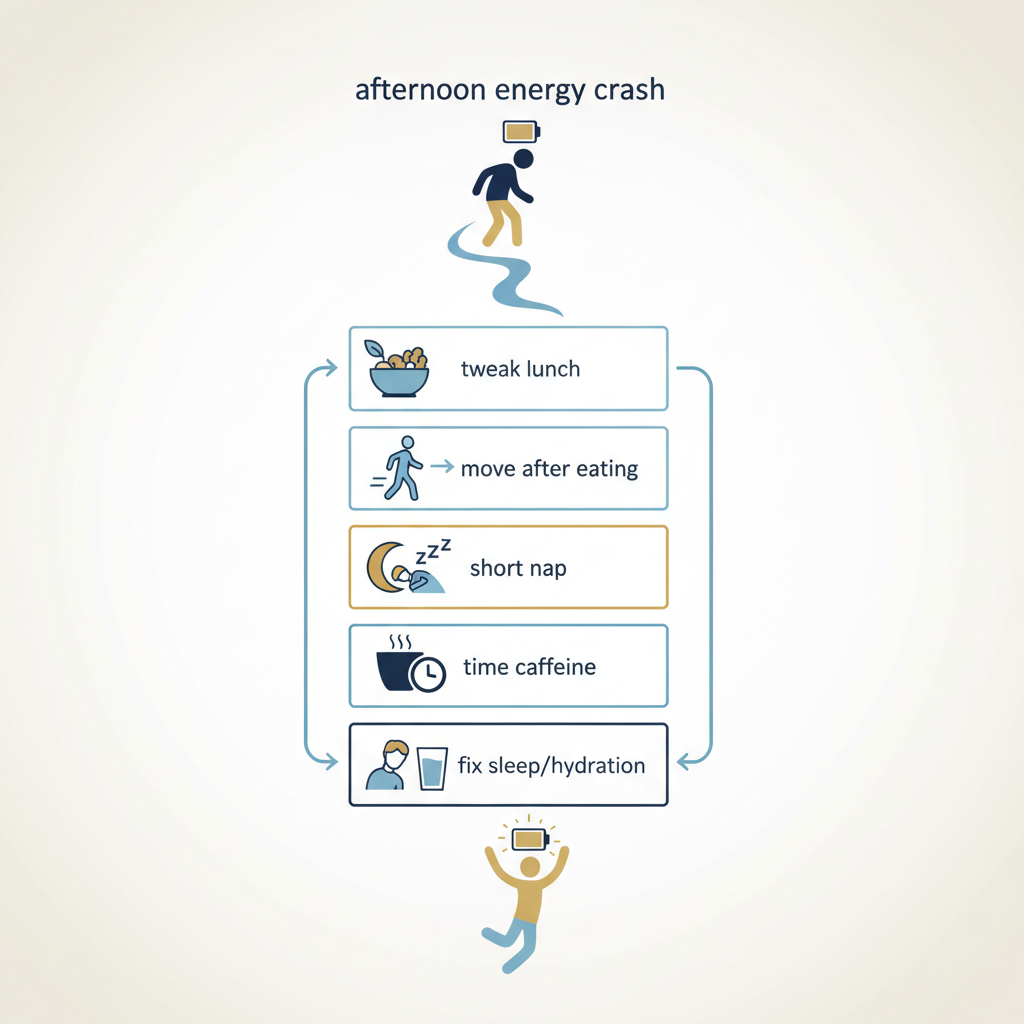
The afternoon energy crash is driven by a natural circadian dip plus meal-related physiology. A science-backed 5-step plan — balance your lunch, move after eating, use a short nap, time caffeine, and address sleep/hydration — may reduce the slump. See a clinician if symptoms persist. ([ncbi.nlm.nih.gov](https://www.ncbi.nlm.nih.gov/books/NBK20359/?utm_source=openai))
How to Stop the Afternoon Energy Crash: A Science-Backed 5-Step Plan to Beat the Post-Lunch Slump
That mid-afternoon fog many people call the "post-lunch slump" or "afternoon energy crash" is familiar to office workers, students, and shift workers alike. It results from the interaction of a natural circadian dip in alertness and the body’s physiological response to eating. Understanding the causes helps target simple, practical interventions you can try this week. ([ncbi.nlm.nih.gov](https://www.ncbi.nlm.nih.gov/books/NBK20359/?utm_source=openai))
What causes the crash?
Three overlapping mechanisms explain why you crash after lunch: (1) a circadian trough in early-to-mid afternoon that lowers baseline alertness; (2) postprandial physiology — gastric distension, hormonal shifts, and blood glucose/insulin responses; and (3) modulating factors such as hydration status and prior sleep debt. In short, biology + food + behavior. ([ncbi.nlm.nih.gov](https://www.ncbi.nlm.nih.gov/books/NBK20359/?utm_source=openai))
Meal composition matters
Meals high in quickly absorbed carbohydrates (high glycemic index/load) and large portions are more likely to be followed by transient blood sugar swings and feelings of lethargy for some people. Replacing refined carbs with whole grains, fiber, protein, and healthy fats tends to produce a steadier post-meal metabolic response and may reduce sleepiness. ([pubmed.ncbi.nlm.nih.gov](https://pubmed.ncbi.nlm.nih.gov/32327444/?utm_source=openai))
The 5-Step Plan
-
Step 1 — Tweak your lunch: moderate portions, balanced macros
Aim for a lunch that pairs lean protein, fiber-rich vegetables or whole grains, and some healthy fats. A lunch like grilled fish or chicken with a mixed-vegetable salad and a small portion of whole grain (or a legume-based bowl) often delivers steady energy and satiety. This approach may help blunt rapid post-meal glucose fluctuations. ([pubmed.ncbi.nlm.nih.gov](https://pubmed.ncbi.nlm.nih.gov/32327444/?utm_source=openai))
-
Step 2 — Move for 10–20 minutes after eating
A light walk or short bout of low-intensity activity after lunch can increase alertness and improve postprandial glucose handling. Recent studies support short postprandial activity breaks as a practical strategy to boost daytime functioning. ([medrxiv.org](https://www.medrxiv.org/content/10.64898/2026.06.20.26356117v1.full.pdf?utm_source=openai))
-
Step 3 — Use a strategic short nap (≈20 minutes)
Brief naps in the early afternoon (about 10–30 minutes) consistently improve vigilance and cognitive performance in sleep-restricted and general populations; 20 minutes is a common sweet spot to avoid sleep inertia. Consider workplace policies or private routines that allow a quick restorative nap if feasible. ([pmc.ncbi.nlm.nih.gov](https://pmc.ncbi.nlm.nih.gov/articles/PMC8507757/?utm_source=openai))
-
Step 4 — Time caffeine smartly
Caffeine taken after the initial post-lunch dip — roughly 60–90 minutes after eating — can temporarily restore alertness. However, excess caffeine or very late afternoon consumption can impair evening sleep. Treat caffeine as a tool to be timed, not a substitute for sleep. ([mayoclinic.org](https://www.mayoclinic.org/healthy-lifestyle/nutrition-and-healthy-eating/in-depth/caffeine/art-20045678?utm_source=openai))
-
Step 5 — Fix the basics: sleep, hydration, and medical check-up if needed
Chronic sleep debt and dehydration amplify daytime sleepiness; addressing these baseline factors often yields the biggest improvements. If symptoms are severe, persistent, or accompanied by weight change, excessive nighttime sleepiness, or other red flags, consider evaluation for sleep disorders or metabolic issues (e.g., insulin resistance). ([pmc.ncbi.nlm.nih.gov](https://pmc.ncbi.nlm.nih.gov/articles/PMC2908954/?utm_source=openai))
Quick comparison: lunches that help vs. lunches that hurt
| Feature | Lunch that helps | Lunch that worsens crash |
|---|---|---|
| Carbs | Whole grains/vegetables (low GI) | White bread, pastries, sugary drinks (high GI) |
| Protein | Lean protein or legumes | Very low protein |
| Fat | Olive oil, nuts, avocado | Fried or trans fats |
| Portion | Moderate (~400–700 kcal depending on needs) | Very large (>800 kcal) heavy meals |
Sample schedule for a typical workday
12:30 — balanced lunch. 13:15 — 10–20 minute walk. 14:00 — optional 20-minute nap or focused break. 14:30 — small caffeine dose if required. Customize based on your workflow.
Myth vs Fact
Myth: "If I crash after lunch it's only because I ate carbs."
Fact: Carbs can be a factor, especially refined carbs, but an intrinsic circadian dip, prior sleep debt, and hydration also play large roles. Adjusting multiple factors simultaneously tends to work best. ([ncbi.nlm.nih.gov](https://www.ncbi.nlm.nih.gov/books/NBK20359/?utm_source=openai))
Expert tips
- Track one change at a time for 7–14 days (e.g., replace one sandwich with a protein-rich bowl) and note alertness patterns.
- If you nap, keep it short and early afternoon to avoid disrupting night sleep. ([pmc.ncbi.nlm.nih.gov](https://pmc.ncbi.nlm.nih.gov/articles/PMC8507757/?utm_source=openai))
- Use light exposure (bright/blue-enriched light) or a brisk walk to increase alertness when immediate performance is required. ([en.wikipedia.org](https://en.wikipedia.org/wiki/Postprandial_somnolence?utm_source=openai))
People Also Ask
Will skipping lunch prevent the crash?
Not reliably. The circadian dip occurs even without food; skipping meals can worsen energy through hunger, low blood sugar, or overcompensation later. A balanced lunch is usually preferable. ([ncbi.nlm.nih.gov](https://www.ncbi.nlm.nih.gov/books/NBK20359/?utm_source=openai))
Are energy drinks a good fix?
They may provide a rapid alertness boost due to caffeine and sugar but can cause rebound fatigue and disrupt sleep if overused; timing and ingredients matter. ([mayoclinic.org](https://www.mayoclinic.org/healthy-lifestyle/nutrition-and-healthy-eating/in-depth/caffeine/art-20045678?utm_source=openai))
Clinical practice and real-world evidence
Meta-analyses and trials show short naps improve vigilance, and post-meal walking can benefit metabolic markers and subjective alertness. Clinicians often recommend a combined behavioral approach—dietary tweaks, activity breaks, and sleep hygiene—before pharmacological interventions. If postprandial sleepiness is extreme, targeted medical evaluation may reveal underlying causes such as sleep apnea or metabolic disease. ([pmc.ncbi.nlm.nih.gov](https://pmc.ncbi.nlm.nih.gov/articles/PMC8507757/?utm_source=openai))
FAQs
Can a continuous glucose monitor (CGM) help me understand my crash?
Yes; CGMs can reveal post-meal glucose patterns that correlate with energy changes and help you personalize meal choices. See our CGM guide for more. Learn more.
How important is hydration?
Hydration is linked to subjective alertness. While effects on objective cognition are mixed, maintaining regular fluid intake is inexpensive and low-risk. ([pmc.ncbi.nlm.nih.gov](https://pmc.ncbi.nlm.nih.gov/articles/PMC2908954/?utm_source=openai))
Internal resources
- The true cost of chronic disease vs prevention
- Metabolic health: WHO Europe report
- 12 best prebiotic foods for gut health
References & authoritative sources
- NIH Bookshelf — Information about Sleep. ([ncbi.nlm.nih.gov](https://www.ncbi.nlm.nih.gov/books/NBK20359/?utm_source=openai))
- PMCID — Water, Hydration and Health (D'Anci et al.). ([pmc.ncbi.nlm.nih.gov](https://pmc.ncbi.nlm.nih.gov/articles/PMC2908954/?utm_source=openai))
- PubMed — High/low glycemic index meals and postprandial responses. ([pubmed.ncbi.nlm.nih.gov](https://pubmed.ncbi.nlm.nih.gov/32327444/?utm_source=openai))
- PMC — Whole-Food Plant-Based Diet pilot and postprandial sleepiness. ([pmc.ncbi.nlm.nih.gov](https://pmc.ncbi.nlm.nih.gov/articles/PMC11562320/?utm_source=openai))
- PMC — Gut vagal sensory pathway and postprandial sleep. ([pmc.ncbi.nlm.nih.gov](https://pmc.ncbi.nlm.nih.gov/articles/PMC12717129/?utm_source=openai))
- PMC — Systematic review & meta-analysis of short daytime naps. ([pmc.ncbi.nlm.nih.gov](https://pmc.ncbi.nlm.nih.gov/articles/PMC8507757/?utm_source=openai))
- PubMed — 20-minute nap effects on mood and performance. ([pubmed.ncbi.nlm.nih.gov](https://pubmed.ncbi.nlm.nih.gov/10210616/?utm_source=openai))
- Mayo Clinic — Caffeine advice and considerations. ([mayoclinic.org](https://www.mayoclinic.org/healthy-lifestyle/nutrition-and-healthy-eating/in-depth/caffeine/art-20045678?utm_source=openai))
- MedRxiv (2026) — Optimal timing/frequency of postprandial physical activity breaks. ([medrxiv.org](https://www.medrxiv.org/content/10.64898/2026.06.20.26356117v1.full.pdf?utm_source=openai))
- PMC — Clinical report: Excessive postprandial sleepiness case series. ([pmc.ncbi.nlm.nih.gov](https://pmc.ncbi.nlm.nih.gov/articles/PMC11651837/?utm_source=openai))
Takeaway
The afternoon crash is manageable for most people with a combined approach: adjust lunch, move, use short naps, time caffeine wisely, and fix foundational sleep and hydration. Personal experimentation and, when needed, clinical evaluation will help you find a sustainable routine.
Ready to Transform Your Health Sustainably?
Connect with Feras Alayed - Therapeutic & Behavioral Nutrition Specialist - for a free health assessment and personalized wellness plan.
Learn more about Sleep & Energy | Business Opportunities
النقاط الرئيسية
- الانخفاض الطاقي بعد الظهر ناتج عن تداخل ساعة الجسم الداخلية (circadian) مع استجابة ما بعد تناول الطعام، وليس مجرد كسول بعد الغداء.
- اختيارات الطعام (حجم الوجبة وتركيبتها الكربوهيدراتية/البروتينية) تؤثر على شدة السقوط الطاقي بعد الأكل. ([pubmed.ncbi.nlm.nih.gov](https://pubmed.ncbi.nlm.nih.gov/32327444/?utm_source=openai))
- استراتيجيات بسيطة — تعديل وجبة الغداء، تحريك الجسم 10–20 دقيقة، وقيلولة قصيرة (20 دقيقة) — قد تساعد على استعادة اليقظة على المدى القصير. ([pmc.ncbi.nlm.nih.gov](https://pmc.ncbi.nlm.nih.gov/articles/PMC8507757/?utm_source=openai))
- الكافيين يمكن أن يساعد مؤقتًا إذا جرى التوقيت بحكمة؛ الإفراط أو توقيت خاطئ قد يؤثر سلبًا على النوم الليلي. ([mayoclinic.org](https://www.mayoclinic.org/healthy-lifestyle/nutrition-and-healthy-eating/in-depth/caffeine/art-20045678?utm_source=openai))
- الجفاف، نقص النوم المزمن، ومشكلات أيضية (مثل مقاومة الإنسولين) قد يفاقموا السقوط الطاقي ويستدعون تقييمًا طبياً. ([pmc.ncbi.nlm.nih.gov](https://pmc.ncbi.nlm.nih.gov/articles/PMC2908954/?utm_source=openai))
TL;DR
سقوط الطاقة بعد الظهر هو ظاهرة بيولوجية معززة بوجبات كبيرة أو عالية المؤشر الغلايسيمي، ونقص النوم، وجفاف الجسم. خطة من 5 خطوات تشمل تعديل الغداء، حركة بعد الأكل، قيلولة قصيرة، ضوء ساطع/تنبيه، وتوقيت الكافيين قد تساعد على تقليل السقوط. التجارب السريرية والتجربة اليومية تدعم فاعلية هذه التدخلات، لكن إذا كان الانخفاض شديدًا ومتكررًا يجب فحص الحالات الطبية الأساسية. ([ncbi.nlm.nih.gov](https://www.ncbi.nlm.nih.gov/books/NBK20359/?utm_source=openai))
كيف تتوقف عن السقوط الطاقي بعد الظهر: خطة عملية علمية من 5 خطوات للتغلب على دوخة ما بعد الغداء
يشعر كثيرون بخمول أو تشتت في منتصف اليوم — ما يُسمى "post-lunch slump" أو "afternoon energy crash" — وهو مزيج من ساعة الجسم الداخلية واستجابة الجسم لوجبة كبيرة. لفهم كيفية إدارته نحتاج أن ندمج الأدلة من علم النوم، التمثيل الغذائي، وعلم التغذية مع حلول عملية قابلة للتطبيق في العمل أو المنزل. ([ncbi.nlm.nih.gov](https://www.ncbi.nlm.nih.gov/books/NBK20359/?utm_source=openai))
لماذا يحدث السقوط الطاقي بعد الظهر؟
ثلاثة عوامل رئيسية تفسر انخفاض الطاقة بعد الظهر: (1) قعر الساعة البيولوجية بعد الظهر — انخفاض طبيعي في اليقظة في وقت مبكر إلى منتصف بعد الظهر، (2) الاستجابة ما بعد الأكل (postprandial responses) بما في ذلك الامتلاء والتغيرات الهرمونية، و(3) عوامل حالة الجسم مثل الجفاف أو نقص النوم أو اضطرابات الأيض. باختصار، الأمر ليس "كسلًا" بل تفاعل فسيولوجي مع الوقت والطعام. ([ncbi.nlm.nih.gov](https://www.ncbi.nlm.nih.gov/books/NBK20359/?utm_source=openai))
دور تركيبة الوجبة وحجمها
الوجبات الكبيرة أو عالية المؤشر الغلايسيمي قد تؤدي إلى ارتفاع وسقوط أسرع في مستوى السكر والإنسولين، ما يرتبط بشعور الخمول لدى البعض؛ التوازن بين البروتين، الدهون الصحية، والألياف يميل إلى تسطيح استجابة السكر وقد يقلل الشعور بالنعاس. ([pubmed.ncbi.nlm.nih.gov](https://pubmed.ncbi.nlm.nih.gov/32327444/?utm_source=openai))
خطة من 5 خطوات مدعومة علميًا لإيقاف السقوط الطاقي بعد الظهر
-
الخطوة 1 — ضبط وجبة الغداء: حجم متحكم وتوازن الماكروز
اجعل الغداء متوسط الحجم وركز على بروتين خفيف (سمك، دجاج، بقوليات)، ألياف (خضار، حبوب كاملة) ودهون صحية (أفوكادو، زيت الزيتون، مكسرات). تجنب الوجبات المكونة من كربوهيدرات بسيطة أو كميات كبيرة دفعة واحدة. هذا قد يساعد على تقليل تقلبات سكر الدم والشعور بالنعاس. ([pubmed.ncbi.nlm.nih.gov](https://pubmed.ncbi.nlm.nih.gov/32327444/?utm_source=openai))
-
الخطوة 2 — حركة قصيرة بعد الأكل (10–20 دقيقة)
المشي الخفيف أو فترات النشاط المقطوعة بعد الغداء يمكن أن تعزز اليقظة وتدعم استجابة سكر الدم بعد الوجبة. الأبحاث الحديثة تشير إلى أن نشاطًا معتدلًا قصير المدة بعد الأكل قد يحسن اليقظة والتحكم الجلايسيمي. ([medrxiv.org](https://www.medrxiv.org/content/10.64898/2026.06.20.26356117v1.full.pdf?utm_source=openai))
-
الخطوة 3 — قيلولة استراتيجية (20 دقيقة)
قيلولة قصيرة مدتها ~20 دقيقة في وقت مبكر من بعد الظهر قد تُحسن الانتباه والأداء دون التسبب في خدر النوم (sleep inertia) أو تعطيل النوم الليلي. الأدلة التجميعية تفضّل القيلولة القصيرة لما لها من فوائد معرفية. ([pmc.ncbi.nlm.nih.gov](https://pmc.ncbi.nlm.nih.gov/articles/PMC8507757/?utm_source=openai))
-
الخطوة 4 — توقيت الكافيين وبدائل منخفضة الأثر على النوم
تناول جرعة معتدلة من الكافيين (مثل كوب قهوة صغير أو شاي) بعد ~60–90 دقيقة من الغداء يمكن أن يساعد على مواجهة الانخفاض، لكن تجنب الجرعات الكبيرة المتأخرة صباحًا التي تؤثر على النوم الليلي. استعمل الكافيين كأداة مُوقوتة وليس كتعويض دائم عن النوم السيئ. ([mayoclinic.org](https://www.mayoclinic.org/healthy-lifestyle/nutrition-and-healthy-eating/in-depth/caffeine/art-20045678?utm_source=openai))
-
الخطوة 5 — أساسيات الصحة: النوم الليلي، الترطيب، وتقييم الحالات الطبية
نقص النوم المزمن، الجفاف، أو حالات مثل مقاومة الإنسولين قد تجعل السقوط الطاقي أشد. المحافظة على نوم كافٍ، شرب كميات مناسبة من الماء خلال اليوم، وفحص الحالة الصحية عند استمرار المشكلة مهمة. ([pmc.ncbi.nlm.nih.gov](https://pmc.ncbi.nlm.nih.gov/articles/PMC2908954/?utm_source=openai))
جدول مقارنة: أمثلة لغداء يخفف السقوط مقابل يغذيه
| عامل | غداء يخفض السقوط | غداء يزيد السقوط |
|---|---|---|
| الكربوهيدرات | حبوب كاملة/خضار (مؤشر غلايسيمي منخفض) | خبز أبيض، معجنات، عصائر محلاة (مؤشر عال) |
| البروتين | سمك/دجاج/حساء عدس | قليل أو معدوم |
| الدهون | زيت زيتون، مكسرات | دهون مهدرجة، أطعمة مقلية |
| الحجم | متوسط — 400–700 كالوري اعتمادًا على النشاط | وجبة كبيرة جدًا (>800 كالوري) مع كربوهيدرات سريعة الهضم |
أمثلة عملية ليوم عمل
نموذج: 12:30 غداء متوازن (سلطة مع حبوب كاملة + بروتين)، 13:15 مشي 10–15 دقيقة، 14:00 قيلولة قصيرة أو فاصل تركيز، 14:30 جرعة صغيرة من الكافيين إذا لزم. تعديل هذه الأوقات حسب يومك ضروري.
Myth vs Fact
Myth: السقوط بعد الظهر سببه دائمًا تناول الكربوهيدرات.
Fact: الكربوهيدرات السريعة قد تزيد الأعراض عند البعض، لكن القاع اليومي في اليقظة يحدث بصرف النظر عن الطعام (circadian dip) ويؤثره حجم الوجبة، الجفاف، ونوعية النوم. ([ncbi.nlm.nih.gov](https://www.ncbi.nlm.nih.gov/books/NBK20359/?utm_source=openai))
نصائح من الخبراء
- جرّب قياس تأثير تغييرات بسيطة (مثل استبدال الخبز الأبيض بحبوب كاملة) لمدة أسبوع لترى الفارق الشخصي.
- حدّد وقتًا لقيلولة قصيرة قدر الإمكان — 20 دقيقة عادةً كافية لتحسن اليقظة. ([pmc.ncbi.nlm.nih.gov](https://pmc.ncbi.nlm.nih.gov/articles/PMC8507757/?utm_source=openai))
- إذا شعرت بنعاس مفرط بعد الأكل لعدة أسابيع، فاطلب فحصًا طبيًا للتحقق من اضطرابات النوم أو التمثيل الغذائي مثل مقاومة الإنسولين. ([pmc.ncbi.nlm.nih.gov](https://pmc.ncbi.nlm.nih.gov/articles/PMC11651837/?utm_source=openai))
تجارب سريرية وممارسة مبنية على الأدلة
تجارب قصيرة الأمد وأدلة تجميعية أظهرت أن القيلولة منخفضة المدة تحسّن الأداء المعرفي، وأن المشي الخفيف بعد الوجبة يمكن أن يحسّن استجابة سكر الدم وفترات اليقظة. في الممارسة السريرية، يُنصح المرضى بتجربة خطة من 3–4 أسابيع مع تسجيل مستوى اليقظة يوميًا لتقييم الفاعلية. ([pmc.ncbi.nlm.nih.gov](https://pmc.ncbi.nlm.nih.gov/articles/PMC8507757/?utm_source=openai))
أسئلة شائعة
هل يجب أن أتوقف عن تناول الكربوهيدرات تمامًا لتجنب السقوط؟
لا؛ تقليل الكربوهيدرات المكررة و اختيار المصادر منخفضة المؤشر الغلايسيمي عادةً ما يكون فعالًا أكثر من الإزالة الكاملة، لأن الجسم يحتاج طاقة مستدامة خلال اليوم. ([pubmed.ncbi.nlm.nih.gov](https://pubmed.ncbi.nlm.nih.gov/32327444/?utm_source=openai))
هل القيلولة ستفسد نومي ليلاً؟
قيلولة قصيرة (10–20 دقيقة) في وقت مبكر من بعد الظهر نادراً ما تؤثر سلبًا على النوم الليلي، أما القيلولات الطويلة أو المتأخرة فقد تفعل. ([pmc.ncbi.nlm.nih.gov](https://pmc.ncbi.nlm.nih.gov/articles/PMC8507757/?utm_source=openai))
متى يجب أن أراجع الطبيب؟
إذا كان النعاس مفرطًا، مترافقًا بصداع، فقدان وزن غير مفسر، أو أثر على الأداء الوظيفي المستمر، فقد يلزم فحص اضطرابات النوم أو الأيض. ([pmc.ncbi.nlm.nih.gov](https://pmc.ncbi.nlm.nih.gov/articles/PMC11651837/?utm_source=openai))
ماذا عن الصيام المتقطع أو تغييرات النظام الغذائي الكبيرة؟
تغييرات النظام مثل الصيام المتقطع قد تؤثر على توزيع الطاقة خلال اليوم؛ بعض الناس يلاحظون تحسّنًا في اليقظة بعد ضبط توقيت الوجبات، لكن الأدلة متباينة ويجب مراعاة الظروف الفردية. للاطّلاع على نقاش موسّع عن الصيام وتأثيراته راجع موردنا الداخلي. قراءة المزيد عن الصيام المتقطع.
خلاصة تطبيقية: خطة 7 أيام لتجربة التغيير
- يوم 1–2: سجل مستوى اليقظة قبل الغداء وبعده بساعة وساعتين.
- يوم 3–4: غيّر الغداء إلى نسخة متوازنة (بروتين+خضار+دهون صحية) ومشى 10 دقائق بعده.
- يوم 5: جرّب قيلولة مدتها 20 دقيقة في وقت مبكر بعد الظهر (إذا أمكن).
- يوم 6: جرّب جرعة صغيرة من الكافيين بعد 60–90 دقيقة من الغداء إذا استمر الخمول.
- يوم 7: قيم: هل انخفض عدد مرات الشعور بالانخفاض؟ سجّل الملاحظات واستمر أو عدّل الخطة.
هل يمكن لقياس السكري المتواصل (CGM) أن يساعد في فهم السقوط بعد الغداء؟
نعم؛ أجهزة CGM قد تُظهر أنماط سكر الدم بعد الوجبات لدى الأفراد وتساعد في تحديد ما إذا كانت تقلبات السكر مرتبطة بالنعاس. راجع دليلنا حول CGM للمزيد. مزيد من المعلومات.
هل الترطيب يؤثر فعلًا على اليقظة؟
أدلة متسقة تربط الجفاف بشعور أقل باليقظة، ولكن تأثير الترطيب على المقاييس المعرفية أقل اتساقًا؛ مع ذلك شرب الماء بانتظام قد يدعم اليقظة الذاتية. ([pmc.ncbi.nlm.nih.gov](https://pmc.ncbi.nlm.nih.gov/articles/PMC2908954/?utm_source=openai))
روابط داخلية مفيدة
- تكلفة الأمراض المزمنة مقابل الوقاية
- دليل الصيام المتقطع (KU Leuven)
- هل يمكن لجهاز CGM كشف مقاومة الإنسولين؟
- أفضل 12 طعامًا بروبيوتيك لصحة الأمعاء
المراجع العلمية والموارد الموثوقة
- NIH — Information about Sleep, NCBI Bookshelf. ([ncbi.nlm.nih.gov](https://www.ncbi.nlm.nih.gov/books/NBK20359/?utm_source=openai))
- PMCID — Water, Hydration and Health (D'Anci et al.). ([pmc.ncbi.nlm.nih.gov](https://pmc.ncbi.nlm.nih.gov/articles/PMC2908954/?utm_source=openai))
- PubMed — High or low glycemic index meals randomized trial. ([pubmed.ncbi.nlm.nih.gov](https://pubmed.ncbi.nlm.nih.gov/32327444/?utm_source=openai))
- PMC — Effect of a Whole-Food Plant-Based Diet on Postprandial Sleepiness (pilot). ([pmc.ncbi.nlm.nih.gov](https://pmc.ncbi.nlm.nih.gov/articles/PMC11562320/?utm_source=openai))
- PMC — The gut vagal sensory pathway drives postprandial sleep. ([pmc.ncbi.nlm.nih.gov](https://pmc.ncbi.nlm.nih.gov/articles/PMC12717129/?utm_source=openai))
- PMC — Systematic review & meta-analysis of short daytime naps. ([pmc.ncbi.nlm.nih.gov](https://pmc.ncbi.nlm.nih.gov/articles/PMC8507757/?utm_source=openai))
- PubMed — 20-minute nap effects on mood/performance (1999 study). ([pubmed.ncbi.nlm.nih.gov](https://pubmed.ncbi.nlm.nih.gov/10210616/?utm_source=openai))
- Mayo Clinic — Caffeine guidance and risks. ([mayoclinic.org](https://www.mayoclinic.org/healthy-lifestyle/nutrition-and-healthy-eating/in-depth/caffeine/art-20045678?utm_source=openai))
- MedRxiv (2026) — Postprandial physical activity timing and cognitive/cardiometabolic responses. ([medrxiv.org](https://www.medrxiv.org/content/10.64898/2026.06.20.26356117v1.full.pdf?utm_source=openai))
- PMC — Excessive Postprandial Sleepiness case series (clinical insight). ([pmc.ncbi.nlm.nih.gov](https://pmc.ncbi.nlm.nih.gov/articles/PMC11651837/?utm_source=openai))
خاتمة
السقوط الطاقي بعد الظهر ظاهرة متعددة الأسباب. تطبيق خطة من 5 خطوات عملية ومُختبرة سريريًا قد يُحسن اليقظة والفعالية بدون الحاجة لتغييرات جذرية. إذا استمرت المشكلة بشدة، استشر مقدم الرعاية الصحية لفحص إمكانية وجود اضطرابات نوم أو حالة أيضية.
هل تريد تحسين صحتك بشكل مستدام؟
تواصل مع فراس العايد - أخصائي التغذية العلاجية والسلوكية - للحصول على تقييم صحي مجاني وخطة مخصصة لك.
اقرأ المزيد عن النوم والطاقة | فرص الاستثمار
Frequently Asked Questions
Why do I feel so tired after lunch?
The crash is caused by a circadian dip plus post-meal physiological responses; meal size and composition, sleep debt, and hydration also play roles.
What should I eat for lunch to avoid the slump?
Choose balanced meals with protein, fiber, and healthy fats; avoid large portions of refined carbs and sugary drinks.
Will walking after lunch help?
A 10–20 minute walk after eating can increase alertness; brief activity helps metabolic handling of the meal.
How long should a nap be to help my energy?
Short naps (around 20 minutes) reliably improve vigilance and are recommended for many people to reduce afternoon sleepiness.
Is caffeine a good fix?
A small, timed dose of caffeine (after the initial post-lunch dip) can boost alertness but avoid late afternoon/early evening doses that disrupt night sleep.
Does drinking water help with afternoon tiredness?
Yes—staying hydrated supports subjective alertness. While effects on objective cognition are mixed, drinking water is a low-risk strategy.
When should I see a doctor about my afternoon fatigue?
If sleepiness is extreme, recurrent, or accompanied by other symptoms (weight changes, loud snoring, poor night sleep), seek medical evaluation for sleep disorders or metabolic issues.
Can tracking my blood sugar help?
Use a continuous glucose monitor (CGM) or food-and-symptom diary to identify which meals trigger energy dips; CGMs can reveal post-meal glucose swings linked to symptoms.