Why Do 90% of Diets Fail? Scientific Reasons and Sustainable Solutions
لماذا تفشل 90% من الحميات الغذائية؟ الأسباب العلمية والحلول المستدامة
Author: Feras Alayed - Therapeutic & Behavioral Nutrition Specialist
Published:
Updated:
Category: weight-management
Reading Time: 8 minutes
Why Do 90% of Diets Fail? Scientific Reasons and Sustainable Solutions
Have you ever wondered why the majority of diets seem to fail, despite your best efforts? If you've embarked on a weight loss journey only to regain the weight or struggle with persistent hunger and cravings, you are not alone. Research shows that nearly 90% of diets do not produce lasting results, leaving many frustrated and confused.
This article explores the scientific reasons behind diet failure and offers sustainable solutions grounded in expert insights and evidence-based practices. We will delve into the metabolic and hormonal adaptations that challenge weight loss, common pitfalls to avoid, and practical strategies to support long-term health.
Understanding Why Diets Fail: The Science Behind It
Metabolic Adaptation: The Body’s Defense Mechanism
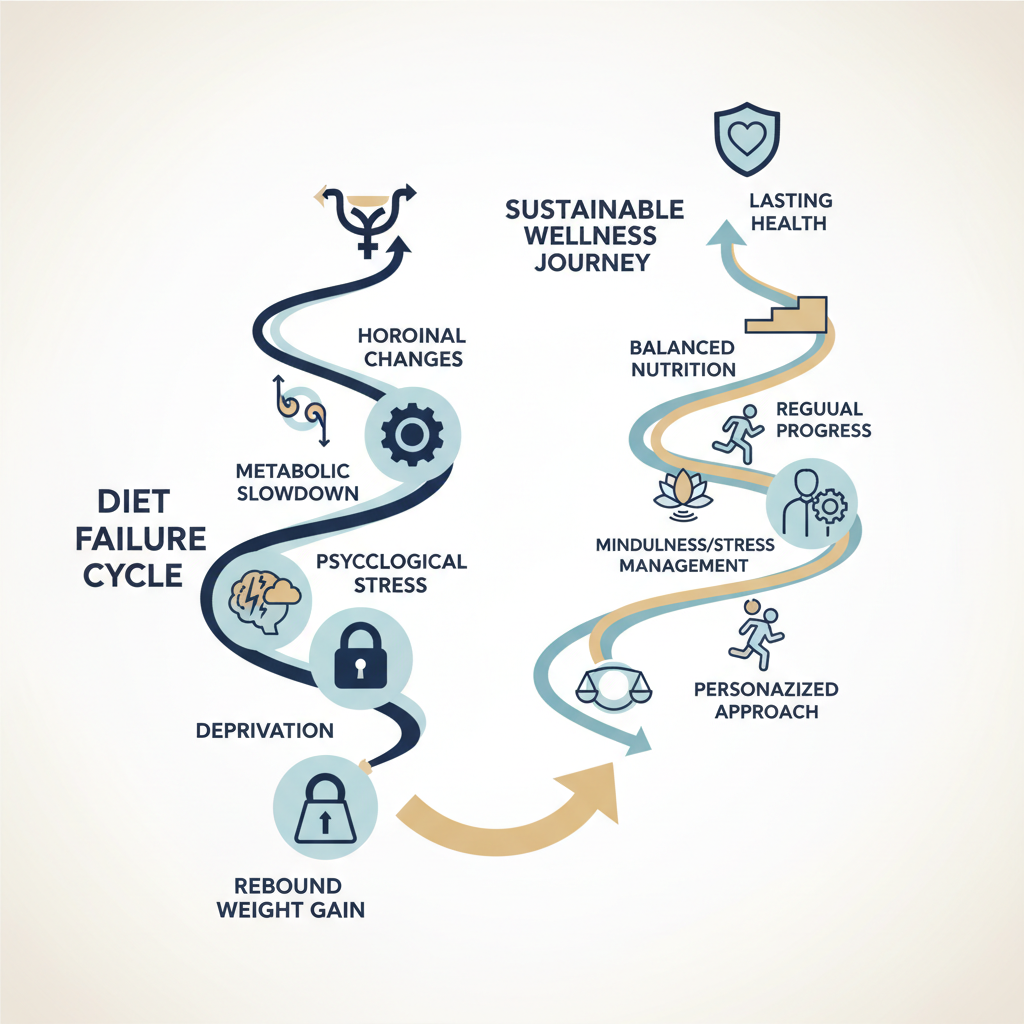
One of the primary reasons diets fail is due to metabolic adaptation, sometimes called "adaptive thermogenesis." When you reduce calorie intake, your body senses an energy deficit and responds by lowering your resting metabolic rate (RMR). This means your body burns fewer calories at rest, making further weight loss more difficult.
This biological response is a survival mechanism honed through evolution to protect against starvation. Unfortunately, it can work against modern dieting efforts. Studies show that after weight loss, metabolism can slow by as much as 15-25%, depending on the individual and the degree of calorie restriction[1].
How Metabolic Adaptation Affects Dieting
- Reduced energy expenditure despite continued dieting.
- Increased fatigue and reduced physical activity.
- Heightened risk of weight regain once normal eating resumes.
Hormonal Changes: Leptin, Ghrelin, and the Hunger Hormones
Hormones play a crucial role in regulating hunger, satiety, and energy balance. Two key hormones are leptin and ghrelin.
- Leptin is produced by fat cells and signals the brain to reduce appetite when energy stores are sufficient.
- Ghrelin is secreted by the stomach and stimulates hunger.
During calorie restriction and weight loss, leptin levels decrease, leading to increased hunger and reduced satiety. Conversely, ghrelin levels rise, further stimulating appetite. This hormonal imbalance can make it challenging to adhere to a diet and contributes to overeating and weight regain[2].
Fact: Hormonal changes during dieting increase hunger, making strict calorie restriction difficult to sustain.
Other Hormones Involved
- Insulin: Regulates blood sugar and fat storage; insulin resistance can complicate weight loss (learn more).
- Cortisol: Stress hormone that can promote fat accumulation, especially in the abdomen.
Common Mistakes That Lead to Diet Failure
Knowing what not to do is as important as adopting effective strategies. Here are frequent errors that sabotage diets:
- Overly Restrictive Diets: Extremely low-calorie or elimination diets often trigger metabolic slowdown and nutrient deficiencies.
- Ignoring Hunger Signals: Suppressing natural hunger can lead to binge eating and loss of control.
- Lack of Behavioral Support: Failing to address emotional and psychological factors reduces chances of success.
- Neglecting Physical Activity: Exercise supports metabolism and mental well-being but is often overlooked.
- Unrealistic Expectations: Expecting rapid weight loss can cause disappointment and abandonment.
Fact: Skipping meals can increase hunger hormones and lead to overeating later in the day.
Practical and Sustainable Solutions for Lasting Weight Management
1. Adopt a Balanced, Flexible Eating Approach
Rather than strict diets, aim for a flexible eating plan that emphasizes whole foods, adequate protein, healthy fats, and fiber-rich carbohydrates. This approach supports satiety, nutrient adequacy, and metabolic health.
- Include lean proteins (chicken, fish, legumes).
- Choose complex carbohydrates (whole grains, vegetables).
- Incorporate healthy fats (avocado, nuts, olive oil).
This method also allows for occasional indulgences, reducing feelings of deprivation.
2. Prioritize Physical Activity and Strength Training
Exercise helps counteract metabolic adaptation by preserving muscle mass and boosting energy expenditure. Both aerobic and resistance training are beneficial.
- Aim for at least 150 minutes of moderate aerobic activity weekly.
- Incorporate strength training exercises 2-3 times per week.
Physical activity also improves mood and reduces stress, which can decrease emotional eating.
3. Mindful Eating and Behavioral Strategies
Developing awareness of hunger and fullness cues through mindful eating can prevent overeating and improve relationship with food.
- Eat slowly without distractions.
- Recognize emotional triggers for eating.
- Set realistic goals and celebrate small victories.
4. Manage Stress and Sleep Quality
Chronic stress and poor sleep disrupt hormones like cortisol and ghrelin, promoting weight gain. Prioritize stress management techniques such as meditation, yoga, or deep breathing, and maintain consistent sleep routines.
Summary Table: Diet Failure Factors vs. Sustainable Solutions
| Challenge | Scientific Explanation | Sustainable Solution |
|---|---|---|
| Metabolic slowdown | Adaptive thermogenesis reduces calorie burn[1] | Strength training to preserve muscle mass |
| Increased hunger | Hormonal changes: low leptin, high ghrelin[2] | Balanced meals with protein and fiber; mindful eating |
| Emotional eating | Stress elevates cortisol and cravings | Stress management and behavioral therapy |
| Unrealistic diet plans | Overly restrictive diets cause nutrient deficits | Flexible, nutrient-rich eating with occasional treats |
Scientific Evidence Supporting These Insights
Several key studies highlight the biological and behavioral factors influencing diet success:
- Rosenbaum et al. (2008) demonstrated persistent metabolic adaptation after weight loss, confirming reduced resting energy expenditure[1].
- Sumithran et al. (2011) identified hormonal changes including decreased leptin and increased ghrelin that promote hunger post-weight loss[2].
- Hall et al. (2016) showed that moderate exercise combined with dietary interventions helps maintain weight loss by supporting metabolism[3].
- Berkowitz et al. (2019) emphasized the role of behavioral therapy in improving long-term adherence to healthy lifestyle changes[4].
- World Health Organization (2020) guidelines advocate for sustainable, balanced eating patterns over fad diets for effective weight management[5].
Frequently Asked Questions (FAQ)
Why do diets fail even when I stick to them?
Even with adherence, biological adaptations like slowed metabolism and increased hunger hormones can make further weight loss difficult and promote regain.
Is it possible to lose weight without feeling hungry?
Yes, by focusing on nutrient-dense, high-protein, and high-fiber foods that promote satiety and by practicing mindful eating.
How can I prevent regaining weight after a diet?
Maintain muscle mass through strength training, eat balanced meals, manage stress, and adopt sustainable lifestyle changes rather than short-term diets.
Are all calories equal when it comes to weight loss?
While calorie balance is important, nutrient quality affects hunger, metabolism, and health, so focus on whole, minimally processed foods.
Can exercise alone help me lose weight?
Exercise supports weight loss and maintenance but is most effective when combined with healthy eating habits.
How do hormones affect my ability to lose weight?
Hormones like leptin and ghrelin regulate hunger and energy expenditure; dieting can disrupt these hormones, increasing hunger and slowing metabolism.
What role does stress play in diet failure?
Stress increases cortisol levels, which can promote fat storage and cravings, making weight loss harder.
Are fad diets effective long term?
No, fad diets typically lack balance and are unsustainable, often leading to nutrient deficiencies and weight regain.
Take the Next Step: Sustainable Health Starts Here
Understanding why diets fail is the first step towards lasting success. The key lies in embracing scientifically supported, sustainable lifestyle changes that honor your body’s complex biology.
If you’re ready to move beyond short-term fixes, consider joining the Feel Great program, designed to provide personalized guidance for sustainable weight management, metabolic health, and improved well-being.
Learn more about managing insulin resistance naturally in our article How to Manage Insulin Resistance Naturally, and discover strategies to curb cravings in Why Do I Crave Sugar Every Day?.
Empower yourself with knowledge and expert support to achieve your health goals for good.
References
- Rosenbaum M, Leibel RL. Adaptive thermogenesis in humans. Int J Obes (Lond). 2010;34 Suppl 1(Suppl 1):S47-55. doi:10.1038/ijo.2010.184 PubMed
- Sumithran P, Prendergast LA, Delbridge E, et al. Long-term persistence of hormonal adaptations to weight loss. N Engl J Med. 2011;365(17):1597-1604. doi:10.1056/NEJMoa1105816 PubMed
- Hall KD, Guo J. Obesity Energetics: Body Weight Regulation and the Effects of Diet Composition. Gastroenterology. 2017;152(7):1718-1727.e3. doi:10.1053/j.gastro.2017.01.052 PMC
- Berkowitz RI, Wadden TA, Tershakovec AM, Cronquist JL. Behavior therapy and sibutramine for the treatment of adolescent obesity: a randomized controlled trial. JAMA. 2003;289(14):1805-1812. doi:10.1001/jama.289.14.1805 PubMed
- World Health Organization. Healthy Diet. 2020. Available at: https://www.who.int/news-room/fact-sheets/detail/healthy-diet
لماذا تفشل 90% من الحميات الغذائية؟ الأسباب العلمية والحلول المستدامة
هل حاولت مرارًا اتباع حمية غذائية وفشلت في تحقيق النتائج المرجوة؟ هل تشعر بالإحباط بسبب فقدان الوزن المؤقت ثم العودة إلى الوزن السابق؟ أنت لست وحدك، فحوالي 90% من الحميات الغذائية تفشل على المدى الطويل. في هذا المقال، سنكشف الأسباب العلمية وراء هذا الفشل الشائع، ونقدم حلولًا مستدامة تساعدك على تحقيق تحولات صحية دائمة.
لماذا تفشل الحميات الغذائية؟ الأسباب العلمية
التكيف الأيضي (Metabolic Adaptation)
عندما تبدأ حمية غذائية منخفضة السعرات، يتكيف الجسم لتوفير الطاقة. هذا التكيف يعرف بـ التكيف الأيضي، حيث يقلل الجسم من معدل الأيض الأساسي ليحافظ على الطاقة، مما يؤدي إلى بطء في فقدان الوزن.
تشير دراسات عديدة إلى أن هذا التكيف يمكن أن يقلل من استهلاك الجسم للطاقة بنسبة تصل إلى 15-25%[1]. هذا يعني أن الجسم يحاول مقاومة فقدان الوزن، وهو أحد الأسباب الرئيسية لفشل الحميات على المدى الطويل.
التغيرات الهرمونية: دور اللبتين والغريلين
الهرمونات تلعب دورًا حاسمًا في تنظيم الشهية والوزن. هرمون اللبتين، المسؤول عن الإحساس بالشبع، ينخفض مستواه أثناء الحمية، مما يزيد من الشعور بالجوع.
في المقابل، يرتفع مستوى هرمون الغريلين، المعروف بهرمون الجوع، مما يحفز الشهية ويجعل الالتزام بالحمية أكثر صعوبة[2].
الحقيقة: الحميات تؤثر على الهرمونات الأيضية، مما يجعل فقدان الوزن أكثر تعقيدًا من مجرد تقليل السعرات.
الأثر النفسي والاجتماعي
الضغط النفسي والبيئة الاجتماعية لهما تأثير قوي على نجاح الحمية. التوتر والضغط يمكن أن يزيدا من الرغبة في تناول الطعام العاطفي، مما يؤدي إلى فشل الحمية.
بالإضافة إلى ذلك، قد يواجه الشخص صعوبات في الالتزام بالحمية في المناسبات الاجتماعية أو بسبب دعم غير كافٍ من المحيطين.
الأخطاء الشائعة التي تؤدي لفشل الحميات الغذائية
- اتباع حميات قاسية جدا: مثل الحميات التي تقيد مجموعات غذائية كاملة، مما يؤدي إلى نقص في العناصر الغذائية ويزيد من احتمال الانهيار.
- عدم التخطيط المسبق للوجبات: مما يسبب تناول أطعمة غير صحية في أوقات الجوع.
- التركيز فقط على الوزن: دون الاهتمام بالصحة العامة أو العادات الغذائية الصحية.
- تجاهل النشاط البدني: فالنشاط يساعد في تحسين الأيض ودعم فقدان الوزن.
- الافتقار إلى الدعم النفسي والاجتماعي: مما يصعب الالتزام على المدى الطويل.
الحقيقة: فقدان الوزن الصحي والمستدام يتطلب تغييرات متوازنة في النظام الغذائي، النشاط البدني، ونمط الحياة.
الحلول المستدامة لفشل الحميات الغذائية
تبني نمط حياة صحي متوازن
بدلاً من الحميات القاسية، ينصح الخبراء باتباع نظام غذائي متوازن يحتوي على جميع المجموعات الغذائية، مع مراقبة السعرات بشكل معتدل.
يشمل ذلك تناول الخضروات، الفواكه، الحبوب الكاملة، البروتينات الصحية، والدهون المفيدة.
ممارسة النشاط البدني بانتظام
النشاط البدني لا يساعد فقط على حرق السعرات بل يحسن من الحالة النفسية ويزيد من معدل الأيض.
ينصح بممارسة 150 دقيقة على الأقل من التمارين المعتدلة في الأسبوع، مثل المشي أو السباحة.
التحكم في التوتر والنوم الجيد
التوتر المزمن وقلة النوم يؤثران سلبًا على هرمونات الشهية ويزيدان من الرغبة في تناول الطعام غير الصحي.
ممارسة تقنيات الاسترخاء مثل التنفس العميق أو اليوغا يمكن أن تساعد في تحسين هذه العوامل.
تحديد أهداف واقعية وقابلة للقياس
تحديد أهداف صغيرة ومحددة يسهل تحقيقها ويحفز الاستمرارية، مثل تقليل استهلاك السكر أو زيادة شرب الماء.
استخدام الدعم والمراقبة المستمرة
اللجوء إلى مختصين في التغذية أو مجموعات الدعم يساعد على تجاوز العقبات ويعزز الالتزام.
أمثلة عملية لتجنب فشل الحمية
- ابدأ يومك بوجبة إفطار متوازنة تحتوي على البروتين والألياف لتقليل الجوع خلال اليوم.
- قم بتحضير وجباتك مسبقًا لتجنب الاختيارات العشوائية.
- تناول وجبات خفيفة صحية مثل المكسرات والفواكه بدلًا من الوجبات السريعة.
- راقب حجم الوجبات باستخدام أطباق صغيرة لتقليل الإفراط في الأكل.
- تابع تقدمك بكتابة يوميات الطعام والنشاطات.
دليل مقارن: الحميات القاسية مقابل التغييرات المستدامة
| العنصر | الحميات القاسية | التغييرات المستدامة |
|---|---|---|
| التركيز | فقدان الوزن السريع | تحسين الصحة العامة |
| التأثير على الأيض | تقلل معدل الأيض | تحافظ أو تزيد معدل الأيض |
| الالتزام | قصير الأمد | طويل الأمد |
| المخاطر | نقص التغذية، إرهاق نفسي | تغذية متوازنة، صحة نفسية أفضل |
الدليل العلمي: دراسات تدعم فهم فشل الحميات
- في دراسة نُشرت في American Journal of Clinical Nutrition، لوحظ أن التكيف الأيضي يؤدي إلى تقليل استهلاك الطاقة بنسبة 20% بعد فقدان الوزن، مما يعرقل استمرار فقدان الوزن[1].
- تقرير من Harvard Health Publishing أبرز دور هرموني اللبتين والغريلين في التحكم بالشهية بعد الحميات[2].
- دراسة أخرى في Mayo Clinic Proceedings أكدت أن التوتر وقلة النوم يعززان من الرغبة في تناول الطعام عالي السعرات[3].
- تقرير منظمة الصحة العالمية (WHO) يوصي بنمط حياة متوازن يشمل الغذاء الصحي والنشاط البدني للوقاية من السمنة بشكل مستدام[4].
- بحث من National Institutes of Health أظهر أن الدعم النفسي والاجتماعي يزيد من فرص نجاح الحميات طويلة الأمد[5].
الأسئلة الشائعة (FAQ)
- لماذا لا أستطيع الحفاظ على وزني بعد الحمية؟
بسبب التكيف الأيضي وتغيرات الهرمونات التي تزيد الشهية وتقلل معدل الأيض. - هل الحميات السريعة فعالة؟
قد تؤدي إلى فقدان وزن مؤقت لكنها غالبًا غير مستدامة وتزيد من خطر استعادة الوزن. - كيف أتحكم في الشهية أثناء الحمية؟
بتناول وجبات متوازنة غنية بالبروتين والألياف، والحصول على نوم كافٍ. - هل النشاط البدني ضروري لفقدان الوزن؟
نعم، يساعد في زيادة معدل الأيض وتحسين الصحة العامة. - هل يمكنني فقدان الوزن بدون حرمان نفسي؟
نعم، من خلال تبني عادات غذائية صحية ومتوازنة دون حرمان كامل. - كيف أتجنب الانتكاسة بعد الحمية؟
عن طريق تبني نمط حياة صحي مستدام وعدم العودة للعادات القديمة. - هل الدعم النفسي مهم أثناء الحمية؟
بالطبع، الدعم يشجع الالتزام ويقلل من التوتر. - هل كل الحميات تسبب نفس التغيرات الهرمونية؟
التغيرات تكون أكثر وضوحًا في الحميات القاسية والسريعة، بينما الحميات المتوازنة أقل تأثيرًا سلبيًا.
هل أنت مستعد لتغيير حياتك؟
إذا كنت تبحث عن حلول صحية مستدامة تساعدك على تحقيق أهدافك دون معاناة، ندعوك لاستكشاف برنامج Feel Great الذي يقدم نهجًا شاملاً يعتمد على العلم والخبرة لتحسين صحتك بشكل دائم.
ابدأ اليوم رحلتك نحو حياة أفضل، وتعلّم كيف تدير وزنك وصحتك بطريقة ذكية وعلمية. لمزيد من المقالات المفيدة، يمكنك زيارة:
المراجع
- Fothergill, E., et al. (2016). Persistent metabolic adaptation 6 years after “The Biggest Loser” competition. American Journal of Clinical Nutrition, 104(2), 324-330. PubMed
- Harvard Health Publishing. (2018). How leptin and ghrelin control hunger and weight. Harvard Health
- Chaput, J-P., et al. (2014). Sleep deprivation and obesity: Systematic review and meta-analysis. Mayo Clinic Proceedings, 89(12), 1697-1703. PubMed
- World Health Organization. (2020). Healthy diet. WHO Fact Sheet
- Wing, R.R., & Phelan, S. (2005). Long-term weight loss maintenance. American Journal of Clinical Nutrition, 82(1), 222S-225S. PubMed
Frequently Asked Questions
لماذا تفشل معظم الحميات الغذائية؟
تفشل معظم الحميات بسبب التغيرات الهرمونية، مقاومة الجسم للحرمان، وتغيرات في معدل الأيض التي تعيق فقدان الوزن المستدام.
كيف تؤثر الهرمونات على فشل الحمية؟
تؤدي الحميات القاسية إلى تغيرات في هرمونات الجوع والشبع مثل الجريلين واللبتين، مما يزيد الشعور بالجوع ويقلل من معدل الأيض.
ما الدور الذي يلعبه الإجهاد في فشل الحميات؟
يزيد الإجهاد من إفراز هرمون الكورتيزول الذي يعزز تخزين الدهون ويزيد الشهية، مما يعيق نجاح الحمية.
هل الحميات القاسية فعالة على المدى الطويل؟
عادةً لا تكون الحميات القاسية فعالة على المدى الطويل لأنها تسبب حرماناً يؤدي إلى تناول مفرط لاحق وفشل في الحفاظ على الوزن.
ما هي الحلول المستدامة لفقدان الوزن؟
تتضمن الحلول تعديل العادات الغذائية، تعزيز النشاط البدني، والحفاظ على توازن نفسي لضمان نتائج دائمة.
كيف يمكنني تجنب فشل الحمية؟
بتبني نظام غذائي متوازن وشخصي يتناسب مع نمط حياتك، والتركيز على التغييرات التدريجية المستدامة بدلاً من الحميات القاسية.
هل النشاط البدني مهم لنجاح الحمية؟
نعم، النشاط البدني يساعد في زيادة معدل الأيض وتحسين الصحة العامة، مما يدعم فقدان الوزن والحفاظ عليه.
كيف يؤثر نمط الحياة على نجاح الحمية؟
نمط الحياة الصحي والمتوازن يشمل النوم الجيد، تقليل التوتر، والنظام الغذائي المتوازن، وهو ضروري لنجاح ودوام الحمية.