The True Cost of Chronic Disease vs. Prevention Investment
التكلفة الحقيقية للأمراض المزمنة مقابل الاستثمار في الوقاية
Author: Feras Alayed - Therapeutic & Behavioral Nutrition Specialist
Published:
Updated:
Category: business-opportunity
Reading Time: 8 minutes
- Chronic diseases are projected to cost the global economy tens of trillions over the coming decades, making prevention an economic imperative.
- Up to 90% of healthcare expenditures in developed nations are tied to treating preventable chronic conditions like type 2 diabetes and heart disease.
- Reactive healthcare models are failing; strategic health investments must prioritize metabolic health span over mere lifespan.
- The Unicity Feel Great system bridges the gap by offering a standardized, science-backed nutritional protocol that supports metabolic balance.
- Building a sustainable health-investing business model combines personal wellness transformation with recurring-revenue community leverage.
The Macroeconomic Reality of Chronic Disease
Modern society stands at a critical crossroads. While medical science has achieved remarkable feats in extending human longevity, our collective health span—the number of years lived free from chronic illness—has severely lagged. According to data from international health authorities and economic research groups, noncommunicable diseases (NCDs) such as cardiovascular disease, type 2 diabetes, and obesity now account for the vast majority of global deaths and healthcare expenditures.
The financial ledger is staggering. Analyses project that chronic illnesses could cost the global economy upwards of $47 trillion over a fifteen-year horizon, driven heavily by mounting direct medical expenses and severe losses in workforce productivity. In regions across North America, Europe, and the Gulf, medical inflation consistently outpaces general economic growth, with health insurance costs surging past 10% annually. Organizations and healthcare systems are discovering a sobering truth: waiting to treat a disease after it manifests is an economically bankrupt strategy.
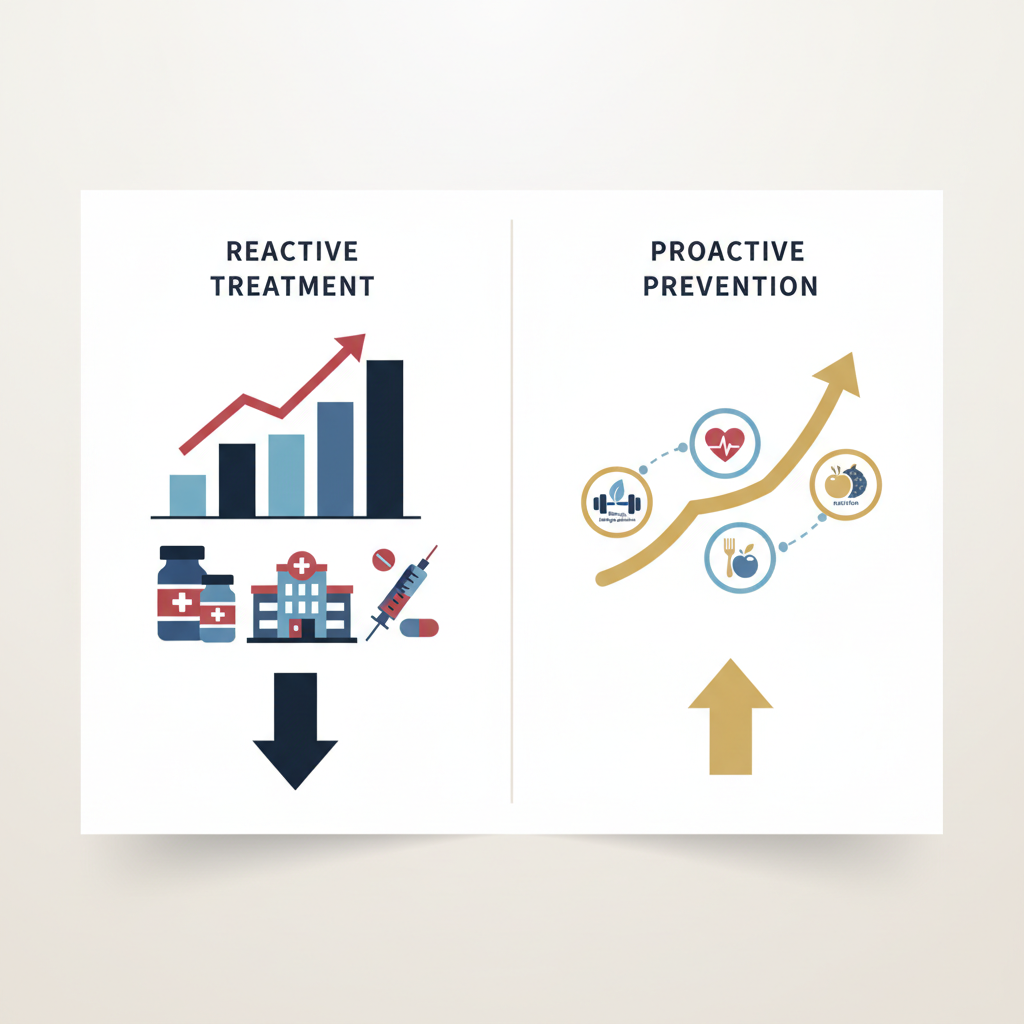
Reactive Medicine vs. Proactive Health Investment
For decades, traditional healthcare systems have operated on a reactive paradigm. Patients wait until clinical biomarkers cross dangerous thresholds—such as chronic hypertension, advanced insulin resistance, or lipid disorders—before interventions begin. This approach may support symptoms rather than root causes, locking individuals into lifelong pharmaceutical dependency while straining public and private balance sheets.
The concept of Health Investment reframes this paradigm entirely. Just as financial investors diversify portfolios to protect against market volatility, health investors allocate time, energy, and capital into early metabolic optimization. The World Health Organization (WHO) and economic think-tanks consistently demonstrate that modest investments in population-level prevention yield staggering returns on investment (ROI)—often saving trillions in avoided hospitalizations, pharmacological costs, and lost labor output.
Key Drivers of the Chronic Disease Crisis
- Metabolic Dysfunction: Insulin resistance acts as a silent precursor to a cascade of degenerative conditions, including cardiovascular complications and cognitive decline.
- Nutritional Deficit: Modern diets heavy in refined carbohydrates and ultra-processed foods promote chronic systemic inflammation.
- Sedentary Environments: Urbanized, desk-bound lifestyles have drastically reduced baseline daily physical energy expenditure.
- Systemic Under-Investment in Prevention: Less than a fraction of healthcare budgets is historically channeled into behavioral lifestyle modification and primary prevention.
The Economic Case for Lifestyle Interventions
Addressing the root causes of metabolic breakdown requires practical, scalable tools that everyday people can integrate into busy routines. Complex medical regimens frequently fail compliance metrics because they demand radical, unrealistic lifestyle overhauls. Sustainable prevention must align with human behavior.
When individuals take control of their metabolic health, the macroeconomic ripple effects are profound. Reduced absenteeism, enhanced cognitive performance, and lower lifetime medical utilization create immediate value for employers, insurers, and families. This structural shift forms the foundation of the modern wellness economy—a multi-trillion-dollar sector accelerating faster than traditional retail and finance.
How This Connects to Feel Great and Unicity
Bridging the gap between macro-level prevention economics and daily individual action requires a proven system. This is where the partnership with Unicity and the flagship **Feel Great** system enters the equation. Backed by over 25 years of corporate stability, more than $1 billion in global revenue, operations in over 60 countries, and products listed in the prestigious *Physicians' Desk Reference* (PDR), Unicity provides the institutional credibility required in serious health-investing ventures.
The Feel Great system centers around two core products—Unimate and Balance—anchored by the intermittent fasting-inspired 4-4-12 protocol (exploring methodologies similar to those discussed in our guides on intermittent fasting and 16:8 vs. OMAD comparisons).
Product Pillar 1: Unimate
A highly concentrated yerba mate extract rich in unique bioactive chlorogenic acids. Unimate supports mental focus, endurance, and mood elevation while helping curb hunger sensations, making it easier to sustain fasting windows without energy crashes.
Product Pillar 2: Balance
A patented blend of fibers, plant sterols, and essential vitamins designed to mitigate glucose spikes following meals. Balance promotes satiety, supports healthy cholesterol levels, and moderates carbohydrate absorption.
From a business architecture standpoint, the Unicity model eliminates traditional friction points. There is no heavy inventory to manage; products ship directly to global consumers. The recurring-revenue nature of consumable wellness creates predictable cash flow models for independent operators, mirroring resilient business dynamics explored in our analysis of recession-proof health ventures. Furthermore, addressing localized health epidemics—such as regional metabolic challenges examined in our features on obesity trends in Canada, diabetes statistics in Germany, and cardiovascular health in Saudi Arabia—positions health investors at the epicenter of high-demand global markets.
The Partnership Path: Building a Sustainable Health Business
True health investment is not about rapid recruitment or speculative sales; it is a professional discipline centered on education, mentorship, and systematic behavioral transformation. Below is an overview of what the partnership path entails for prospective collaborators.
Who This Path May Suit
- Professionals seeking a secondary, scalable stream of recurring revenue in the wellness sector.
- Coaches, nutritionists, and fitness advocates wanting to integrate science-backed metabolic tools into their client offerings.
- Individuals passionate about health literacy who enjoy mentoring others through sustainable lifestyle changes.
Who This Path May Not Suit
Those seeking passive wealth without active effort, consistent communication, or skill development will not find success here. Building a lasting health business requires patience, adherence to ethical standards, and a commitment to personal leadership.
Everyday Work and Expectations
The daily routine of a health investor involves guiding clients through the Feel Great protocol, hosting educational workshops on metabolic health, and building communities centered around wellness goals. Success depends heavily on consistency rather than high-pressure sales tactics.
30 / 60 / 90-Day Learning Framework
Days 1–30 (Immersion & Personal Results): Focus entirely on mastering the Feel Great protocol personally, understanding product science, and completing foundational compliance and communication training.
Days 31–60 (Skill Acquisition & Outreach): Begin introducing the system to a close network, learning how to handle client inquiries, and utilizing corporate-backed digital support tools.
Days 61–90 (Leadership & Community Scaling): Transition into active mentorship, organizing customer success tracking, and establishing sustainable daily operational routines.
هل الشراكة تناسبك؟
Explore whether the partnership path suits your long-term professional and financial goals. Financial outcomes depend entirely on individual effort, skill development, consistency, market conditions, and applicable company policies.
اكتشف هل الشراكة تناسبكPeople Also Ask
Q: What is the main driver of rising global healthcare expenditures?
A: The accumulation of chronic, preventable conditions—specifically type 2 diabetes, cardiovascular disease, and obesity—drives up to 90% of total healthcare spending in developed nations.
Q: How does the Feel Great system support metabolic health?
A: The system pairs Unimate (for mental clarity and metabolic energy) with Balance (for glycemic moderation) alongside the 4-4-12 fasting protocol to naturally stabilize blood sugar and insulin levels.
Q: Is prior healthcare or business experience required to become a health investor?
A: No prior medical background is necessary. Comprehensive training, mentorship, and standardized business frameworks are provided to support new partners through structured 30/60/90-day learning curves.
Q: Why is prevention investment more cost-effective than treatment?
A: Prevention stops disease progression before costly clinical interventions, hospitalizations, and long-term pharmacological treatments become mandatory.

Q: How do recurring revenue models function in wellness entrepreneurship?
A: Consumable wellness products naturally generate reorders as customers maintain their daily health routines, providing stable, predictable growth for independent operators.
Frequently Asked Questions
Q1: What financial commitments are required to start?
A: Startup costs are minimal compared to traditional brick-and-mortar businesses, focusing primarily on personal product acquisition and basic educational resource setup.
Q2: Can this business be built part-time?
A: Yes, many health investors begin part-time while maintaining traditional careers, gradually scaling their operations as their client base and leadership skills expand.
Q3: How are international markets managed?
A: Unicity handles global logistics, regulatory compliance, credit card processing, and direct-to-consumer shipping across more than 60 countries.
Q4: What scientific backing supports Unicity products?
A: Products feature in clinical studies, are backed by decades of research, and are prominently listed in the Physicians' Desk Reference (PDR) for medical professionals.
Q5: Are there any income guarantees?
A: No. Individual results vary. Success requires consistent effort, skill development, and adherence to company standards.
Income Disclaimer: Individual results vary. Success requires consistent effort, skill development, market conditions, and adherence to company policies. There are no guarantees of specific financial outcomes or earnings.
Health Disclaimer: The information provided in this article is for educational and informational purposes only and is not intended as medical advice. Always consult a qualified healthcare professional before beginning any new dietary supplement, fasting protocol, or lifestyle regimen.
References & Scientific Sources
This article references peer-reviewed research from PubMed, NIH, and leading medical journals. For specific studies cited, please contact us.
Related Research & Articles
- 📊 BMJ 2025: Intermittent Fasting - 99 Clinical Trials
- 📊 Unimate & GLP-1: BYU Study 2025
- 📊 Balance Reduces LDL 24.5% - Cleveland Clinic
- Best Program for Insulin Resistance (Partner Site)
💼 Ready to Start Your Health Business?
Join thousands of health entrepreneurs who are building sustainable income while helping others transform their health with the Feel Great system. Backed by 50+ clinical studies, listed in the PDR, and available in 60+ countries.
✅ No inventory required | Work from anywhere | 90-Day Money-Back Guarantee | Available in 60+ countries
- تشير التقديرات إلى أن الأمراض المزمنة ستكلف الاقتصاد العالمي عشرات التريليونات في العقود القادمة، مما يجعل الوقاية ضرورة اقتصادية ملحة.
- تترتبط ما يصل إلى 90% من الإنفاق الصحي في الدول المتقدمة بعلاج حالات مزمنة يمكنوقايتها مثل السكري من النوع الثاني وأمراض القلب.
- تفشل النماذج الصحية التفاعلية؛ ويجب أن تعطي الاستثمارات الصحية الاستراتيجية الأولوية للصحة الأيضية على حساب مجرد طول العمر.
- يسد نظام Feel Great من شركة Unicity الفجوة من خلال توفير بروتوكول غذائي قياسي مدعوم علمياً يدعم التوازن الأيضي.
- يجمع نموذج عمل المستثمر الصحي المستدام بين التحول الصحي الشخصي والاستفادة من المجتمعات ذات الإيرادات المتكررة.
الواقع الاقتصادي الكلي للأمراض المزمنة
يقف المجتمع الحديث عند مفترق طرق حاسم. فبينما حقق العلم الطبي إنجازات ملحوظة في إطالة عمر الإنسان، فإن فترة الصحة الجماعية -أي عدد السنوات التي يعيشها الإنسان خالية من الأمراض المزمنة- قد تخلفة بشكل ملحوظ. وفقاً لبيانات الهيئات الصحية الدولية ومجموعات البحث الاقتصادي، فإن الأمراض غير السارية (NCDs) مثل أمراض القلب والأوعية الدموية، والسكري من النوع الثاني، والسمنة تمثل الآن الغالبية العظمى من الوفيات العالمية والنفقات الصحية.
إن السجل المالي مذهل للغاية؛ تشير التقديرات إلى أن الأمراض المزمنة قد تكلف الاقتصاد العالمي ما يصل إلى 47 تريليون دولار على مدى خمسة عشر عاماً، مدفوعة بشكل كبير بارز بالتكاليف الطبية المباشرة المتصاعدة والخسائر الفודحة في إنتاجية القوى العاملة [1.1.1، 1.2.1]. وفي مناطق مختلفة من أمريكا الشمالية وأوروبا والخليج، يتجاوز التضخم الطبي باستمرار النمو الاقتصادي العام، حيث ترتفع تكاليف التأمين الصحي بأكثر من 10% سنوياً. وتكتشف المؤسسات والأنظمة الصحية حقيقة رصينة: إن انتظار علاج المرض بعد ظهوهر هو استراتيجية مفلسة اقتصادياً.
الطب التفاعلي مقابل الاستثمار الصحي الاستباقي
لعقود من الزمن، عملت الأنظمة الصحية التقليدية وفق نموذج تفاعلي. حيث ينتظر المرضى حتى تتجاوز المؤشرات الحيوية عتبات خطيرة -مثل ارتفاع ضغط الدم المزمن، أو مقاومة الأنسولين المتقدمة، أو اضطرابات الدهون- قبل أن تبدأ التدخلات. قد يدعم هذا النهج الأعراض بدلاً من الأسباب الجذريّة، مما يربط الأفراد بالاعتماد الدوائي مدى الحياة بينما يفرض ضغوطاً هائلة على الميزانيات العامة والخاصة.
يعيد مفهوم الاستثمار الصحي (Health Investment) صياغة هذا النموذج تماماً. وكما يقوم المستثمرون الماليون بتنويع محافظهم للحماية من تقلبات السوق، يخصص المستثمرون الصحيون الوقت والطاقة وراس المال للتحسين الأيضي المبكر. تثبت منظمة الصحة العالمية (WHO) ومراكز الفكر الاقتصادي باستمرار أن الاستثمارات المتواضعة في الوقاية على مستوى السكان تحقق عوائد مذهلة على الاستثمار - وغالباً ما توفر تريليونات الدولارات من دخول المستشفيات والتكاليف الدوائية وضياع العمل.
الدوافع الرئيسية لأزمة الأمراض المزمنة
الجدوى الاقتصادية للتدخلات في نمط الحياة
يتطلب معالجة الأسباب الجذرية للانهيار الأيضي أدوات عملية وقابلة للتطوير يمكن للأشخاص العاديين دمجها في روتينهم المزدحم. غالباً ما تفشل الأنظمة الطبية المعقدة في معايير الامتثال لأنها تتطلب تغييرات جذرية وغير واقعية في نمط الحياة. يجب أن تتوافق الوقاية المستدامة مع السلوك البشري.
عندما يتولى الأفراد السيطرة على صحتهم الأيضية، تكون الآثار الاقتصادية الكلية عميقة. فالحد من التغيب عن العمل، وتعزيز الأداء الإدراكي، وخفض استخدام الرعاية الطبية على مدى الحياة يخلق قيمة فورية لأصحاب العمل وشركات التأمين والعائلات. هذا التحول الهيكلي يشكل أساس اقتصاد Wellness الحديث - وهو قطاع متعدد التريليونات من الدولارات ينمو بشكل أسرع من قطاع التجزئة والتمويل التقليدي.
كيف يرتبط ذلك بنظام Feel Great وشركة Unicity
يتطلب ردم الهوة بين اقتصاديات الوقاية على مستوى الاقتصاد الكلي والعمل الفردي اليومي نظاماً مجرباً. وهنا يأتي دور الشراكة مع شركة Unicity ونظامها الرائد **Feel Great**. وبدعم من أكثر من 25 عاماً من الاستقرار المؤسسي، وأكثر من مليار دولار من الإيرادات العالمية، والعمل في أكثر من 60 دولة، والمنتجات المدرجة في مرجع الأطباء المرموق (PDR)، توفر Unicity المصداقية المؤسسية اللازمة لمشاريع الاستثمار الصحي الجادة.
يتمحور نظام Feel Great حول منتجين أساسيين - **Unimate** و **Balance** - يرتكزان على بروتوكول 4-4-12 المستوحى من الصيام المتقطع (والذي يستكشف منهجيات مشابهة لتلك التي ناقشناها في أدلتنا حول الصيام المتقطع والمقارنات بين 16:8 و OMAD).
ركيزة المنتج الأولى: Unimate
مستخلص عالي التركيز من عشب المتة الغني بأحماض الكلوروجينيك الحيوية الفريدة. يدعم Unimate التركيز الذهني، والقدرة على التحمل، وتحسين المزاج بينما يساعد في كبح مشاعر الجوع، مما يسهل الحفاظ على فترات الصيام دون انخفاض الطاقة.
ركيزة المنتج الثاني: Balance
مزيج براءة اختراع من الألياف، وستيرولات النبات، والفيتامينات الأساسية المصممة لتخفيف ارتفاع الجلوكوز بعد الوجبات. يعزز Balance الشعور بالشبع، ويدعم مستويات الكوليسترول الصحية، ويهدئ امتصاص الكربوهيدرات.
من منظور بنية الأعمال، يلغي نموذج Unicity نقاط الاحتكاك التقليدية. لا توجد مخزونات ثقيلة لإدارتها؛ بل تشحن المنتجات مباشرة للمستهلكين حول العالم. وتخلق طبيعة الإيرادات المتكررة لمنتجات العافية الاستهلاكية نماذج تدفق نقدي قابلة للتنبؤ للمشغلين المستقلين، مما يعكس ديناميات الأعمال المرنة التي تم استكشافها في تحليلنا لـ مشاريع الصحة المقاومة للركود. علاوة على ذلك، فإن معالجة الأوبئة الصحية المحلية -مثل التحديات الأيضية الإقليمية التي تم فحصها في ميزاتنا حول معدلات السمنة في كندا، وإحصاءات السكري في ألمانيا، وصحة القلب في المملكة العربية السعودية- تضع المستثمرين الصحيين في قلب الأسواق العالمية ذات الطلب المرتفع.
مسار الشراكة: بناء عمل صحي مستدام
الاستثمار الصحي الحقيقي لا يتعلق بالتوظيف السريع أو المبيعات المضاربة؛ بل هو انضباط مهني يتمحور حول التعليم، والإرشاد، وتحول السلوك المنهجي. فيما يلي نظرة عامة على ما يشتمل عليه مسار الشراكة للمتعاونين المحتملين.
من قد يناسبهم هذا المسار
من قد لا يناسبهم هذا المسار
العمل اليومي والتوقعات
يتضمن الروتين اليومي للمستثمر الصحي توجيه العملاء عبر بروتوكول Feel Great، واستضافة ورش عمل تعليمية حول الصحة الأيضية، وبناء مجتمعات تركز على الأهداف الصحية. يعتمد النجاح بشكل كبير على الاستقرار بدلاً من تكتيكات المبيعات عالية الضغط.
إطار التعلم لـ 30 / 60 / 90 يوماً
الأيام 1-30 (الاندماج والنتائج الشخصية): التركيز بالكامل على إتقان بروتوكول Feel Great شخصياً، وفهم علم المنتجات، وإتمام التدريب التأسيسي على الامتثال والتواصل.
الأيام 31-60 (اكتساب المهارات والتواصل): البدء في تقديم النظام إلى شبكة مقربة، وتعلم كيفية التعامل مع استفسارات العملاء، واستخدام أدوات الدعم الرقمي المدعومة من الشركة.
الأيام 61-90 (القيادة وتوسيع المجتمعات): الانتقال إلى الإرشاد النشط، وتنظيم تتبع نجاح العملاء، وإرساء روتين تشغيلي يومي مستدام.
هل الشراكة تناسبك؟
اكتشف ما إذا كان مسار الشراكة يناسب أهدافك المهنية والمالية على المدى الطويل. تعتمد النتائج المالية كلياً على الجهد الفردي، وتطوير المهارات، والاستقرار، وظروف السوق، وسياسات الشركة المعمول بها.
اكتشف هل الشراكة تناسبكالأسئلة الشائعة
س: ما هو العامل الرئيسي لارتفاع نفقات الرعاية الصحية العالمية؟
ج: إن تراكم الحالات المزمنة القابلة للوقاية - وتحديداً السكري من النوع الثاني، وأمراض القلب والأوعية الدموية، والسمنة - يدفع ما يصل إلى 90% من إجمالي الإنفاق الصحي في الدول المتقدمة.
س: كيف يدعم نظام Feel Great الصحة الأيضية؟
ج: يجمع النظام بين Unimate (للوضوح الذهني والطاقة الأيضية) و Balance (للاعتدال السكري) إلى جانب بروتوكول الصيام 4-4-12 لتثبيت مستويات السكر في الدم والأنسولين بشكل طبيعي.
س: هل يلزم وجود خبرة طبية أو تجارية سابقة لتصبح مستثمراً صحياً؟
ج: لا توجد حاجة لخلفية طبية مسبقة. يتم توفير تدريب شامل وإرشاد وأطر عمل تجارية قياسية لدعم الشركاء الجدد من خلال منحنى تعليمي منظم لـ 30/60/90 يوماً.
س: لماذا يعتبر الاستثمار في الوقاية أكثر فعالية من حيث التكلفة مقارنة بالعلاج؟
ج: توقف الوقاية تطور المرض قبل أن تصبح التدخلات السريرية المكلفة، والإدخال إلى المستشفيات، والعلاجات الدوائية طويلة الأجل إلزامية.
س: كيف تعمل نماذج الإيرادات المتكررة في ريادة أعمال العافية؟
ج: تولد منتجات العافية الاستهلاكية طلبيات متكررة بطبيعتها حيث يحافظ العملاء على روتينهم الصحي اليومي، مما يوفر نمواً مستقراً ومتوقعاً للمشغلين المستقلين.
أسئلة وأجوبة إضافية
س1: ما هي الالتزامات المالية المطلوبة للبدء؟
ج: تكاليف البدء ضئيلة مقارنة بالأعمال التجارية التقليدية، حيث تركز أساساً على اقتناء المنتجات الشخصية وإعداد الموارد التعليمية الأساسية.
س2: هل يمكن بناء هذا العمل بدوام جزئي؟
ج: نعم، يبدأ العديد من المستثمرين الصحيين بدوام جزئي مع الحفاظ على وظائفهم التقليدية، ثم يتوسعون تدريجياً في عملياتهم مع نمو قاعدة عملائهم ومهاراتهم القيادية.
س3: كيف تتم إدارة الأسواق الدولية؟
ج: تتولى شركة Unicity اللوجستيات العالمية، والامتثال التنظيمي، ومعالجة بطاقات الائتمان، والشحن المباشر للمستهلك في أكثر من 60 دولة.
س4: ما هو الدعم العلمي الذي يدعم منتجات Unicity؟
ج: تظهر المنتجات في دراسات سريرية، وهي مدعومة بعقود من الأبحاث، ومدرجة بشكل بارز في مرجع الأطباء (PDR) للمهنيين الطبيين.
س5: هل توجد أي ضمانات للدخل؟
ج: لا. تتباين النتائج الفردية. يتطلب النجاح جهداً متسقاً، وتطوير المهارات، والالتزام بمعايير الشركة.
إخلاء المسؤولية عن الدخل: تتباين النتائج الفردية. يتطلب النجاح جهداً متسقاً، وتطوير المهارات، وظروف السوق، والالتزام بسياسات الشركة. لا توجد ضمانات لنتائج مالية محددة أو أرباح.
إخلاء المسؤولية الصحية: المعلومات الواردة في هذه المقالة هي لأغراض تعليمية وإعلامية فقط وليست مقصودة كاستشارة طبية. استشر دائماً أخصائي رعاية صحية مؤهلاً قبل البدء في أي مكمل غذائي جديد أو بروتوكول صيام أو نظام لنمط الحياة.
المراجع والمصادر العلمية
يستند هذا المقال إلى أبحاث محكّمة من PubMed وNIH والمجلات الطبية الرائدة. للاطلاع على الدراسات المحددة، يرجى التواصل معنا.
إخلاء مسؤولية طبية: هذا المحتوى تعليمي ومعلوماتي فقط ولا يُعد بديلاً عن الاستشارة الطبية المتخصصة أو التشخيص أو العلاج. استشر طبيبك دائماً قبل إجراء أي تغييرات في نظامك الغذائي أو نمط حياتك.
الأسئلة الشائعة
كيف يعمل نظام Feel Great؟
يجمع نظام Feel Great بين يونيماتي (يربا ماتي لتحفيز GLP-1 والتحكم بالشهية) وبالانس (مصفوفة ألياف لتنظيم الجلوكوز) ونمط الصيام المتقطع 4-4-12 لدعم الصحة الأيضية طبيعياً.
هل الصيام المتقطع آمن؟
أبحاث من مجلة BMJ (99 تجربة سريرية، 6,582 مشاركاً) تؤكد أن الصيام المتقطع آمن وفعّال لإدارة الوزن وتحسين صحة القلب.
متى سأرى النتائج؟
تظهر الدراسات السريرية تحسناً ملموساً في المؤشرات الأيضية خلال 8-12 أسبوعاً من الاستخدام المنتظم. النتائج تختلف من شخص لآخر.
أبحاث ومقالات ذات صلة
- 📊 BMJ 2025: الصيام المتقطع - 99 تجربة سريرية
- 📊 يونيماتي و GLP-1: دراسة BYU 2025
- 📊 بالانس يخفض LDL بنسبة 24.5% - كليفلاند كلينك
- أفضل برنامج لمقاومة الأنسولين (الموقع الشريك)
💼 هل أنت مستعد لبدء عملك الصحي؟
انضم لآلاف رواد الأعمال الصحيين الذين يبنون دخلاً مستداماً بينما يساعدون الآخرين على تحويل صحتهم مع نظام Feel Great. مدعوم بأكثر من 50 دراسة سريرية، مدرج في مرجع الأطباء (PDR)، ومتوفر في أكثر من 60 دولة.
✅ لا حاجة لمخزون | اعمل من أي مكان | ضمان استرداد 90 يوم | متوفر في أكثر من 60 دولة
Frequently Asked Questions
What is the main driver of rising global healthcare expenditures?
The accumulation of chronic, preventable conditions—specifically type 2 diabetes, cardiovascular disease, and obesity—drives up to 90% of total healthcare spending in developed nations.
How does the Feel Great system support metabolic health?
The system pairs Unimate for mental clarity and metabolic energy with Balance for glycemic moderation, alongside the 4-4-12 fasting protocol to naturally stabilize blood sugar and insulin levels.
Is prior healthcare or business experience required to become a health investor?
No prior medical background is necessary. Comprehensive training, mentorship, and standardized business frameworks are provided to support new partners through structured 30/60/90-day learning curves.
Why is prevention investment more cost-effective than treatment?
Prevention stops disease progression before costly clinical interventions, hospitalizations, and long-term pharmacological treatments become mandatory.
How do recurring revenue models function in wellness entrepreneurship?
Consumable wellness products naturally generate reorders as customers maintain their daily health routines, providing stable, predictable growth for independent operators.