The Complete Intermittent Fasting Guide for Beginners: Everything You Need to Know in 2026
دليل الصيام المتقطع الشامل للمبتدئين: كل ما تحتاج معرفته في 2026
Author: Feras Alayed - Therapeutic & Behavioral Nutrition Specialist
Published:
Updated:
Category: intermittent-fasting
Reading Time: 8 minutes
The Complete Intermittent Fasting Guide for Beginners: Everything You Need to Know in 2026
You want a sustainable way to lose fat, steady your energy, and regain control of your hunger—without obsessively counting calories all day. Yet with so many “fasting” methods online, it’s hard to know where to start, what’s safe, and what actually works.
This beginner’s guide explains intermittent fasting (IF) in plain English. You’ll learn how it works in your body, which schedule to try first, what to eat, what to avoid, how to train, and how to troubleshoot common roadblocks. We also break down myths with the latest evidence and point you to trusted sources so you can make informed decisions.
Intermittent fasting isn’t a magic trick. It’s a simple structure that helps you eat in a way that improves insulin sensitivity, supports fat-burning, and can be easier to sustain than constant calorie counting.[1][11]
If you’re managing insulin resistance, cravings, or stubborn weight, consider this your roadmap—backed by research and written for real life. For deeper dives on related topics, see our guides on the best program for insulin resistance, why you’re always hungry, and daily sugar cravings.
What Is Intermittent Fasting?
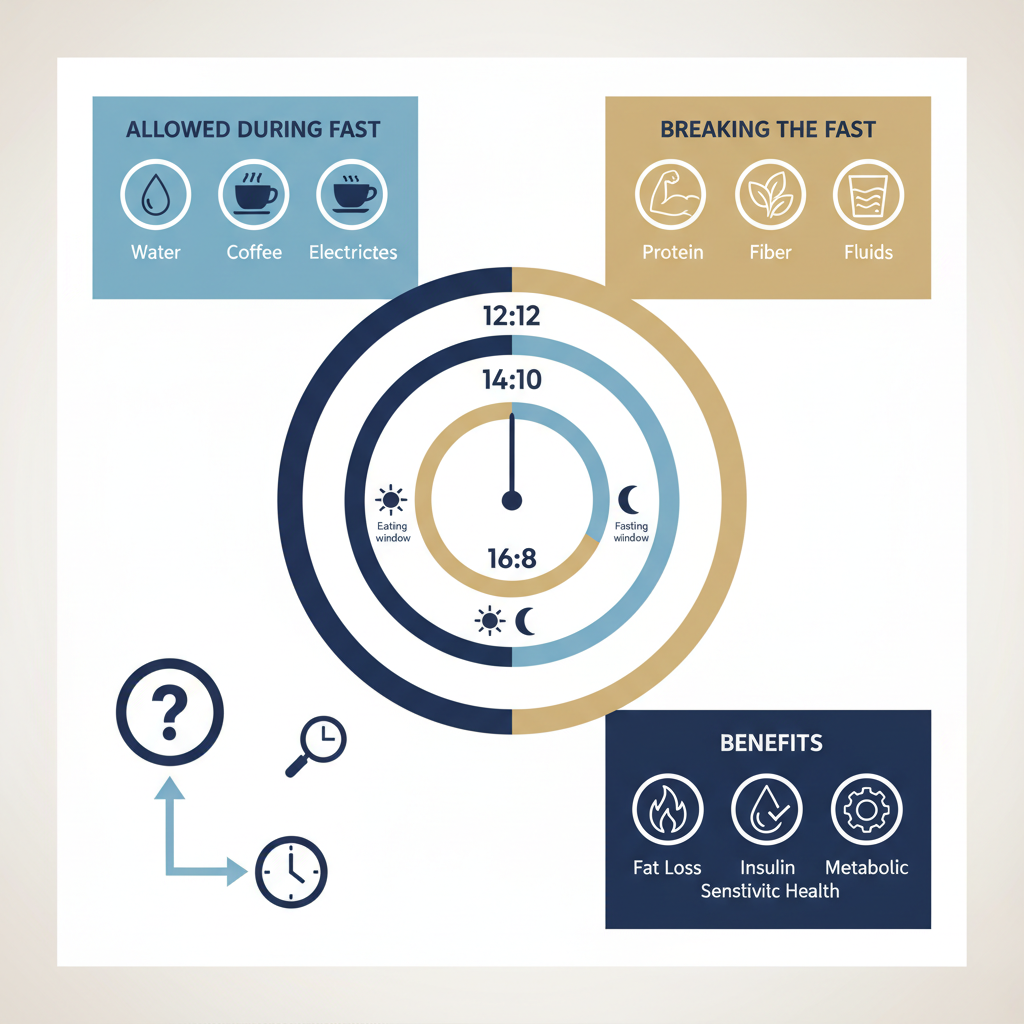
Intermittent fasting is the practice of cycling between periods of eating and not eating. It doesn’t tell you exactly what to eat; it sets when you eat. Common approaches include a daily eating window (time-restricted eating, like 12/12 or 16/8) or periodic fasting days (such as the 5:2 plan).
How Intermittent Fasting Works in Your Body
After meals, your insulin rises to help shuttle glucose into cells. Between meals—especially if you leave enough time—insulin falls. Lower insulin signals your body to tap stored glycogen and, later, body fat for energy. This metabolic flexibility is key to fat loss and steady energy.[1][11]
- Glycogen to fat shift: Once liver glycogen begins to deplete, the body increases lipolysis (fat breakdown) and fat oxidation. This can take 8–12 hours depending on prior meals and activity.[1]
- Insulin sensitivity: Compressing eating windows may improve insulin sensitivity and blood sugar control, particularly with earlier-in-the-day meals aligned to circadian rhythms.[2][10][11]
- Cellular housekeeping: Longer fasting periods can increase autophagy signaling (cellular cleanup) in animal and preliminary human data, though human outcomes are still being studied.[1][11]
Fact: In controlled studies, intermittent fasting is at least as effective as continuous calorie restriction for weight loss and can preserve metabolic rate when protein and resistance training are adequate.[4][5]
Is Intermittent Fasting Right for You?
Most healthy adults can try gentle time-restricted eating (like 12/12 or 14/10). However, some people should not fast or should only do so under medical supervision:
- Pregnant or breastfeeding women
- People under 18 or with a history of eating disorders
- Individuals who are underweight, frail, or recovering from surgery or illness
- People with diabetes on insulin or sulfonylureas, or on medications that must be taken with food—speak with your clinician first[7][8][9]
Popular Intermittent Fasting Methods Compared
| Method | Fasting:Eating | Best For | Pros | Watch Outs |
|---|---|---|---|---|
| 12/12 (Beginner) | 12 hrs fast : 12 hrs eat | New to IF, improving sleep rhythm | Gentle, circadian-friendly, widely sustainable | Modest fat loss unless food quality improves |
| 14/10 | 14 hrs fast : 10 hrs eat | Gradual metabolic reset | Often reduces snacking, easy social fit | Plan protein to avoid under-eating |
| 16/8 | 16 hrs fast : 8 hrs eat | Fat loss, insulin resistance support | Strong evidence base, simple rules[3][11] | Initial hunger, coffee reliance, late-night snacking risk |
| Early TRE | e.g., 8 a.m.–4 p.m. eating | Prediabetes, metabolic health | Improves insulin sensitivity, BP, oxidative stress markers[2] | Hard socially; dinner becomes early |
| 5:2 | 5 days normal, 2 low-cal (500–600 kcal) | People preferring weekly structure | Flexible, evidence for weight loss[4][5] | “Low-cal” days can feel tough without planning |
| 24-hr (Eat-Stop-Eat) | 1–2 non-consecutive 24-hr fasts | Plateaus, experienced fasters | Efficient weekly calorie reduction | Greater hunger, requires electrolytes and supervision if on meds |
For most beginners, a daily window (12/12 → 14/10 → 16/8) is the simplest, most sustainable path. If your goal is insulin sensitivity, consider earlier eating windows when possible.[2][10] Explore more basics on our intermittent fasting topic hub.
A Two-Week Beginner Plan (With Real-Life Examples)
Week 1: Gentle On-Ramp (12/12 to 14/10)
- Pick a consistent dinner cutoff, e.g., finish by 7 p.m.
- Eat a protein-rich breakfast 12 hours later (7 a.m.). Aim for 25–35 g protein.
- Choose whole-food meals with fiber and healthy fats to stabilize appetite.
- Hydrate: 2–3 liters of water/day, add electrolytes if needed.
- After 3–4 days, push breakfast 30–60 minutes later if you feel good.
Sample day (14/10):
- 7:30 a.m. Hydration + black coffee or unsweetened tea
- 9:00 a.m. First meal: Greek yogurt, berries, chia; or eggs, avocado, spinach
- 1:00 p.m. Lunch: Salmon bowl with quinoa, olive oil, mixed greens
- 5:30 p.m. Dinner: Grilled chicken, roasted vegetables, olive oil, small baked potato
- 6:30–7:00 p.m. Kitchen closed
Week 2: Slide Toward 16/8 (If It Feels Good)
If your energy is stable and sleep is solid, shift your first meal later by another 30–60 minutes. Many beginners land at 10 a.m.–6 p.m. or 11 a.m.–7 p.m. for an 8-hour eating window.
Training days: If you lift in the morning, consider a small protein intake post-workout and then resume the fasting window once you’re consistent, or schedule workouts inside your eating window. Adequate protein (0.7–1.0 g per pound of goal body weight per day) supports muscle maintenance while losing fat.[3][11]
Fact: Meal quality still matters. Whole foods with protein, fiber, and healthy fats improve satiety and metabolic health. Ultra-processed foods can derail fasting by provoking overeating and cravings.[6][7][8]
What to Eat During the Eating Window
- Protein: Eggs, fish, poultry, Greek yogurt, tofu, legumes. Target 25–35 g per meal.
- Fiber-rich plants: Non-starchy vegetables, beans, lentils, berries.
- Healthy fats: Olive oil, avocado, nuts, seeds—help satiety and glycemic control.
- Smart carbs: Whole grains (quinoa, brown rice, oats), starchy veg (potato, squash) scaled to activity.
- Fluids: Water, mineral water, unsweetened tea/coffee. Consider 1–2 g sodium/day if lightheaded (from broth or electrolytes), particularly during longer fasts or hot climates.
New to metabolic health? See our resources on insulin resistance and sustainable health for context on cravings and blood sugar stability.
What Breaks a Fast?
- Typically allowed: Water, black coffee, plain tea, electrolytes without sugar (trace calories are usually okay for most goals).
- Likely to break a fast metabolically: Sugar, milk/cream, juice, alcohol, protein or amino acids.
- Gray zone: Non-nutritive sweeteners; some people experience appetite spikes—test your response.
Common Mistakes (And How to Fix Them)
1) Undereating Protein
Cutting the eating window without planning protein can cause fatigue, muscle loss, and rebound hunger. Build your plate around protein first.
2) Late-Night Windows
Eating late impairs glucose control and may blunt fasting benefits. Where possible, move your window earlier.[2][10]
3) All-or-Nothing Thinking
A perfect plan you can’t follow is worse than a good plan you can. Social dinner? Slide the window, enjoy mindfully, resume the next day. Consistency beats rigidity.
4) Ignoring Sleep and Stress
Short sleep raises hunger hormones and cravings. Protect 7–9 hours of sleep and add brief stress-management rituals.
5) Dehydration and Electrolyte Gaps
Headaches, dizziness, and cravings often reflect hydration or sodium shortfalls. Sip water throughout the morning and add electrolytes if needed.
Fact: Ghrelin (the “hunger hormone”) pulses in waves. Many people notice hunger peaks pass within 10–20 minutes with hydration or a brisk walk.[7][8][11]
Exercise, Sleep, and Hormones: Making IF Work With Your Life
Training on IF
- Resistance training: Aim for 2–4 sessions/week. If training fasted, prioritize a protein-rich meal within your window to support recovery.[3]
- Endurance: Low-to-moderate cardio can pair well with fasts. For high-intensity work, many perform better closer to meals.
- Electrolytes: During morning fasted workouts, consider electrolytes without sugar to reduce dizziness or fatigue.
Sleep and Circadian Rhythm
Earlier eating windows may align better with natural insulin rhythms, improving blood sugar and blood pressure markers.[2][10] Avoid large meals within 2–3 hours of bedtime to protect sleep quality.
Earlier time-restricted eating improved insulin sensitivity, blood pressure, and oxidative stress markers in men with prediabetes—even without weight loss.[2]
Women and IF
Most healthy women do well with gentle time-restricted eating. If you notice cycle irregularities, low energy, or sleep disruptions, shorten the fasting window (e.g., 12/12 to 14/10) and emphasize nutrient density. During high-training phases or luteal phase (pre-period), some prefer slightly earlier meals and extra protein and carbs to support recovery. Anyone with a history of disordered eating should avoid fasting and seek clinician guidance.
Real-World Troubleshooting
“I’m starving at 10 a.m.”
- Check dinner composition: add 20–30 g protein and fiber-rich veg.
- Hydrate early; add electrolytes.
- Walk for 5–10 minutes; wait 15 minutes before deciding.
- If persistent, use 14/10 instead of 16/8 for two weeks.
“I binge when my window opens.”
- Pre-plan your first meal; include 30 g protein and fiber.
- Start with a piece of fruit or salad before the main course to slow eating pace.
- Avoid opening your window with ultra-processed snacks.
“My energy dips in the afternoon.”
- Eat enough at lunch: protein + slow carbs + healthy fat.
- Shift caffeine earlier; avoid late-afternoon stimulants.
- Ensure 7–9 hours sleep; add a brief walk after lunch.
If you’re struggling with cravings or post-meal crashes, explore our resources on sugar cravings and managing insulin resistance naturally.
Scientific Evidence at a Glance
Weight, Metabolic Health, and Timing
- NEJM Review (2019): Summarized human and animal studies showing IF can improve insulin sensitivity, blood pressure, resting heart rate, and markers of inflammation; it may promote fat loss and metabolic flexibility.[1]
- Early Time-Restricted Feeding (2018): In men with prediabetes, eating within 6 hours earlier in the day improved insulin sensitivity, blood pressure, and oxidative stress—without weight loss changes.[2]
- Body Composition (2015): Intermittent fasting can reduce fat mass while preserving fat-free mass when paired with adequate protein and resistance training.[3]
- Intermittent vs Continuous Restriction (2013): Intermittent energy restriction produced weight loss comparable to continuous restriction, with potential insulin sensitivity benefits in some groups.[4]
- Time-Restricted Eating (2019): A 10-hour eating window over 12 weeks led to weight loss and reduced blood pressure in adults with metabolic syndrome features.[10]
Importantly, success hinges on fundamentals: food quality, sufficient protein, movement, sleep, and consistency. IF is a tool—effective when used well, unhelpful when used to justify poor diet quality.[7][8][11]
FAQs: Intermittent Fasting for Beginners
1) How long does it take to see results?
Many notice steadier energy and less grazing within 1–2 weeks. Measurable fat loss typically appears by 3–6 weeks when food quality and protein are adequate. Markers like fasting glucose or blood pressure may improve within weeks, especially with earlier windows.[2][10]
2) Does coffee break a fast?
Black coffee or plain tea is generally compatible with fasting for most goals. Adding sugar, milk, cream, or protein will likely break a fast. If sweeteners trigger cravings, consider avoiding them during the fast.
3) Can I build muscle on intermittent fasting?
Yes, with enough total daily protein (about 0.7–1.0 g per pound of goal body weight), progressive resistance training, and adequate calories during the eating window. Many lifters schedule training inside the window and split protein across 2–3 meals.[3][11]
4) Is intermittent fasting safe for women?
Many women do well with 12/12 to 16/8. If you experience cycle changes, low energy, or sleep issues, shorten the fasting window and ensure you’re eating enough. Avoid IF if pregnant, breastfeeding, underweight, or with a history of disordered eating; consult a clinician if unsure.[7][8][9]
5) Will intermittent fasting slow my metabolism?
Not when done properly. Studies show similar weight loss to continuous restriction without unique metabolic harm. Maintaining protein intake, strength training, and sleep helps preserve resting metabolic rate.[3][4][5]
6) Who should not try intermittent fasting?
People who are pregnant or breastfeeding, under 18, underweight, with eating disorders, or taking medications that require food (or that can cause hypoglycemia, like insulin or sulfonylureas) should avoid or only fast under medical supervision.[7][8][9]
7) What should I eat to break my fast?
Start with protein, fiber, and healthy fats: for example, eggs with vegetables and avocado; Greek yogurt with berries and chia; or a chicken-and-quinoa bowl with olive oil. Avoid opening with ultra-processed snacks that spike hunger.
8) Is 16/8 better than 14/10?
“Better” depends on what you can sustain. 16/8 may offer stronger appetite control and metabolic benefits for some, but 14/10 is often easier and still effective—especially when combined with high-quality meals and activity.[3][11]
Putting It All Together: A Beginner’s Checklist
- Pick an on-ramp: 12/12 for 3–7 days, then 14/10; consider 16/8 if you feel good.
- Align earlier when practical; finish dinner 2–3 hours before bed.[2][10]
- Center meals on protein + fiber + healthy fats; limit ultra-processed foods.
- Strength train 2–4x/week; walk daily; hydrate and add electrolytes as needed.
- Sleep 7–9 hours; manage stress; be flexible with social life.
- Track how you feel: energy, sleep, cravings, performance—not just the scale.
For personalized context—especially if you’re dealing with insulin resistance, prediabetes, or fatty liver—review our guides on insulin resistance, diabetes, and fatty liver.
Call to Action: Learn, Test, and Personalize
Intermittent fasting is a framework, not a finish line. Start gently, observe how your body responds, and adjust. If you want structured guidance that connects fasting with protein targets, food quality, movement, sleep, and behavioral habits, explore our educational resources and take the next step.
- Start with our quick self-check to map your goals and readiness: Take the free assessment.
- See how fasting fits within our sustainable approach in the Feel Great program and related curriculum: Learn more.
When used thoughtfully, IF can be a powerful, sustainable part of a healthier lifestyle—one that helps you feel great, not just lose weight.
References
- Mattson MP, Longo VD, Harvie M. Effects of intermittent fasting on health, aging, and disease. New England Journal of Medicine. 2019;381(26):2541-2551. PubMed PMID: 31881139.[1]
- Sutton EF, et al. Early time-restricted feeding improves insulin sensitivity, blood pressure, and oxidative stress even without weight loss in men with prediabetes. Cell Metabolism. 2018;27(6):1212–1221.e3. PubMed PMID: 29754952.[2]
- Tinsley GM, La Bounty PM. Effects of intermittent fasting on body composition and clinical health markers in humans. Journal of the International Society of Sports Nutrition. 2015;12:47. PubMed PMID: 26384657.[3]
- Harvie MN, et al. The effects of intermittent or continuous energy restriction on weight loss and metabolic disease risk markers: a randomized trial in young overweight women. British Journal of Nutrition. 2013;110(8):1534–1547. PubMed PMID: 23444495.[4]
- Varady KA. Intermittent versus daily calorie restriction: which diet regimen is more effective for weight loss? Obesity Reviews. 2011;12(7):e593–e601. PubMed PMID: 21210942.[5]
- World Health Organization. Obesity and overweight: Key facts. Updated 2024. https://www.who.int/news-room/fact-sheets/detail/obesity-and-overweight.[6]
- Harvard Health Publishing. Intermittent fasting: The science of going without. Updated 2024. https://www.health.harvard.edu/blog/intermittent-fasting-surprising-update-2018062914156.[7]
- Mayo Clinic Staff. Intermittent fasting: What are the benefits? Updated 2024. https://www.mayoclinic.org/healthy-lifestyle/nutrition-and-healthy-eating/expert-answers/intermittent-fasting/faq-20441303.[8]
- National Institute on Aging (NIH). Calorie Restriction and Fasting Diets: What Do We Know? Updated 2022. https://www.nia.nih.gov/health/calorie-restriction-and-fasting-diets-what-do-we-know.[9]
- Wilkinson MJ, et al. Ten-hour time-restricted eating reduces weight, blood pressure, and atherogenic lipids in patients with metabolic syndrome. Cell Metabolism. 2019;30(1):92–104.e5. PubMed PMID: 31488366.[10]
- Patterson RE, Sears DD. Metabolic effects of intermittent fasting. Annual Review of Nutrition. 2017;37:371–393. PubMed PMID: 28661504.[11]
مقدمة تشويقية: لماذا يبدو الصيام المتقطع بسيطاً… لكنه يربك المبتدئين؟
ربما سمعت أن الصيام المتقطع يساعد على إنقاص الوزن وتحسين حساسية الأنسولين وزيادة الصفاء الذهني. لكن عندما تبدأ، تواجه أسئلة فورية: ماذا أشرب؟ متى آكل؟ هل أتدرب أثناء الصيام؟ وكيف أتجنب الجوع والصداع؟
هذا الدليل الشامل للمبتدئين في 2026 يضعك على الطريق الصحيح بخطوات عملية مدعومة بالأدلة. ستفهم كيف يعمل الصيام المتقطع علمياً، وكيف تختار البروتوكول الأنسب لحياتك، وخطة تنفيذ واضحة لمدة 14 يوماً، والأخطاء الشائعة وكيف تتجنبها، مع إجابات مفصلة لأكثر الأسئلة تكراراً. ستجد أيضاً روابط داخلية لمقالات وموضوعات متخصصة تُكمل الصورة، لتبني أسلوباً صحياً مستداماً لا يعتمد على الإرهاق أو الحرمان.
خلاصة سريعة: الصيام المتقطع ليس حمية سريعة؛ إنه إطار زمني للأكل يعيد ضبط هرمونات الجوع والتمثيل الغذائي، بشرط تطبيقه بذكاء، وتغذية الجسم جيداً خلال نافذة الطعام، والنوم والحركة بشكل كافٍ.[6][7]
ما هو الصيام المتقطع وكيف يعمل؟
الصيام المتقطع هو تنظيم وقت تناول الطعام، لا أصنافه. الفكرة الأساسية: إطالة الفترة دون طعام لخفض الأنسولين، وتسهيل استخدام الدهون المخزّنة كمصدر للطاقة. عند تراجع الأنسولين وزيادة حساسية الجسم له، تتحسن مرونة الأيض، ويخف الجوع المتذبذب، وتتحسن مؤشرات مثل سكر الدم وضغط الدم لدى البعض.[1][4][5]
الآلية العلمية المبسطة
- الأنسولين وحرق الدهون: كل وجبة ترفع الأنسولين بدرجات متفاوتة. في فترات الصيام ينخفض الأنسولين، ما يفتح باب حرق الدهون المخزنة ويقلل تقلبات السكر.[1][5]
- AMPK وmTOR: مسارات خلوية تتناوب بين البناء والترميم. تقليص نافذة الأكل يحفّز آليات الإصلاح الخلوي والالتئام الأيضي، بينما يوفر الأكل الجيد خلال النافذة مواد البناء الضرورية (بروتين، فيتامينات، معادن).[4][5]
- هرمونات الشهية: يتأقلم هرمون الجوع (الغريلين) مع المواعيد الجديدة للأكل خلال 2–4 أسابيع، فينخفض الجوع “الاعتيادي” عند نفس ساعات الصيام بعد فترة التكيّف.[4][6]
مراحل الصيام عبر الزمن
- 0–4 ساعات بعد الوجبة: طور ما بعد الأكل، الأنسولين أعلى، يخزن الجسم الطاقة.
- 4–12 ساعة: انخفاض تدريجي في الأنسولين، بدء استخدام مخازن الجليكوجين.
- 12–18 ساعة: زيادة الاعتماد على الدهون كمصدر للطاقة، بداية تحسّن أوضح في حساسية الأنسولين لدى البعض.[1]
- 18–24 ساعة: توسّع في حرق الدهون، ويُحتمل تفعيل عمليات إصلاح خلوية أعمق لدى أشخاص محددين، خاصة عند تكرار النمط بشكل منتظم.[4][5]
من قد يستفيد أكثر؟ من يعانون من مقاومة الأنسولين، زيادة الدهون الحشوية، أو تذبذب طاقة شديد بعد الوجبات. لكن الملاءمة فردية، وتحتاج التدرج والمراقبة الذكية للعلامات الحيوية والسلوك الغذائي.
كيف تختار بروتوكول الصيام المناسب للمبتدئين؟
ابدأ بالأبسط ثم تقدّم تدريجياً وفق إحساسك بالطاقة والنوم والجوع. الهدف الأول: انتظام توقيت الأكل قبل التشدد في طول النافذة.
مقارنة أشهر البروتوكولات للمبتدئين
| البروتوكول | النافذة اليومية المقترحة | لمن يناسب؟ | ملاحظات عملية |
|---|---|---|---|
| 12:12 | 12 ساعة أكل / 12 صيام | نقطة انطلاق آمنة لمعظم المبتدئين | ثبّت مواعيد الوجبات؛ مناسب لتعديل نمط السهر |
| 14:10 | 10 ساعات أكل / 14 صيام | لمن يريد خطوة إضافية مع سهولة الالتزام | مثالي لغداء متأخر وعشاء مبكّر |
| 16:8 | 8 ساعات أكل / 16 صيام | شائع، فعّال للكثيرين إذا دُعم بتغذية كافية | الأدلة مختلطة على خسارة الوزن دون تحسين العادات الغذائية داخل النافذة[2][3] |
| نافذة 6–4 ساعات | 6 أو 4 ساعات أكل يومياً | متوسط إلى متقدم وتحت إشراف ذاتي واعٍ | قد يحقّق نتائج أسرع، لكنه يتطلّب جودة طعام أعلى وتخطيطاً دقيقاً[3] |
| 5:2 أسبوعي | 5 أيام عادية + 2 يوم سعرات منخفضة | لمن يفضّل مرونة الأيام على تقييد اليوم | يتطلب حساباً تقريبياً للسعرات في يومي الخفض |
خطة عملية لمدة 14 يوماً: بدء ذكي بدون معاناة
الأسبوع الأول (الأيام 1–7): تثبيت الإيقاع
- اختر نافذة 12:12 أو 14:10: مثلاً من 8 صباحاً إلى 6 مساءً (10 ساعات)، أو 8 صباحاً إلى 8 مساءً (12 ساعة) كبداية.
- ثبّت مواعيد الوجبات: وجبتان رئيسيتان + وجبة خفيفة اختيارية داخل النافذة. لا تؤخر العشاء لما بعد ساعتين من موعد نومك.
- رطوبة وإلكتروليت: ماء + رشة ملح بحر خفيفة إذا شعرت بصداع أو دوار، خاصة في الأيام الحارة، ما لم يُمنع طبيّاً. استشر طبيبك إن كان لديك ارتفاع ضغط دم أو أمراض كلوية.[7][8]
- قهوة وشاي: مسموحان بدون سكر أثناء الصيام. أضف الحليب داخل النافذة فقط.[6][7]
- حركة خفيفة يومية: 20–30 دقيقة مشي بعد الوجبات لتحسين سكر الدم.
الأسبوع الثاني (الأيام 8–14): ترقية محسوبة
- إذا كان الأسبوع الأول مريحاً، انتقل إلى 16:8 يومين إلى ثلاثة في الأسبوع، وابق على 14:10 في البقية.
- أولوية البروتين: استهدف 1.2–1.6 غرام بروتين/كغ من وزن الجسم يومياً داخل النافذة للحفاظ على الكتلة العضلية.[6][7]
- ألياف عالية: 25–35 غرام يومياً من خضار ورقية، بقوليات، وبذور؛ تدعم الشبع وصحة الأمعاء.[8]
- تتبّع بسيط: دوّن ساعات الأكل، جودة النوم، طاقة اليوم التالي. اضبط النافذة حسب استجابتك.
جدول يوم نموذجي (16:8)
- 7:00 صباحاً: ماء + قهوة سوداء (صيام)
- 12:00 ظهراً: الوجبة 1 — سلطة كبيرة + بروتين (سمك/دجاج/عدس) + كربوهيدرات ذكية (كينوا/بطاطا حلوة)
- 3:30 عصراً: وجبة خفيفة — زبادي يوناني كامل الدسم + توت + بذور شيا
- 7:30 مساءً: الوجبة 2 — خضار مطهوة + بروتين + دهون صحية (زيت زيتون/أفوكادو)
- 8:00 مساءً: بدء الصيام حتى اليوم التالي
ماذا تأكل داخل نافذة الطعام؟ "لوحة الوجبة الذكية"
الصيام المتقطع لا يعوّض سوء الاختيارات الغذائية. أفضل النتائج تأتي من دمج الأكل المتوازن مع التوقيت الذكي.
مكوّنات الوجبة المتوازنة
- بروتين كامل: 25–40 غ/وجبة (بيض، أسماك، دجاج، بقوليات لمرونة نباتية) لدعم العضلات والشبع.
- خضار غير نشوية: نصف الطبق على الأقل (بروكلي، سبانخ، خيار، ورقيات).
- كربوهيدرات ذكية: حبوب كاملة أو بطاطا حلوة أو بقوليات وفق النشاط؛ كميات معتدلة.
- دهون صحية: زيت زيتون بكر، مكسرات، أفوكادو لتحسين الشبع والالتهاب.
- ألياف ومخمّرات: مخللات طبيعية/كيمتشي/زبادي لتحسين صحة الأمعاء والسكريات بعد الوجبات.
أمثلة سريعة
- طبق البحر المتوسط: سلمون مشوي + سلطة فتوش معدّلة بدون خبز + عدس دافئ بزيت الزيتون.
- نباتي متوازن: حمص بالطحينة + تبولة برغل كامل + خضار ورقية مع بذور كتان.
- فطور داخل النافذة: عجة خضار + زبادي كامل الدسم + شريحتا خبز كامل الحبة.
الأخطاء الشائعة وكيف تتجنبها
- الأكل غير الكافي داخل النافذة: يؤدي لنوبات نهم لاحقة. الحل: زِد البروتين والألياف ودهوناً صحية معتدلة.
- المبالغة في التدريب أثناء الصيام: خصوصاً تمارين عالية الشدة للمبتدئ. ابدأ بالمشي وتمارين مقاومة خفيفة، وجرّب المقاومة بعد الوجبة الأولى.
- إهمال النوم: قلة النوم ترفع هرمونات الجوع وتقلل الالتزام. ثبّت ميعاد النوم قبل تشديد الصيام.
- مشروبات “خالية” بنَكهات وسكريات خفيّة: قد ترفع الأنسولين وتخرّب الصيام. تمسّك بالماء والقهوة/الشاي بدون إضافات.
- عقلية الكلّ أو اللاشيء: نافذة واحدة “منحرفة” لا تفسد التقدّم. عُد للمسار في الوجبة التالية.
من يجب أن يتجنب الصيام المتقطع أو يستشير الطبيب أولاً؟
هذه التوصيات تعليمية ولا تغني عن استشارة طبية شخصية. تحدث مع مقدم الرعاية الصحية إذا كنت:
- حاملاً أو مرضعة.
- مصاباً بداء السكري من النوع الأول، أو النوع الثاني مع أدوية قد تسبب هبوط السكر (كالأنسولين أو سلفونيل يوريا).
- لديك تاريخ من اضطرابات الأكل أو نقص وزن واضح.
- تحت سن 18 أو فوق 75 مع أمراض مزمنة متعددة.
- تعاني أمراض كلوية/قلبية متقدمة، أو تتناول أدوية تتطلب الطعام.
- عامل نوبات/عمل ليلي؛ الأفضل تخصيص خطة توقيت ملائمة لإيقاعك اليومي.
الصيام المتقطع، مقاومة الأنسولين وإنقاص الوزن
أحد أسباب عدم الاستجابة للحميات التقليدية هو مقاومة الأنسولين، حيث يحتاج الجسم مستويات أعلى من الأنسولين لخفض سكر الدم. الصيام المتقطع، خصوصاً تناول الطعام مبكراً في اليوم، قد يحسّن الحساسية للأنسولين وضغط الدم لدى بعض الأشخاص قبل السكري.[1] لمتابعة فهم أعمق، طالع: أفضل برنامج عملي لمقاومة الأنسولين وكيف تدير مقاومة الأنسولين طبيعياً.
لكن الأدلة ليست أحادية الاتجاه. تجربة بشرية على نافذة 16:8 لم تُظهر فارقاً كبيراً في الوزن مقابل التحكم دون تحسين جودة الطعام أو النشاط، بل شهدت فئة فرعية فقداناً أكبر في الكتلة الخالية من الدهون.[2] الخلاصة: التوقيت + جودة الطعام + الحركة + النوم = النتيجة الأمثل.
إذا وجدت نفسك جائعاً باستمرار أو تتوق للسكر داخل النافذة، فربما تعاني اختلالات في توازن البروتين/الألياف أو في نومك. ابدأ بتحليل الأسباب عبر: لماذا أشعر بالجوع دا��ماً؟ ولماذا أشتاق للسكر كل يوم؟
التوفيق مع نمط حياة مستدام
اجتماعات، سفر، ومناسبات
- قاعدة 80/20: التزم بنمطك 80% من الأيام، واسمح بمرونة ذكية 20% دون إفراط.
- ساعات سفر: اختر وجبة بروتينية مُشبعة قبل الإقلاع، وأبقِ صيامك بسيطاً بالماء والقهوة السوداء.
- فعالية المشي بعد الوجبات: 10–20 دقيقة تقلل من ارتفاع السكر اللاحق للوجبة.
اعتبارات خاصة بالنساء
- ابدئي بـ 12:12 أو 14:10. في النصف الثاني من الدورة قد ترتفع الشهية؛ وسّعي النافذة قليلاً عند الحاجة.
- أولويتك: بروتين كافٍ، دهون صحية، نوم جيد. إذا أثر الصيام على المزاج/الدورة، خفّفي الشدة ثم أعيدي التدرج.
العمر والتدريب
- فوق 55 عاماً: ركّز على البروتين (حتى 1.6 غ/كغ) وتمارين مقاومة للحفاظ على العضلات.[6][7]
- المتدرّبون: جرّب تمارين المقاومة بعد أول وجبة لتحقيق أداء وتعافٍ أفضل، أو أضف وجبة بروتينية خفيفة داخل النافذة قبل التمرين.
الأدلة العلمية المختصرة: ماذا تقول الدراسات؟
- تناول مبكّر محدود الوقت (eTRF): في رجال زائدين الوزن قبل السكري، حسّن eTRF حساسية الأنسولين وضغط الدم حتى دون فقدان وزن كبير.[1]
- 16:8 في تجربة عشوائية: نافذة 16:8 على مدى 12 أسبوعاً لم تتفوق بوضوح على التحكم في الوزن، مع ملاحظة فقدان كتلة خالية من الدهون في فئة فرعية — تأكيد على أهمية جودة الغذاء والمقاومة.[2]
- نافذة 4–6 ساعات: خفّضت الوزن وضغط الدم لدى بدناء في 8 أسابيع دون تعقيد حسابي، مع التزام جيد لدى المشاركين.[3]
- مراجعات منهجية: تُظهر أن الصيام المتقطع يحسّن عدة مؤشرات أيضية لدى البالغين، مع ضرورة التخصيص والتحكّم بجودة الطعام.[4][5]
الأسئلة الشائعة (FAQ)
1) هل الصيام المتقطع مناسب للنساء؟
نعم للكثيرات، عند البدء بنوافذ معتدلة (12:12 أو 14:10) ومراقبة النوم والطاقة والدورة. إذا واجهتِ اضطراباً في الدورة/المزاج، خفّفي الشدة وأولوي البروتين والنوم. استشيري طبيبك إذا لديك حالات هرمونية خاصة.
2) هل القهوة، المُحلّيات، الفيتامينات تكسر الصيام؟
القهوة والشاي بدون سكر لا تُعدّ قاطعاً عملياً للصيام الأيضي. المحلّيات السعرية والحليب والمرطبات المُحلاة تُدرج داخل النافذة. الفيتامينات الخالية من السعرات لا تُؤثّر عادة، لكن المُكمّلات ذات السعرات/الأحماض الأمينية تُؤخذ داخل النافذة.[6][7]
3) أعاني صداعاً في الأيام الأولى، ماذا أفعل؟
غالباً بسبب الجفاف أو نقص الصوديوم أو انسحاب الكافيين. زد الماء، وأضف رشة ملح بحر خفيفة إذا لا مانع طبياً، واحرص على نوم كافٍ. خفّف الشدة لبضعة أيام ثم عاود الزيادة تدريجياً.[7][8]
4) هل أحتاج لحساب السعرات؟
لا بشكل صارم للمبتدئين. ركّز على “ماذا ومتى” أولاً: بروتين كافٍ، خضار وفيرة، دهون صحية، وتوقيت ثابت. إن لم تتحسن المؤشرات خلال 4–6 أسابيع، راجع أحجام الحصص أو استعن باختصاصي تغذية.
5) هل يمكن بناء العضلات مع الصيام المتقطع؟
نعم، بشرط كفاية البروتين والسعرات داخل النافذة وتمارين مقاومة منتظمة. ضع التمرين بعد الوجبة الأولى أو داخل النافذة لتحقيق تعافٍ أمثل.[6]
6) هل الصيام يبطئ الأيض؟
لا لدى معظم البالغين عند تطبيقه باعتدال مع تغذية كافية. ما يبطئ الأيض عادة هو تقييد السعرات القاسي المزمن دون بروتين كافٍ أو راحة كافية.[5][6]
7) رائحة فم غير محببة أثناء الصيام — طبيعي؟
قد تحدث مع انتقال الجسم لاستخدام الدهون. الحل: ماء كافٍ، مضمضة، أعشاب منعشة، وتوازن وجباتك عند الفتح. إن استمرت بشدة، خفّف الشدة مؤقتاً.
8) كيف أوفّق الصيام المتقطع مع رمضان؟
طبيعة رمضان تعني نافذة ليلية. ركّز على وجبتين متوازنتين (إفطار وسحور)، بروتين كافٍ وترطيب، ومشي خفيف بعد الإفطار. تجنّب الإفراط في الحلويات والدهون المقلية.
الربط بموضوعات مكملة
- لخطة متكاملة طويلة الأمد: الصحة المستدامة
- تعمّق أكثر في آليات وأساليب الصيام: موضوعات الصيام المتقطع
- لمن يشتكي من جوع متكرر: لماذا أشعر بالجوع دائماً؟
- للرغبة في السكر: لماذا أشتاق للسكر كل يوم؟
- برنامج متخصص لدعم حساسية الأنسولين: أفضل برنامج لمقاومة الأنسولين
نداء أخير للتعلّم الذكي والعمل المتدرّج
الصيام المتقطع للمبتدئين ينجح عندما تختار نافذة واقعية، وتغذّي جسمك جيداً، وتنام بما يكفي، وتتحرّك يومياً. ابدأ بخطوة صغيرة اليوم، وامنح نفسك 14 يوماً من التدرج الواعي.
هل تريد خريطة طريق تعليمية عملية تُكمل هذا الدليل وتساعدك على بناء عادات مستدامة؟ تعرّف على إطار برنامج Feel Great، وابدأ بتقييم ذاتي سريع عبر الاختبارات لاختيار نقطة البداية الأنسب لك.
المراجع
- Sutton EF, Beyl R, Early KS, et al. Early Time-Restricted Feeding Improves Insulin Sensitivity, Blood Pressure, and Oxidative Stress Even Without Weight Loss in Men with Prediabetes. Cell Metabolism. 2018;27(6):1212-1221. PubMed: https://pubmed.ncbi.nlm.nih.gov/29754952/
- Lowe DA, Wu N, Rohdin-Bibby L, et al. Effects of Time-Restricted Eating on Weight Loss in Adults: A Randomized Clinical Trial. JAMA. 2020;324(16):1671-1679. PubMed: https://pubmed.ncbi.nlm.nih.gov/32986097/
- Cienfuegos S, Gabel K, Kalam F, et al. Effects of 4- and 6-h Time-Restricted Eating on Weight and Cardiometabolic Health: A Randomized Controlled Trial in Adults with Obesity. Cell Metabolism. 2020;32(3):366-378. PubMed: https://pubmed.ncbi.nlm.nih.gov/32877691/
- Tinsley GM, La Bounty PM. Effects of Intermittent Fasting on Body Composition and Clinical Health Markers in Humans. Nutrition Reviews. 2015;73(10):661-674. PubMed: https://pubmed.ncbi.nlm.nih.gov/26374764/
- Varady KA, Cienfuegos S, Ezpeleta M, Gabel K. Clinical Applications of Intermittent Fasting for Weight Loss and Type 2 Diabetes. Annual Review of Nutrition. 2021;41:333-361. PubMed: https://pubmed.ncbi.nlm.nih.gov/34062037/
- Harvard Health Publishing. Intermittent fasting: Surprising update. https://www.health.harvard.edu/blog/intermittent-fasting-surprising-update-202301262873
- Mayo Clinic. Intermittent fasting: What are the benefits? https://www.mayoclinic.org/healthy-lifestyle/nutrition-and-healthy-eating/expert-answers/intermittent-fasting/faq-20441303
- World Health Organization (WHO). Healthy diet. https://www.who.int/news-room/fact-sheets/detail/healthy-diet
- National Institute of Diabetes and Digestive and Kidney Diseases (NIDDK), NIH. Insulin Resistance & Prediabetes. https://www.niddk.nih.gov/health-information/diabetes/overview/what-is-diabetes/prediabetes-insulin-resistance
Frequently Asked Questions
ما هو الصيام المتقطع؟
الصيام المتقطع هو نمط أكل يبدّل بين فترات صيام وتناول طعام ضمن نافذة زمنية محددة. لا يحدّد ماذا تأكل، بل متى تأكل، وقد يساعد على التحكم بالسعرات وتحسين حساسية الإنسولين ودعم الصحة الأيضية عند تطبيقه بشكل مناسب.
ما أفضل جدول للمبتدئين؟
ابدأ بالأبسط: 12:12 لبضعة أيام، ثم انتقل إلى 14:10، وبعدها 16:8 إذا شعرت بالارتياح. اختر جدولًا يناسب عملك ونومك وعلاقاتك الاجتماعية، وابقَ مرنًا بالتبديل عند السفر أو المناسبات.
ماذا أستطيع شربه أثناء الصيام؟
الماء، القهوة السوداء، الشاي غير المحلّى، والمشروبات الخالية من السعرات. قد تفيد الإلكتروليتات الخالية من السكر (الصوديوم/المغنيسيوم) لتقليل الصداع والدوخة. تجنّب السعرات، والسكريات الكحولية بكميات كبيرة، ومنكّهات قد تثير الجوع.
كيف أكسر الصيام دون إزعاج هضمي؟
ابدأ بوجبة صغيرة تحتوي بروتينًا سهل الهضم وأليافًا وسوائل (مثل زبادي عالي البروتين مع توت وبذور)، وانتظر 20–30 دقيقة قبل وجبتك الأساسية. تجنّب الكميات الكبيرة والدهون/السكريات العالية مباشرةً بعد الصيام.
هل الصيام المتقطع مناسب للنساء؟
قد تحتاج بعض النساء لنوافذ أوسع (مثل 12:12 أو 14:10) وتجنّب الصيام الشديد خاصة عند ارتفاع الضغط البدني أو خلال بعض مراحل الدورة. الحوامل والمرضعات ينبغي أن يتجنّبن الصيام إلا بتوصية طبية.
من يجب أن يتجنّب الصيام أو يستشير طبيبه أولًا؟
من لديهم تاريخ اضطرابات الأكل، نقص وزن حاد، سكري مع أدوية خافِضة للسكر أو إنسولين، أمراض مزمنة غير مستقرة، المراهقون، الحوامل والمرضعات. استشر مختصًا قبل البدء أو عند استخدام أدوية تتأثر بتوقيت الطعام.
كيف أتعامل مع الجوع والدوخة في البداية؟
ارفع الترطيب، أضف رشة ملح أو إلكتروليتات، اشغل نفسك بنشاط خفيف، ركّز على بروتين وألياف ودهون صحية في نافذة الأكل، وحسّن النوم. إن ظهرت أعراض شديدة أو مستمرة، خفّف الجدول أو أوقف الصيام واستشر مختصًا.
هل يمكنني ممارسة الرياضة أثناء الصيام؟
نعم، الأنشطة الخفيفة إلى المتوسطة غالبًا مناسبة. ضع تمارين القوة قرب نافذة الأكل لدعم الأداء والتعافي، واعتبر تزويدًا بسيطًا إذا كان التمرين طويلًا أو عالي الشدة. استمع لجسمك وعدّل التوقيت حسب الاستجابة.