How to Improve Insulin Resistance in 30 Days: A Science-Based Action Plan
كيف تحسّن مقاومة الأنسولين خلال 30 يوماً: خطة عملية مبنية على العلم
Author: Feras Alayed - Therapeutic & Behavioral Nutrition Specialist
Published:
Updated:
Category: insulin-resistance
Reading Time: 8 minutes
How to Improve Insulin Resistance in 30 Days: A Science-Based Action Plan
Feeling stuck in a cycle of fatigue, cravings, and stubborn belly fat? You are not alone. Insulin resistance underpins many of these symptoms and increases long-term risk for type 2 diabetes, fatty liver, and heart disease. The encouraging news: targeted changes to diet, activity, sleep, and stress can measurably improve insulin sensitivity in as little as 30 days—often with better energy and steadier appetite along the way.[1][2][3][4]
This guide translates the latest research into a focused month-long plan. You will learn the physiology behind insulin resistance, the behaviors that move the needle fastest, common missteps to avoid, and exactly what to do—week by week. Each section includes practical examples, expert tips, and links to deeper resources such as what insulin resistance is, time-restricted eating, and gut health.
Key stat: A structured lifestyle program cut progression to type 2 diabetes by 58% in high-risk adults—outperforming metformin—by targeting diet, physical activity, and weight loss.[5]
Insulin Resistance, Explained
What is insulin resistance?
Insulin is a hormone that shuttles glucose from your bloodstream into cells for energy or storage. In insulin resistance, muscle, liver, and fat cells respond sluggishly to insulin’s signal, so your pancreas produces more insulin to maintain normal blood sugar. Over time, this compensatory hyperinsulinemia can contribute to weight gain, high triglycerides, elevated blood pressure, and eventually prediabetes or type 2 diabetes.[2][3][4]
The story does not stop at sugar. Visceral fat around the abdomen releases inflammatory signals that further dull insulin’s effect, while the liver overproduces glucose overnight. Meanwhile, inactive muscle soaks up less glucose throughout the day. The good news: these drivers are modifiable with daily habits.[2][4]
How do you know if you have it?
Talk with your clinician about testing if you have central weight gain, fatigue after meals, cravings for carbs, elevated triglycerides, or a family history of diabetes. Screening typically includes fasting glucose, A1C, and lipid panel; waist circumference and blood pressure provide additional clues. Indices like HOMA-IR (from fasting glucose and insulin) can quantify insulin resistance in clinical settings.[2][4]
Explore more on causes, signs, and diagnostics here: Insulin Resistance 101 and Diabetes.
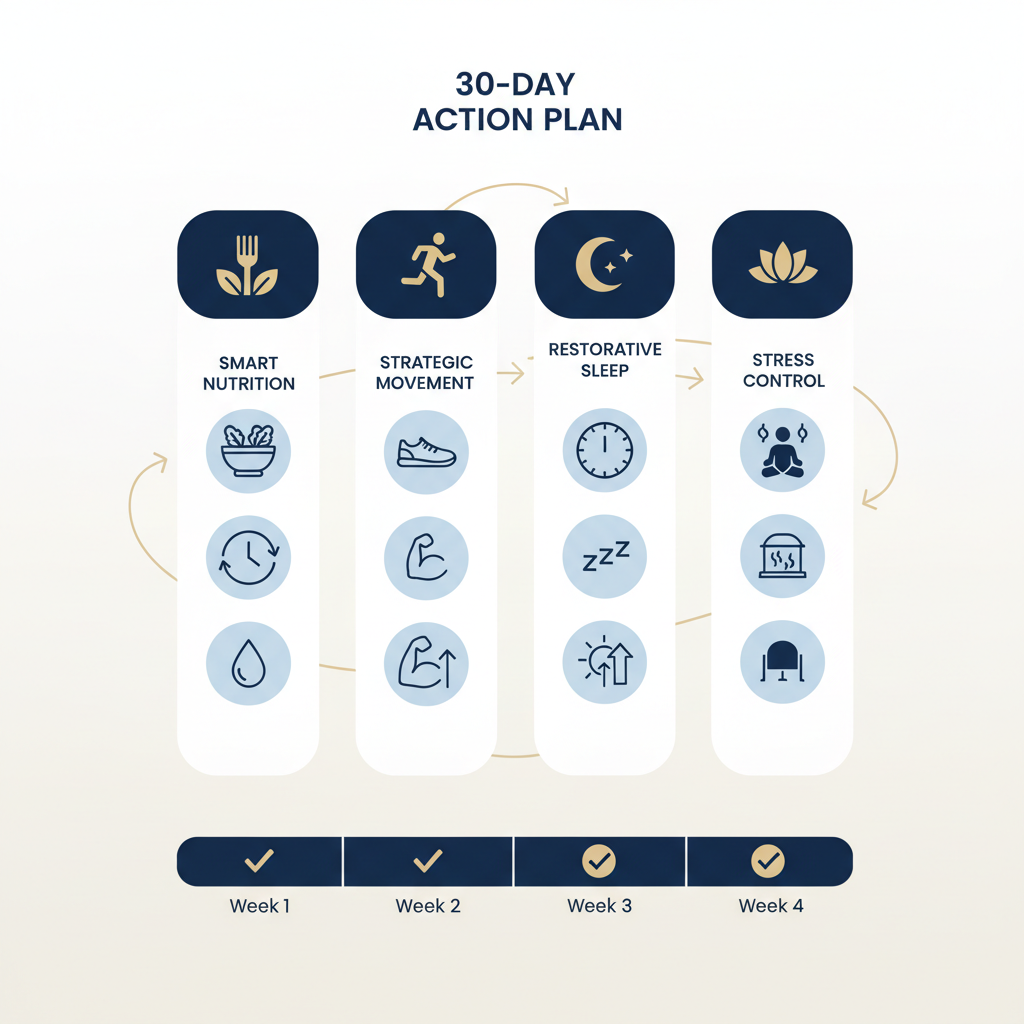
The 30-Day Action Plan to Improve Insulin Resistance
This month is about consistency, not perfection. Each week builds on the last with small, repeatable actions across diet, exercise, sleep, and stress. The goal: lower fasting and post-meal glucose, reduce circulating insulin load, and rekindle muscle glucose uptake. Adjust portions and intensity to your current health status and physician’s advice.
| Week | Main Focus | Diet Move | Exercise Move | Sleep/Stress Move | Key Metric |
|---|---|---|---|---|---|
| 1 — Reset | Stabilize meals, cut refined carbs | Protein at every meal; swap refined grains for whole-food carbs | 10-minute walks after meals; 150 total minutes light-moderate activity | Consistent bedtime; 10-minute daily breathing | Waist and AM glucose baseline |
| 2 — Build | Fiber and muscle engagement | 30–40g fiber/day; plate method (½ veg, ¼ protein, ¼ smart carbs) | 2 beginner strength sessions; brisk walk 30 minutes, 3–4 days | Cut caffeine after 2 pm; wind-down routine | Post-meal glucose checks, energy |
| 3 — Intensify | Timing and metabolic training | 12:12 to 14:10 eating window if appropriate; carbs post-exercise | 1–2 short HIIT sessions; add sets/reps to strength | Evening light hygiene; 15-minute walk at sunset | Waist change; sleep quality |
| 4 — Consolidate | Progressive overload, habit stacking | Refine portions; plan “anchor” meals for busy days | 3rd strength day or extra walk; maintain post-meal movement | Stress check-ins; social support | AM glucose trend; adherence score |
Diet: What to Eat, What to Limit, and How to Build Plates
Principles that move insulin sensitivity
- Prioritize protein: Aim for ~1.2–1.6 g/kg body weight per day (adjust for kidney disease with your clinician). Protein helps preserve lean mass and tempers glucose spikes.[2][3]
- Choose “smart carbs”: Mostly vegetables, legumes, whole fruit, and intact whole grains. Start with 30–40 g carbohydrate per meal and place higher-carb foods after activity.[8]
- Lift your fiber to 30–40 g/day: Emphasize viscous fibers (oats, barley, beans, chia, vegetables). Fiber slows carb absorption and supports a healthier microbiome linked to improved insulin action.[8]
- Favor unsaturated fats: Olive oil, nuts, seeds, avocados, and fish for satiety and cardiometabolic health.[3][4]
- Minimize refined starches and added sugars: Swap white bread, pastries, sugary drinks, and ultra-processed snacks for whole-food alternatives.[2][3]
Plate method (easy visual)
- Half plate: non-starchy vegetables (greens, broccoli, peppers, mushrooms, cauliflower)
- Quarter plate: lean protein (eggs, tofu/tempeh, Greek yogurt, chicken, fish, beans/lentils)
- Quarter plate: smart carbs (quinoa, farro, beans, sweet potato, whole fruit) + 1–2 tablespoons of healthy fats
Sample 30-day grocery list
- Proteins: eggs, Greek yogurt or skyr, cottage cheese, tofu/tempeh, chicken breast, canned salmon/tuna, lentils and beans
- Vegetables: leafy greens, crucifers (broccoli, cauliflower), onions, tomatoes, peppers, zucchini, carrots
- Smart carbs: steel-cut oats, quinoa, brown rice, barley, sweet potatoes, berries, apples, oranges
- Fats: extra-virgin olive oil, avocado, almonds/walnuts, chia/flax seeds
- Flavor and fiber boosters: cinnamon, vinegar, herbs, garlic, chia, ground flax
One-week meal template (repeat with variety)
- Breakfast: Greek yogurt with berries and chia; or veggie omelet with avocado and side of fruit
- Lunch: Lentil and quinoa bowl with roasted vegetables and tahini; or chicken salad over mixed greens with olive oil vinaigrette
- Dinner: Salmon, broccoli, and barley; or tofu stir-fry with mixed vegetables over cauliflower rice + side of brown rice
- Snacks (optional): A handful of nuts, edamame, cottage cheese with cinnamon, or an apple with peanut butter
For more pointers on building a sustainable plan, see how to manage insulin resistance naturally and our sustainable health guides.
Exercise: Your Most Powerful Insulin Sensitivity Lever
Active muscle is a glucose sponge. During and after activity, muscle cells can take up glucose with much less reliance on insulin. That is why exercise reduces fasting and post-meal glucose and improves insulin sensitivity acutely and cumulatively.[6][10][11]
Weekly targets
- Moderate aerobic exercise: 150–210 minutes per week (e.g., brisk walking, cycling, swimming)
- Strength training: 2–3 sessions per week covering major muscle groups
- Movement snacks: 5–10 minutes of light walking or mobility after each meal
Why this works
- HIIT boosts insulin sensitivity and glycemic control, even with short workouts, when appropriate and introduced gradually.[6]
- Resistance training preserves and builds lean mass, elevating resting glucose disposal and lowering long-term diabetes risk.[10]
- Post-meal walks reduce glucose excursions and can be easier to sustain than long single workouts.[11]
Beginner week-by-week strength plan
- Week 1: 2 sessions, 1–2 sets of 8–12 reps each (squats to chair, wall push-ups, hip hinges, rows with bands, planks)
- Week 2: 2 sessions, 2 sets; add light dumbbells or bands as tolerated
- Week 3: 2–3 sessions, 2–3 sets; add a short finisher (20 seconds fast/70 seconds easy x 4)
- Week 4: 3 sessions, progress load slightly or add reps
Dive deeper into strategies and adherence levers in behavioral nutrition and sustainable health.
Sleep and Stress: The Hidden Drivers
Even one week of sleep restriction can induce measurable insulin resistance and increase hunger hormones. Chronic stress pushes cortisol higher, nudging the liver to release more glucose and making fat cells more insulin resistant. Addressing these “silent” drivers is essential for durable progress.[9][12]
Sleep actions (Week 1 start)
- Set a non-negotiable sleep window: 7.5–8.5 hours in bed
- Anchor a consistent wake time (even on weekends)
- Dim lights and screens 60 minutes before bed; keep the bedroom cool and dark
- Stop caffeine after 2 pm; finish large meals 2–3 hours before bed
Stress actions
- Daily 10-minute breathing: 4-second inhale, 6-second exhale for 5–10 minutes
- “Worry window” journaling: set a 10-minute slot to offload concerns, then close the book
- Micro-breaks: 2–5 minutes of stretching or a short walk between tasks
- Nature exposure or daylight walk most days
Week-by-Week Playbook
Week 1: Reset and Stabilize
- Meals: Build every plate using the plate method. Remove sugary drinks, pastries, and ultra-processed snacks. Replace with water, tea, nuts, and fruit.
- Movement: 10-minute walks after each meal. Accumulate 150 minutes of light-to-moderate activity.
- Sleep/Stress: Implement bedtime routine and daily breathing.
- Measure: Baseline waist, AM glucose (if available), and energy levels.
Week 2: Build Fiber and Muscle
- Meals: Push fiber to 30–40 g/day with vegetables, beans, oats, chia, and berries. Keep protein in each meal.
- Movement: Two strength sessions and three brisk walks of 30 minutes each.
- Optional: 1–2 tablespoons of vinegar before carb-heavy meals if tolerated.[14]
- Measure: Post-meal checks once or twice this week; note which meals create the biggest spikes.
Week 3: Intensify with Timing
- Meals: Try 12:12 or 14:10 time-restricted eating if appropriate. Place larger carb servings after workouts.[7]
- Movement: Add 1–2 short HIIT sessions and progress strength volume.
- Sleep: Reinforce light hygiene; keep caffeine earlier in the day.
- Measure: Compare waist and AM glucose to Week 1.
Week 4: Consolidate and Plan Forward
- Meals: Identify 3 “go-to” breakfasts and 3 “go-to” dinners for busy days. Continue fiber and protein targets.
- Movement: Maintain post-meal walks; add a third strength day or extra movement snack.
- Stress: Add one enjoyable social or restorative activity.
- Measure: Review trends and plan the next 30 days.
Common Mistakes to Avoid
- All-or-nothing dieting: Extreme restriction backfires. Aim for small, consistent upgrades to meals and movement.
- Skipping protein: Under-eating protein can worsen cravings and stall lean mass. Anchor each meal with 20–40 g protein.[2][3]
- Overdoing fasting: Aggressive fasting can spike stress hormones and overeating later. Start with gentle 12:12 timing and evaluate.[7]
- Ignoring sleep: A week of sleep loss can undermine insulin sensitivity and appetite control.[9]
- Only doing cardio: Add resistance training to preserve muscle and boost insulin sensitivity.[10]
- Drinking calories: Sugary beverages and heavy alcohol derail glucose control; prefer water, sparkling water, and unsweetened tea.
- Relying solely on supplements: Supplements may support a solid plan but cannot replace a balanced diet, movement, sleep, and stress care.
Myths vs. Facts: Quick Reality Checks
Supplement Considerations (Optional and Individualized)
Discuss any supplement with your healthcare professional, especially if you take glucose-lowering medications or are pregnant. Evidence-backed options include:
- Magnesium: May modestly improve fasting glucose and insulin sensitivity in deficient individuals.[13]
- Vinegar with meals: Can blunt post-meal glucose in some contexts.[14]
- Myo-inositol: Evidence supports use in insulin-resistant states such as PCOS; discuss with your clinician.[15]
If you suspect nonalcoholic fatty liver—a frequent companion of insulin resistance—learn more at fatty liver.
Scientific Evidence at a Glance
What the research shows
- Structured lifestyle beats medication for prevention: In the Diabetes Prevention Program, lifestyle intervention lowered progression to type 2 diabetes by 58% versus 31% with metformin, highlighting diet and physical activity as first-line tools.[5]
- HIIT improves insulin sensitivity quickly: A 2015 systematic review found that high-intensity interval training significantly improved insulin resistance and glucose control—even with relatively short sessions.[6]
- Early time-restricted eating can help: In a randomized crossover trial, early time-restricted feeding improved insulin sensitivity, blood pressure, and oxidative stress markers independent of weight loss.[7]
- Fiber matters: Reviews indicate higher dietary fiber—particularly viscous and cereal fibers—improves insulin sensitivity and glycemic control through slower absorption and gut-mediated mechanisms.[8]
- Sleep restriction impairs insulin action: Experimental sleep debt impaired glucose tolerance and insulin sensitivity within days, underscoring sleep as a primary lever—not a luxury.[9]
FAQs: What People Also Ask
Can you improve insulin resistance in 30 days?
Yes, many people see improvements in fasting glucose, post-meal responses, and waist circumference within 2–4 weeks of consistent changes in diet, movement, sleep, and stress. Significant risk reduction accrues with continued habits, as demonstrated in large prevention trials.[5]
What is the best diet to improve insulin resistance?
There is no single best diet for everyone. Mediterranean-style and higher-fiber, minimally processed eating patterns with adequate protein consistently support better insulin sensitivity. Focus on whole foods, fiber (30–40 g/day), protein at each meal, and minimizing refined starches and added sugars.[5][8] See more: manage insulin resistance naturally.
Is intermittent fasting safe and effective?
Gentle time-restricted eating (e.g., 12:12 or 14:10) can improve insulin sensitivity and appetite regulation for some people, especially when meals are earlier in the day.[7] Avoid fasting if you are pregnant, underweight, have a history of disordered eating, or take medications that can cause hypoglycemia—consult your clinician first. Learn more at intermittent fasting.
How much exercise do I need?
Target 150–210 minutes of moderate aerobic activity weekly, plus 2–3 days of strength training. Short post-meal walks (5–10 minutes) provide outsized benefits on top of this.[6][10][11]
Which tests track progress?
Fasting glucose, A1C, fasting insulin (for HOMA-IR), triglycerides, HDL, and waist circumference are common. Some use home glucose meters or continuous glucose monitors for insights. Work with your clinician to choose the right panel.[2][4]
Do coffee or vinegar help or hurt?
Coffee’s effects vary; some people see higher post-meal glucose when consuming caffeine close to meals. Vinegar before carbohydrate-rich meals can blunt post-meal spikes for some people.[14] Test your personal response and consult your clinician if you use medications.
Are supplements necessary?
No. Supplements can be supportive (e.g., magnesium if deficient), but lifestyle changes are the foundation and deliver the largest benefits. Speak with your healthcare provider about any additions.[13]
Is keto required?
No. Lower-carb patterns can help some individuals, but diverse, fiber-rich, minimally processed diets with adequate protein, paired with movement and sleep, also improve insulin sensitivity and are often easier to sustain.[5][8]
Putting It Together: Your Next 30 Days
- Pick three anchor meals and repeat them most days to reduce decision fatigue.
- Walk for 10 minutes after at least two meals per day; add strength training twice per week.
- Set a fixed sleep window and protect it like an appointment.
- Track waist, AM glucose (if available), and daily post-meal movement minutes weekly.
- Iterate—adjust carb portions and timing based on your post-meal responses.
Ready for a structured, step-by-step path? Explore our overview of the best program for insulin resistance and complete the quick metabolic health assessment to personalize your 30-day plan.
References
- World Health Organization. Diabetes – Key facts. https://www.who.int/news-room/fact-sheets/detail/diabetes
- National Institute of Diabetes and Digestive and Kidney Diseases (NIH). Insulin Resistance & Prediabetes. https://www.niddk.nih.gov/health-information/diabetes/overview/what-is-diabetes/prediabetes-insulin-resistance
- Harvard Health Publishing. Prediabetes: What you can do. https://www.health.harvard.edu/staying-healthy/prediabetes-what-you-can-do
- Mayo Clinic. Prediabetes: Diagnosis and treatment. https://www.mayoclinic.org/diseases-conditions/prediabetes/diagnosis-treatment/drc-20355284
- Diabetes Prevention Program Research Group. Reduction in the incidence of type 2 diabetes with lifestyle intervention or metformin. N Engl J Med. 2002;346:393-403. PubMed: https://pubmed.ncbi.nlm.nih.gov/11832527/
- Jelleyman C, et al. The effects of high-intensity interval training on glucose regulation and insulin resistance: A meta-analysis. Obes Rev. 2015;16(11):942-961. PubMed: https://pubmed.ncbi.nlm.nih.gov/26199142/
- Sutton EF, et al. Early time-restricted feeding improves insulin sensitivity, blood pressure, and oxidative stress even without weight loss in men with prediabetes. Cell Metab. 2018;27(6):1212-1221.e3. PubMed: https://pubmed.ncbi.nlm.nih.gov/29754952/
- Weickert MO, Pfeiffer AFH. Impact of dietary fiber consumption on insulin resistance and the prevention of type 2 diabetes. J Nutr. 2018;148(1):7-12. PubMed: https://pubmed.ncbi.nlm.nih.gov/29378054/
- Spiegel K, Leproult R, Van Cauter E. Impact of sleep debt on metabolic and endocrine function. Lancet. 1999;354(9188):1435-1439. PubMed: https://pubmed.ncbi.nlm.nih.gov/10543671/
- Grøntved A, et al. A prospective study of weight training and risk of type 2 diabetes mellitus in men. JAMA. 2012;308(11):1142-1149. PubMed: https://pubmed.ncbi.nlm.nih.gov/22990271/
- DiPietro L, et al. Three 15-min bouts of postmeal walking significantly improve 24-h glycemic control in older people at risk for impaired glucose tolerance. Diabetes Care. 2013;36(10):3262-3268. PubMed: https://pubmed.ncbi.nlm.nih.gov/23877912/
- Tasali E, et al. Slow-wave sleep and the risk of type 2 diabetes in humans. Proc Natl Acad Sci U S A. 2008;105(3):1044-1049. PubMed: https://pubmed.ncbi.nlm.nih.gov/18227513/
- Veronese N, et al. Effect of magnesium supplementation on glucose metabolism in people with or at risk of diabetes: A systematic review and meta-analysis of double-blind randomized controlled trials. Eur J Clin Nutr. 2016;70(12):1354-1359. PubMed: https://pubmed.ncbi.nlm.nih.gov/27457439/
- Johnston CS, et al. Vinegar improves insulin sensitivity to a high-carbohydrate meal in subjects with insulin resistance or type 2 diabetes. Diabetes Care. 2004;27(1):281-282. PubMed: https://pubmed.ncbi.nlm.nih.gov/14693998/
- Unfer V, et al. Myo-inositol effects in women with PCOS: A systematic review of randomized controlled trials. Int J Endocrinol. 2017;2017:1-10. PubMed: https://pubmed.ncbi.nlm.nih.gov/28607538/
Medical disclaimer: This article is educational and not a substitute for medical advice. If you take glucose-lowering medications, are pregnant, or have chronic conditions, consult your healthcare professional before making significant dietary, exercise, or fasting changes.
كيف تحسّن مقاومة الأنسولين خلال 30 يوماً: خطة عملية مبنية على العلم
إذا كانت طاقتك تتقلّب، وشهيتك خارجة عن السيطرة، وتجد نفسك تشتهي السكريات بعد كل وجبة—فقد تكون مقاومة الأنسولين هي الحلقة المفقودة. الخبر الجيد: لا تحتاج إلى سنوات لإحداث فرق. خلال 30 يوماً فقط، يمكنك تحريك الإبرة بشكل ملموس—انخفاض في الجوع والعطش، تحسّن في التركيز، وقياسات خصر تتراجع—عبر تغييرات بسيطة ومدروسة علمياً.
في هذا الدليل العملي، سنشرح ما هي مقاومة الأنسولين ببساطة، ونقدّم خطة من أربع مراحل قابلة للتنفيذ تشمل التغذية والحركة والنوم وإدارة التوتر. ستجد أيضاً أخطاء شائعة يجب تفاديها، وصناديق “خرافة/حقيقة”، ونصائح خبراء، وقسماً مخصصاً للدليل العلمي، مع روابط داخلية لقراءة أوسع.
أكثر من 420 مليون شخص حول العالم يعانون من السكري، ونسبة كبيرة منهم مرّوا بمرحلة مقاومة الأنسولين قبل ذلك. تقليل المخاطر يبدأ بخطوات يومية صغيرة وذكية.[1]
ما هي مقاومة الأنسولين؟ الفهم أولاً قبل التصحيح
الأصل البيولوجي باختصار
الأنسولين هرمون يفرزه البنكرياس ليسهّل دخول الغلوكوز إلى خلايا العضلات والكبد والدهون ليُستخدم كوقود أو يُخزّن. عند مقاومة الأنسولين، تتباطأ استجابة الخلايا لهذا الهرمون، فيرتفع الغلوكوز والأنسولين في الدم لفترات أطول. مع الوقت، يتزايد التراكم الدهني الحشوي ويختلّ الاستقلاب، وقد تتطور الحالة إلى مقدمات السكري ثم داء السكري من النمط الثاني إن تُركت دون تدخل.[2][3]
لماذا تحدث مقاومة الأنسولين؟
العوامل متعددة: فائض السعرات خاصة من السكريات المضافة والدقيق الأبيض، الجلوس الطويل، ضعف الكتلة العضلية، اضطراب النوم، توتر مزمن يرفع الكورتيزول، وربما الاستعداد الوراثي. الأنماط الغذائية الغربية فائقة المعالجة تميل إلى تضخيم طفرات الغلوكوز بعد الوجبة وتجعل “إشارات الشبع” أقل فاعلية.[3]
كيف تتعرّف عليها مبكراً؟
علامات غير نوعية شائعة: نوبات جوع مفاجئة، رغبة في الحلويات بعد الوجبات، تعب بعد الأكل، زيادة محيط الخصر، وارتفاع الدهون الثلاثية أو انخفاض HDL. طبياً، تُستخدم مؤشرات مثل HOMA-IR، الغلوكوز والأنسولين الصياميان، سكر تراكمي، ووظائف الكبد (ALT) خاصة عند الاشتباه بكبد دهني.[2][4]
ابدأ بمراجعة مواردنا التعريفية حول الحالة عبر ما هي مقاومة الأنسولين؟ وأكمل باختبار ذاتي تمهيدي عبر التقييمات، ثم راجع النتائج مع مختص قبل اتخاذ قرارات علاجية.
مقارنة سريعة
| الحالة | الغلوكوز الصيامي | الأنسولين/مقاومة | السمات |
|---|---|---|---|
| مقاومة الأنسولين | قد يكون طبيعياً | مرتفع نسبياً | ارتفاع محيط الخصر، شبع ضعيف، رغبة بالسكر |
| مقدمات السكري | 100–125 ملغ/دل | مرتفع | بدء اضطراب استقلاب الغلوكوز |
| السكري النوع 2 | ≥126 ملغ/دل أو HbA1c ≥6.5% | متغير | ارتفاع مستمر مع اختلالات واسعة |
ملاحظة: هذه القيم إرشادية وليست للتشخيص. راجع الطبيب لإجراء فحوصات معتمدة ووضع خطة علاج مناسبة.[4]
خطة الـ 30 يوماً: أربع مراحل عملية لتحسين مقاومة الأنسولين
ستتحرك هذه الخطة أسبوعاً بعد أسبوع. لكل أسبوع أهداف في أربعة محاور: التغذية، الحركة، النوم، والتوتر. الهدف هو تحسين الاستجابة للأنسولين بدون إفراط أو حرمان.
الأسبوع 1: إعادة الضبط الذكي
1) التغذية: منصة منخفضة المؤشر الغلايسيمي
- أعدّ طبقك وفق قاعدة 40/30/30 تقريبية: 40% خضار غير نشوية، 30% بروتين عالي الجودة (سمك، دجاج منزوع الجلد، بيض، لبن/زبادي، بقول)، 30% كربوهيدرات كاملة الحبة أو فواكه كاملة.
- استبدل الدقيق الأبيض والسكريات المضافة بحبوب كاملة وبقول: شعير، شوفان، عدس، حمص، كينوا. أضف 1–2 ملعقة كبيرة من الدهون الصحية (زيت زيتون، أفوكادو، مكسرات).
- ابدأ يومك ببروتين 25–35 غراماً لتقليل طفرات الغلوكوز والتحكم بالشهية (مثل زبادي يوناني مع بذور وكينوا منفوشة، أو بيض وخضار).
2) الحركة: 10–15 دقيقة بعد كل وجبة
- امشِ بخفة 10–15 دقيقة بعد الإفطار والغداء والعشاء. هذا النمط يقلل الغلوكوز بعد الأكل بفعالية ملحوظة لدى البالغين.[6]
- اجمع 6,000–8,000 خطوة يومياً كبداية. لا تركض قبل أن تمشي بانتظام.
ثلاث جولات مشي لمدة 15 دقيقة بعد الوجبات تخفّض استجابات الغلوكوز بعد الأكل مقارنة بجولة واحدة مطولة يومياً.[6]
3) النوم: روتين ثابت
- وقت نوم واستيقاظ ثابت، وهدف 7–9 ساعات. اقطع الشاشات قبل النوم بـ60 دقيقة.
- بيئة نوم: غرفة باردة مظلمة، لا كافيين بعد منتصف النهار. قلة النوم تُضعف حساسية الأنسولين خلال أيام.[8]
4) التوتر: تهدئة محور الكورتيزول
- 5 دقائق تنفّس موجه (4-4-6) مرتين يومياً. تقليل التوتر يحسّن تنظيم الغلوكوز على المدى البعيد عبر خفض الكورتيزول.[11]
- دوّن مسببات التوتر الأعلى لديك وحدد استراتيجية واحدة لكل منها (تفويض، تبسيط، قول “لا”).
الأسبوع 2: التثبيت والبناء
1) التغذية: نمط متوسطي منخفض المؤشر الغلايسيمي
- نمط متوسطي مُكيّف: خضار وفواكه كاملة، بقول، حبوب كاملة، زيت زيتون كمصدر دهون أساسي، أسماك 2–3 مرات أسبوعياً، مكسرات يومياً بكمية معتدلة. هذا النمط يدعم حساسية الأنسولين ويقلل الالتهاب.[9]
- أهداف يومية: 30 غرام ألياف، 1.2–1.6 غرام بروتين/كغ وزن مستهدف، ماء 30–35 مل/كغ.
2) الحركة: مقاومة + هوائي معتدل
- أدخل تمارين مقاومة 2–3 مرّات/الأسبوع (جلسات 30–45 دقيقة): حركات أساسية مركّبة (قرفصاء، دفع/سحب أفقي وعمودي، مفصل الورك)، 2–3 مجموعات × 8–12 تكراراً. بناء العضلات يرفع حساسية الأنسولين.[5]
- هوائي معتدل 90–150 دقيقة أسبوعياً (مشي سريع، دراجة). الجمع بين الاثنين يحسّن مؤشرات السكر أكثر من أحدهما منفرداً.[5]
3) النوم والتوتر: عادات متسقة
- تابع روتين النوم. إن استيقظت مرهقاً، قلّص الكافيين واستبدله بماء وحركة قصيرة في الصباح.
- أضف 10 دقائق يقظة ذهنية بعد الغداء، أو صلاة/تأمل، لخفض الاستثارة الفسيولوجية.[11]
الأسبوع 3: التهيئة الأيضية الذكية
1) التغذية: نافذة أكل منظمة ودعم للميكروبيوم
- جرّب “صياماً مبكّراً محدود الوقت” 12–14 ساعة ليلية (مثلاً 7م–9ص) إن كان آمناً لك. هذا الأسلوب قد يحسّن الحساسية وإشارات الشهية عند بعض الأفراد.[7] تعرّف أكثر عبر دليل الصيام المتقطع.
- أضف أطعمة مُخمّرة (لبن/زبادي، مخللات تقليدية) وبريبايوتك (بصل، ثوم، كراث، موز غير ناضج) دعماً لصحة الأمعاء التي ترتبط بتنظيم الغلوكوز. زر صحة الأمعاء للتفاصيل.
2) الحركة: جرعة HIIT محسوبة
- أدخل حصة HIIT واحدة أسبوعياً (10–20 دقيقة إجمالي: 6–10 جولات × 30–60 ثانية جهد عالٍ + استراحة نشطة)، مع يومي مقاومة أو ثلاثة. HIIT يحسن مؤشرات حساسية الأنسولين عند كثيرين، لكن لا تفرط في التكرار.[10]
- حافظ على مشي ما بعد الوجبات—هو خط الأمان اليومي للغلوكوز.[6]
3) النوم والتوتر: ترميم عميق
- أضف “طقس الإطفاء” قبل النوم: إضاءة خافتة + قراءة ورقية + تدوين 3 أسطر امتنان. هذا يقلّص الاجترار الذهني ويحسّن جودة النوم، ما يدعم الحساسية للأنسولين.[8]
- سلّم جسدك لإيقاع ثابت: وجبة عشاء مبكرة، لا شاشات زرقاء لاحقاً، وتمرينات تمدد خفيفة.
الأسبوع 4: التثبيت والتخصيص
1) التغذية: تحسينات دقيقة لا حرمان
- راجع مفكّرة طعامك ومزاجك. حدّد وجبتين أسبوعيتين تسببتا برغبة سكر لاحقة واستبدلهما بنسخ أغنى بالبروتين/الألياف.
- اجعل الكربوهيدرات “تعمل لصالحك”: قسّمها حول التمرين أو بعده لتعزيز التخزين العضلي بدلاً من الارتفاع الدموي.
2) الحركة: تصعيد محسوب
- زد وزنك أو مجموعاتك في تمارين المقاومة بنسبة 5–10% إذا كان الأداء جيداً. العضلة حسّاس أنسولين قوي.
- أضف “سناك حركة” 3–5 دقائق كل ساعة جلوس (قرفصاء، دفع حائط، مشي سلالم).
3) النوم والتوتر: صيانة مستمرة
- قيّم: كم ليلة نمت فيها ≥7 ساعات هذا الشهر؟ استهدف ≥20 ليلة في الشهر القادم.
- ثبت موعداً أسبوعياً “بلا شاشات” 3 ساعات مع نشاط ممتع منخفض التكلفة—هذا ليس ترفاً، بل وقاية أيضية.
نماذج عملية وأدوات تساعدك خلال 30 يوماً
مثال طبق متوازن منخفض المؤشر الغلايسيمي
- الغداء: عدس مطبوخ بزيت الزيتون + سلطة خضراء مع بذور القرع + سمك مشوي + شريحة خبز حبوب كاملة.
- العشاء: دجاج مشوي بالأعشاب + تبولة كينوا + زبادي لبناني طبيعي مع خيار ونعناع.
- وجبات خفيفة: حفنة مكسرات، لبن/زبادي مع قرفة، خضار مقرمشة مع حمص، تفاحة مع زبدة فول سوداني طبيعية.
مقايضات ذكية تقلّل طفرات الغلوكوز
| الاختيار الشائع | البديل الأذكى | لماذا أفضل؟ |
|---|---|---|
| عصير برتقال | برتقالة كاملة + مكسرات | ألياف وشبع أعلى، طفرات أقل |
| خبز أبيض | خبز حبوب كاملة مختمر | بطء امتصاص، مؤشر غلايسيمي أخفض |
| أرز أبيض | أرز بني/شعير/عدس معاً | ألياف ومعادن وتحمّل أفضل |
| حلوى بعد وجبة | زبادي مع قرفة وتوت | بروتين + بوليفينولات، أثر سكري أقل |
روتين يومي مقترح
- صباحاً: ماء + 10 دقائق ضوء شمسي + إفطار بروتيني.
- بعد الوجبات: 10–15 دقيقة مشي.
- قبل التمرين: وجبة خفيفة بروتين/كربوهيدرات معقدة عند الحاجة.
- مساءً: عشاء مبكر + ساعة بلا شاشات + تمارين تنفس + نوم 7–9 ساعات.
للتوسّع في الأساسيات الطبيعية، طالع إدارة مقاومة الأنسولين طبيعياً، وللتعامل مع “نهم السكر” راجع لماذا أشتهي السكر كل يوم؟ وإذا سألت نفسك كثيراً “لماذا أنا دائماً جائع؟” فهذه قراءة مفيدة.
أخطاء شائعة تُبطئ تحسين مقاومة الأنسولين
- قطع الكربوهيدرات تماماً: يؤدي لنهم وارتداد. الأفضل اختيار كربوهيدرات كاملة وتوزيعها بذكاء.
- HIIT يومي بلا أساس متين: يزيد التوتر ويقلّل التعافي. التوازن أساس.[10]
- إهمال النوم: حتى أفضل نظام غذائي لا يعوّض 5 ساعات نوم مزمن.[8]
- عصائر “ديتوكس” ومحليات صناعية بكثرة: قد تحفّز الجوع أو تغيّر تفضيلات الذوق.
- تناول مكملات عشوائياً دون تغييرات سلوكية أو متابعة طبية.
- عدم تخطيط الوجبات، والاعتماد على إرادة لحظية في بيئة مليئة بالمحفزات.
الدليل العلمي المختصر
- التمارين المنظمة تخفّض HbA1c وتحسّن التحكم بالغلوكوز: تحليلات منهجية وتجارب تُظهر أن الجمع بين الهوائي والمقاومة يُحسّن العلامات بشكل ملحوظ مقارنة بالإرشاد فقط.[5]
- المشي بعد الوجبات يحد من طفرات الغلوكوز: ثلاث جولات قصيرة بعد الوجبات فاقت جولة واحدة طويلة في خفض ارتفاع السكر بعد الأكل لدى كبار السن ذوي الوزن الزائد.[6]
- الصيام المبكّر محدود الوقت (12–14 ساعة) قد يعزّز الحساسية: تحسينات في حساسية الأنسولين وضغط الدم وإشارات الشهية دون تغييرات وزن كبيرة عند بعض المشاركين.[7]
- نقص النوم المزمن يضعف الحساسية للأنسولين: تقييد النوم لأسابيع خفّض حساسية الأنسولين وغيّر الاستقلاب عند بالغين أصحاء.[8]
- النمط المتوسطي الغذائي يقلل مكونات المتلازمة الاستقلابية: تجربة عشوائية أظهرت تحسينات في مقاومة الأنسولين والواسمات الالتهابية لدى أشخاص بمتلازمة استقلابية.[9]
أسئلة شائعة (FAQ)
هل يمكن تحسين مقاومة الأنسولين خلال 30 يوماً حقاً؟
نعم، يمكنك رؤية مؤشرات تحسّن مبكر: انخفاض الجوع بين الوجبات، طاقة مستقرة، تراجع طفرات السكر بعد الطعام، وانخفاض بسيط في محيط الخصر. المؤشرات المخبرية الكبيرة قد تحتاج 8–12 أسبوعاً لتظهر بوضوح.[3][4]
هل يجب فقدان الوزن للتحسّن؟
الفقدان البسيط للوزن الحشوي (حتى 3–5%) يفيد، لكن حتى من دون فقدان وزن على الميزان يمكن تحسين الحساسية عبر زيادة الكتلة العضلية، وتنظيم الوجبات، والمشي بعد الأكل، وتحسين النوم.[5][8][9]
ما أفضل نظام غذائي لـ تحسين مقاومة الأنسولين؟
لا يوجد “نظام واحد للجميع”. النمط المتوسطي منخفض المؤشر الغلايسيمي، الغني بالخضار والبقول والحبوب الكاملة وزيت الزيتون والبروتين الكافي، مدعوم جيداً. الأهم تقليل السكريات المضافة والدقيق الأبيض والأطعمة فائقة المعالجة.[3][4][9]
هل الصيام المتقطع مناسب لي؟
نافذة أكل منظمة 12–14 ساعة قد تكون مفيدة عند كثيرين. إذا كنت تأخذ أدوية سكر، حاملاً، مرضعاً، أو لديك تاريخ اضطرابات أكل—استشر طبيبك أولاً. ابدأ تدريجياً وراقب الإشارات.[7] اقرأ المزيد في الصيام المتقطع.
هل يجب ممارسة تمارين شديدة؟
الأساس هو المشي اليومي وتمارين مقاومة معتدلة 2–3 مرات أسبوعياً. أضف HIIT مرة واحدة أسبوعياً إن رغبت وبعد بناء قاعدة جيدة. النوعية والاستمرارية أهم من الشدة الفائقة.[5][10]
كيف أعرف أن الخطة تعمل؟
علامات عملية: استقرار الشبع، قلة الرغبة في السكر بعد الوجبة، تحسن صفاء الذهن، زيادة القوة/القدرة على التحمل، وانخفاض محيط الخصر. مخبرياً: تحسن HOMA-IR، سكر صيامي، HbA1c على مدى 2–3 أشهر.[2][4]
هل الفاكهة ممنوعة؟
لا. ركّز على الفاكهة الكاملة مع قشرها، ويفضل تناولها مع بروتين/دهون صحية لتقليل الطفرات، وتجنّب العصائر. التوازن والكمية المناسبة لاحتياجاتك هما الفيصل.[3][4]
هل يمكن تحسين مقاومة الأنسولين طبيعياً دون أدوية؟
لدى كثيرين، تعديلات نمط الحياة تقلب المعادلة مبكراً. لكن إن كنت مصاباً بمقدمات السكري أو السكري أو لديك أدوية، فالتنسيق مع طبيبك ضروري لتعديل الجرعات ومراقبة الأمان.[2][4]
دعوة للتعلّم واتخاذ خطوة عملية
تذكّر: تحسين مقاومة الأنسولين لا يعني حياة حرمان، بل حياة “اختيارات ذكية بشكل افتراضي”. إذا رغبت بخطة عملية مجرّبة خطوة بخطوة، اطّلع على أفضل برنامج لتحسين مقاومة الأنسولين، واستكشف مزيداً من الاستراتيجيات في الصحة المستدامة والتغذية السلوكية. ولتقييم وضعك الحالي ابدأ بـ اختباراتنا. لمزيد من القراءة التعليمية، زر السكري والكبد الدهني.
ابدأ حيث أنت، بما لديك. مشي بعد الوجبة اليوم + إفطار بروتيني غداً + ساعة نوم إضافية هذا الأسبوع = فارق حقيقي خلال 30 يوماً.
المراجع العلمية
- World Health Organization. Diabetes Fact Sheet. https://www.who.int/news-room/fact-sheets/detail/diabetes (تم الوصول).[1]
- National Institute of Diabetes and Digestive and Kidney Diseases (NIH). Insulin Resistance & Prediabetes. https://www.niddk.nih.gov/health-information/diabetes/overview/what-is-diabetes/prediabetes-insulin-resistance.[2]
- Harvard Health Publishing. Insulin resistance: what it is and how to reverse it. https://www.health.harvard.edu/diseases-and-conditions/insulin-resistance-what-it-is-and-how-to-reverse-it.[3]
- Mayo Clinic. Prediabetes: Diagnosis and treatment. https://www.mayoclinic.org/diseases-conditions/prediabetes/diagnosis-treatment/drc-20355284.[4]
- Umpierre D, et al. Physical Activity Advice Only or Structured Exercise Training and HbA1c Levels in Type 2 Diabetes. JAMA. 2011;305(17):1790-1799. PMID: 21540423.[5]
- DiPietro L, et al. Three 15-min bouts of postmeal walking reduce postprandial glycemia in older people at risk for impaired glucose tolerance. Diabetes Care. 2013;36(10):3262-3268. PMID: 23690539.[6]
- Sutton EF, et al. Early Time-Restricted Feeding Improves Insulin Sensitivity, Blood Pressure, and Oxidative Stress Even without Weight Loss in Men with Prediabetes. Cell Metab. 2018;27(6):1212-1221. PMID: 29951594.[7]
- Buxton OM, et al. Adverse Metabolic Consequences in Humans of Prolonged Sleep Restriction Combined with Circadian Disruption. Sci Transl Med. 2012;4(129):129ra43. PMID: 22517862.[8]
- Esposito K, et al. Effect of a Mediterranean-style diet on endothelial dysfunction and markers of vascular inflammation in the metabolic syndrome: a randomized trial. JAMA. 2004;292(12):1440-1446. PMID: 15383514.[9]
- Jelleyman C, et al. The effects of high-intensity interval training on glucose regulation and insulin resistance: a meta-analysis. Obes Rev. 2015;16(11):942-961. PMID: 25784164.[10]
- National Institute of Mental Health (NIH). 5 Things You Should Know About Stress. https://www.nimh.nih.gov/health/publications/stress.[11]
Frequently Asked Questions
ما هي مقاومة الإنسولين ولماذا تهم؟
هي حالة تصبح فيها الخلايا أقل استجابة للإنسولين، فيرتفع سكر الدم ويزداد عبء البنكرياس. ترتبط بزيادة دهون البطن، ما قبل السكري، السكري النوع الثاني، وأمراض القلب.
كم يستغرق تحسين حساسية الإنسولين؟
يمكن رصد تحسّن أولي خلال 2–4 أسابيع مع تعديل التغذية، الحركة، والنوم. النتائج الأوضح تظهر خلال 8–12 أسبوعاً، لكن 30 يوماً بداية فعّالة.
ما أفضل نظام غذائي خلال 30 يوماً؟
نمط متوسطي منخفض المؤشر الغلايسيمي مع بروتين كافٍ (1.2–1.6 غ/كغ)، ألياف 25–35 غ/يوم، تقليل السكريات والحبوب المكرّرة، واستخدام دهون صحية كزيت الزيتون والمكسرات.
هل الصيام المتقطع مناسب للجميع؟
نافذة أكل 10–12 ساعة تفيد معظم البالغين. تجنّبه أو عدّله إذا كنت حاملاً، مرضعاً، لديك اضطراب أكل، أو تتناول أدوية خافضة للسكر—استشر طبيبك.
ما التمارين الأكثر فاعلية لتحسين الحساسية؟
تمارين المقاومة 2–3 مرات أسبوعياً مع مشي يومي 7–10 آلاف خطوة وHIIT قصير 1–2 مرة وفق القدرة. الثبات أهم من الشدة العالية.
هل تفيد المكمّلات مثل البربرين؟
قد يدعم البربرين، الماغنيسيوم، وأوميغا‑3 التحكم الغلوكوزي عند بعض الأشخاص. استخدمها بوصفة مهنية خاصة إذا كنت تتناول أدوية سكر لتجنّب هبوطه.
كيف أقيس التقدّم خلال 30 يوماً؟
قِس سكر صائم صباحاً، محيط الخصر، الوزن، والخطوات. راقب استقرار الطاقة والشبع بعد الوجبات. إن توفّر، استخدم قياس HbA1c أو جهاز قياس مستمر للجلوكوز.
متى يجب أن أتوقف وأستشير الطبيب؟
إذا ظهرت دوخة متكررة، تعرّق بارد، ارتجاف، سكر دم منخفض، خفقان شديد، أو فقدان وزن غير مبرر. كذلك قبل أي تغييرات كبيرة بالأدوية أو الصيام.