Five Signs Your Body Needs More Dietary Fiber
خمس علامات تدل على أن جسمك يحتاج إلى ألياف غذائية أكثر
Author: Feras Alayed - Therapeutic & Behavioral Nutrition Specialist
Published:
Updated:
Category: gut-health
Reading Time: 8 minutes
Five Signs Your Body Needs More Dietary Fiber
You eat regularly, you stay reasonably active, and you try to make sensible food choices — yet something still feels off. Maybe your digestion is sluggish, your energy dips after meals, or you find yourself reaching for snacks far sooner than you should. These seemingly unrelated complaints often share a single, overlooked root cause: insufficient dietary fiber.
Most adults in Western countries consume less than half the recommended daily fiber intake, yet the signs of dietary fiber deficiency are rarely discussed with the same urgency as vitamin shortfalls or mineral imbalances.[1] This article will walk you through five clear, evidence-backed signals that your body is asking for more fiber — and explain exactly what you can do about each one.
Why Dietary Fiber Matters More Than You Think
Fiber is not a single nutrient — it is a broad category of plant-based carbohydrates that the human digestive system cannot fully break down. Rather than being absorbed into the bloodstream, fiber travels through the gut, feeding beneficial bacteria, regulating bowel movements, and influencing everything from blood sugar control to cardiovascular health.[2]
The World Health Organization recommends a minimum of 25 grams of dietary fiber per day for adults, while many nutrition researchers argue the optimal range is closer to 30–38 grams depending on body size and metabolic needs.[3] In practice, surveys consistently show that average intake hovers around 15–17 grams per day in high-income countries — a significant gap with measurable health consequences.
"Dietary fiber intake provides benefits for health maintenance and in the prevention and treatment of numerous health conditions." — Academy of Nutrition and Dietetics, 2015 Position Paper
Understanding the signs of dietary fiber deficiency is the first step toward closing that gap intelligently, rather than simply adding a supplement and hoping for the best.
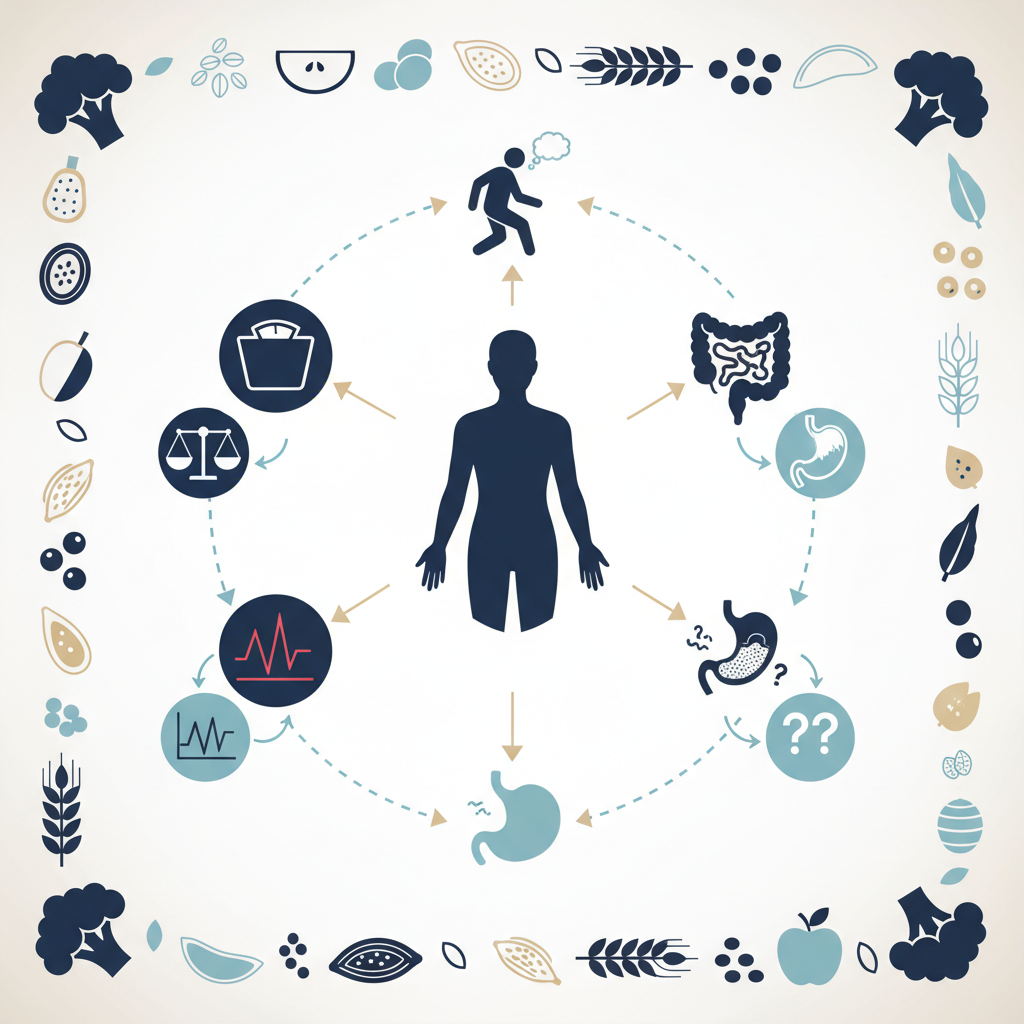
Sign 1: Chronic Constipation or Irregular Bowel Movements
The most recognized sign of low fiber intake is difficulty with bowel regularity. Insoluble fiber — found in whole grains, wheat bran, and many vegetables — adds bulk to stool and accelerates transit time through the colon. Without adequate amounts, stools become hard, dry, and difficult to pass.[4]
What the Research Shows
A systematic review published in the World Journal of Gastroenterology confirmed that increasing dietary fiber intake significantly improves stool frequency and consistency in individuals with functional constipation.[4] The effect was most pronounced with soluble fiber sources such as psyllium husk, which forms a gel-like substance in the intestine and softens stool without causing the bloating that some insoluble fibers can produce.
Common Mistake: Reaching for Laxatives First
Many people resort to over-the-counter laxatives at the first sign of constipation, which can create dependency over time and disrupt the gut's natural motility reflexes. Addressing the underlying fiber deficit is a more sustainable approach for most healthy adults.
Practical Steps
- Replace white bread with 100% whole grain bread (adds approximately 2 grams of fiber per slice)
- Add a tablespoon of ground flaxseed to yogurt or oatmeal
- Choose brown rice or quinoa over white rice at dinner
- Eat the skin on fruits and vegetables where safe to do so
Sign 2: Persistent Hunger Shortly After Meals
If you finish a meal and find yourself hungry again within an hour or two, the problem may not be portion size — it may be fiber content. Fiber slows the rate at which food leaves the stomach and delays glucose absorption in the small intestine, both of which extend the feeling of fullness after eating.[5]
This is especially relevant for people who feel constantly hungry despite eating adequate calories. In many such cases, the diet is high in refined carbohydrates and low in fiber, creating a pattern of rapid glucose spikes followed by crashes that trigger hunger signals prematurely.
The Satiety Mechanism Explained
Soluble fiber forms a viscous gel in the stomach that physically slows gastric emptying. This triggers the release of satiety hormones including GLP-1 (glucagon-like peptide-1) and PYY (peptide YY), which signal the brain to reduce appetite.[5] A diet consistently low in fiber bypasses these hormonal cues, making it genuinely harder to regulate food intake.
Fiber-Rich Foods That Improve Satiety
- Legumes (lentils, black beans, chickpeas) — 7–9 grams of fiber per half cup
- Avocado — approximately 5 grams per half fruit
- Oats — 4 grams per half cup dry, with beta-glucan specifically shown to enhance satiety
- Chia seeds — 10 grams per ounce, with exceptional water-absorbing capacity
Sign 3: Unstable Blood Sugar and Energy Crashes
Afternoon energy slumps, difficulty concentrating after meals, and strong cravings for sweet foods are often attributed to stress or poor sleep — but they can also reflect the blood sugar instability that accompanies a low-fiber diet. Without fiber to moderate glucose absorption, even moderate carbohydrate meals can produce sharp glycemic spikes followed by rapid drops.[6]
This pattern is directly connected to why sugar cravings can feel so relentless — the body is responding to blood glucose volatility rather than a genuine caloric need.
Fiber's Role in Glycemic Control
Viscous soluble fibers — particularly beta-glucan from oats and barley, and pectin from apples and citrus — form a physical barrier in the small intestine that slows the digestion and absorption of carbohydrates. This flattens the glycemic response to a meal without eliminating carbohydrates from the diet entirely.[6]
Harvard T.H. Chan School of Public Health notes that high-fiber diets are associated with a significantly lower risk of type 2 diabetes, in part because of this consistent moderating effect on postprandial blood glucose.[7]
Comparison: Low-Fiber vs. High-Fiber Meal Glycemic Impact
| Meal Type | Estimated Fiber Content | Typical Glycemic Effect | Energy Pattern |
|---|---|---|---|
| White toast + jam + orange juice | ~1–2 grams | Sharp spike, rapid drop | Energy crash within 60–90 minutes |
| Oatmeal + berries + chia seeds + nuts | ~10–12 grams | Gradual rise, slow decline | Sustained energy for 3–4 hours |
| Whole grain wrap + vegetables + hummus | ~8–10 grams | Moderate, controlled | Stable energy, reduced cravings |
Sign 4: Gut Microbiome Imbalances and Digestive Discomfort
The human gut is home to approximately 38 trillion microbial cells, and the health of this ecosystem depends substantially on what you feed it.[8] Dietary fiber — particularly fermentable prebiotic fiber — serves as the primary food source for beneficial gut bacteria such as Bifidobacterium and Lactobacillus species.
When fiber intake is chronically low, these beneficial populations decline, and less favorable bacteria can proliferate — a state associated with increased intestinal permeability, low-grade inflammation, and a range of digestive symptoms including bloating, gas, and irregular stools that do not fit neatly into constipation or diarrhea.[9]
Prebiotic Fiber vs. Probiotic Supplements
There is considerable interest in probiotic supplements for gut health, but research increasingly suggests that without adequate prebiotic fiber to sustain them, supplemented bacteria often fail to colonize effectively. Feeding the bacteria already present in your gut through consistent fiber intake is foundational — probiotics are a complement, not a substitute.[9]
For a deeper understanding of how the gut microbiome affects overall health, the gut health resource hub provides comprehensive guidance on both dietary and lifestyle strategies.
Best Prebiotic Fiber Sources for Gut Health
- Jerusalem artichokes and chicory root — highest inulin content of any foods
- Garlic and onions — fructooligosaccharides that selectively feed beneficial bacteria
- Slightly unripe bananas — rich in resistant starch, a particularly effective prebiotic
- Cooked and cooled potatoes or rice — cooking and cooling converts starch into resistant starch
- Oats — beta-glucan supports both satiety and microbiome diversity
Sign 5: Elevated Cholesterol or Cardiovascular Risk Markers
This sign is often discovered during a routine blood test rather than through symptoms, but it is one of the most clinically significant indicators of chronic fiber insufficiency. Soluble fiber — particularly the beta-glucan in oats and barley and the pectin in fruits — binds to bile acids in the digestive tract and facilitates their excretion.[10]
Because bile acids are made from cholesterol, the liver must draw on circulating LDL cholesterol to produce replacements, effectively lowering LDL levels in the bloodstream. The FDA has recognized this mechanism sufficiently to approve a health claim for oat beta-glucan and heart disease risk reduction.
What the Numbers Look Like
A meta-analysis published in the American Journal of Clinical Nutrition found that consuming 5–10 grams of soluble fiber per day reduced LDL cholesterol by approximately 5–11 points (mg/dL) — a clinically meaningful reduction achievable through diet alone for many individuals.[10]
This is particularly relevant for people exploring insulin resistance and metabolic health, as low fiber intake, elevated LDL, and impaired glucose regulation frequently cluster together and reinforce each other.
Scientific Evidence: Key Studies on Fiber Deficiency
Study 1: Fiber Intake and All-Cause Mortality
A landmark prospective study published in the Archives of Internal Medicine (2011) followed over 388,000 participants for nine years and found that the highest quintile of dietary fiber intake was associated with a 22% lower risk of all-cause mortality compared to the lowest quintile, with particularly strong associations for cardiovascular and infectious disease mortality.[11]
Study 2: Fiber and the Gut Microbiome
Research published in Cell Host & Microbe (2022) demonstrated that a high-fiber diet increased microbiome diversity and elevated levels of short-chain fatty acids (SCFAs) — particularly butyrate — which are critical for colonocyte health and intestinal barrier integrity. The effects were apparent within two weeks of dietary change.[9]
Study 3: Soluble Fiber and Glycemic Control
A systematic review in Diabetes Care (2012) analyzed 35 randomized controlled trials and concluded that soluble fiber supplementation significantly reduced fasting blood glucose and HbA1c in individuals with type 2 diabetes, supporting fiber's role in long-term glycemic management.[6]
Study 4: Fiber and Satiety Hormones
A randomized crossover trial published in the Journal of Nutrition (2019) found that meals enriched with viscous soluble fiber produced significantly higher postprandial GLP-1 and PYY responses compared to low-fiber control meals, with participants reporting greater fullness and consuming fewer calories at a subsequent meal.[5]
Study 5: Fiber and LDL Cholesterol
The meta-analysis by Brown et al. in the American Journal of Clinical Nutrition (1999, updated in subsequent reviews) remains the most comprehensive analysis of soluble fiber and lipid outcomes, confirming dose-dependent reductions in LDL cholesterol across multiple fiber types
خمس علامات تدل على أن جسمك يحتاج إلى ألياف غذائية أكثر
هل تشعر بالانتفاخ المتكرر بعد الوجبات، أو تعاني من الإمساك بين الحين والآخر، أو تجد نفسك جائعاً بعد ساعة فقط من تناول الطعام؟ قد تكون هذه الأعراض مجرد إشارات تُرسلها أمعاؤك لتخبرك بأنها تحتاج إلى مزيد من الألياف الغذائية.
الألياف الغذائية واحدة من أكثر العناصر الغذائية إهمالاً في النظام الغذائي الحديث، رغم أن الأدلة العلمية تتراكم يوماً بعد يوم لتؤكد دورها المحوري في الصحة العامة. في هذا المقال، سنستعرض خمس علامات رئيسية تدل على نقص الألياف الغذائية في جسمك، مع شرح علمي دقيق لكل علامة وتوجيهات عملية للتعامل معها.
وفقاً لمنظمة الصحة العالمية، يستهلك معظم الناس حول العالم أقل من نصف الكمية اليومية الموصى بها من الألياف الغذائية، وهي ما بين 25 و38 غراماً يومياً للبالغين.[1]
ما هي الألياف الغذائية ولماذا هي مهمة؟
الألياف الغذائية هي نوع من الكربوهيدرات النباتية التي لا يستطيع الجهاز الهضمي البشري تحليلها أو امتصاصها بالكامل. وهذه الخاصية تحديداً هي ما يجعلها مميزة ومفيدة، إذ تمر عبر الجهاز الهضمي وتُحدث تأثيرات إيجابية متعددة على طول هذا المسار.
تنقسم الألياف إلى نوعين رئيسيين: الألياف القابلة للذوبان التي تتحول إلى مادة هلامية في الماء وتُبطئ الهضم، والألياف غير القابلة للذوبان التي تُضخّم الكتلة البرازية وتُسرّع حركة الأمعاء. كلا النوعين ضروريان لصحة الجهاز الهضمي وما هو أبعد منه.
الألياف الغذائية ليست مجرد "مُلطّف للأمعاء"؛ فهي تُغذّي البكتيريا النافعة في الميكروبيوم المعوي، وتُساعد في تنظيم مستويات السكر في الدم، وتُخفّض الكوليسترول، وتُقلّل من خطر الإصابة بأمراض مزمنة متعددة.[2]
العلامة الأولى: الإمساك المتكرر أو عدم انتظام حركة الأمعاء
ما الذي يحدث في جسمك؟
الإمساك هو أكثر علامات نقص الألياف الغذائية وضوحاً وشيوعاً. عندما تنخفض كمية الألياف في نظامك الغذائي، تفقد الكتلة البرازية حجمها وكثافتها المائية، مما يجعل حركتها عبر القولون بطيئة وصعبة.[3]
الألياف غير القابلة للذوبان تعمل كالإسفنجة؛ تمتص الماء وتُضاعف حجم البراز، مما يُحفّز جدران الأمعاء على الانقباض بصورة منتظمة وفعّالة. وفي غيابها، يُصبح البراز جافاً ومضغوطاً ويستغرق وقتاً أطول بكثير في رحلته عبر الجهاز الهضمي.
الفرق بين الإمساك الناتج عن نقص الألياف وغيره
| المؤشر | إمساك نقص الألياف | إمساك لأسباب أخرى |
|---|---|---|
| الاستجابة لزيادة الألياف | تحسن واضح خلال أيام | تحسن محدود أو معدوم |
| شكل البراز | جاف وصغير الحجم | متنوع |
| الأعراض المصاحبة | انتفاخ وغازات | قد تشمل ألماً شديداً |
| العلاقة بالنظام الغذائي | مرتبط بنمط الأكل | قد لا يرتبط بالغذاء |
العلامة الثانية: الشعور المستمر بالجوع بعد الوجبات
آلية الشبع والألياف
إذا كنت تنتهي من وجبتك وتجد نفسك تبحث عن شيء آخر لتأكله بعد وقت قصير، فقد تكون الألياف هي الحلقة المفقودة. الألياف القابلة للذوبان تُبطئ إفراغ المعدة وتُطيل الشعور بالامتلاء عبر آليات متعددة.[4]
عندما تذوب الألياف القابلة للذوبان في الماء، تُشكّل مادة لزجة تُبطئ عملية هضم الكربوهيدرات والدهون، مما يُؤخّر ارتفاع السكر في الدم ويُطيل الإحساس بالشبع. كما أن الألياف تُحفّز إفراز هرمونات الشبع مثل GLP-1 وPYY في الجهاز الهضمي.
هذا يُفسّر لماذا وجبة غنية بالألياف كسلطة الخضار مع الحبوب الكاملة تُشبعك لفترة أطول بكثير من وجبة تحتوي على نفس السعرات الحرارية لكنها فقيرة بالألياف. للمزيد عن آليات الجوع، يمكنك قراءة لماذا أشعر بالجوع دائماً؟
العلامة الثالثة: تقلبات حادة في مستويات الطاقة والرغبة في السكر
الألياف وتنظيم سكر الدم
هل تشعر بنشاط مفاجئ بعد الأكل ثم تُصاب بالخمول والإرهاق بعد ساعة أو ساعتين؟ هذه التقلبات في مستويات الطاقة غالباً ما تكون مرتبطة بعدم استقرار سكر الدم، وهو أحد أبرز نتائج نقص الألياف الغذائية.
الألياف القابلة للذوبان تعمل كحاجز بين الكربوهيدرات وإنزيمات الهضم، مما يُبطئ امتصاص الجلوكوز في مجرى الدم. وبهذا تمنع الارتفاع المفاجئ في سكر الدم الذي يعقبه انخفاض حاد يُسبّب الإرهاق والرغبة الشديدة في تناول السكريات.[5]
إذا كنت تجد نفسك تتوق إلى الحلويات والسكريات بشكل متكرر، فقد يكون النظام الغذائي الفقير بالألياف هو السبب الجذري. اقرأ المزيد في مقال لماذا أشتهي السكر كل يوم؟
العلامة الرابعة: ارتفاع مستويات الكوليسترول أو اضطرابات الدهون في الدم
كيف تُؤثر الألياف على الكوليسترول؟
إذا أظهرت نتائج فحوصاتك الدورية ارتفاعاً في الكوليسترول الضار (LDL) أو الدهون الثلاثية، فقد يكون نقص الألياف القابلة للذوبان أحد الأسباب المساهمة في ذلك. هذا النوع من الألياف يرتبط بأحماض الصفراء في الأمعاء ويُعيق إعادة امتصاصها.
عندما تُعاد أحماض الصفراء إلى الكبد بكميات أقل، يضطر الكبد إلى استخدام الكوليسترول الموجود في الدم لتصنيع أحماض صفراء جديدة، مما يُخفّض مستوى الكوليسترول الضار في مجرى الدم. هذه الآلية موثقة علمياً ومعترف بها من قِبل مؤسسات طبية كبرى مثل Mayo Clinic وHarvard Health.[6]
دراسات متعددة أثبتت أن تناول 5 إلى 10 غرامات يومياً من الألياف القابلة للذوبان كالموجودة في الشوفان والبقوليات يُمكن أن يُخفّض LDL بنسبة تتراوح بين 5 و11 بالمئة.
العلامة الخامسة: اضطرابات في الميكروبيوم المعوي وضعف المناعة
الألياف وغذاء البكتيريا النافعة
هذه العلامة هي الأقل وضوحاً لكنها ربما الأعمق تأثيراً. الألياف الغذائية تعمل كـ"بريبايوتيك"، أي غذاء للبكتيريا النافعة في الأمعاء. عندما تنخفض
Frequently Asked Questions
ما هي الألياف الغذائية ولماذا هي مهمة لجسمنا؟
الألياف الغذائية هي أجزاء من النباتات لا يستطيع الجهاز الهضمي هضمها أو امتصاصها. تنقسم إلى نوعين: ألياف قابلة للذوبان تساعد في خفض الكوليسترول وتنظيم السكر في الدم، وألياف غير قابلة للذوبان تعزز حركة الأمعاء وتمنع الإمساك. كلاهما ضروري لصحة الجهاز الهضمي، والوقاية من الأمراض المزمنة كالسكري وأمراض القلب.
كم الكمية اليومية الموصى بها من الألياف الغذائية؟
توصي معظم المنظمات الصحية بتناول ما بين 25 و38 غراماً من الألياف يومياً للبالغين، إذ تحتاج المرأة إلى حوالي 25 غراماً والرجل إلى حوالي 38 غراماً. ومع ذلك، تشير الدراسات إلى أن معظم الناس لا يحصلون إلا على نصف هذه الكمية تقريباً من خلال نظامهم الغذائي اليومي.
ما هي أبرز أعراض نقص الألياف الغذائية؟
تشمل أبرز أعراض نقص الألياف: الإمساك المتكرر وصعوبة التبرز، والشعور الدائم بالجوع حتى بعد تناول الوجبات، وتذبذب مستويات السكر في الدم، وارتفاع مستويات الكوليسترول الضار، والشعور بانتفاخ البطن، وصعوبة التحكم في الوزن والميل للإفراط في تناول الطعام.
ما هي أفضل المصادر الغذائية الغنية بالألياف؟
تشمل أفضل مصادر الألياف الغذائية: الخضروات كالبروكلي والجزر والسبانخ، والفواكه كالتفاح والكمثرى والتوت، والبقوليات كالعدس والفاصوليا والحمص، والحبوب الكاملة كالشوفان والكينوا وخبز القمح الكامل، والمكسرات والبذور كبذور الشيا وبذور الكتان.
هل يمكن أن يؤثر نقص الألياف على مستويات السكر في الدم؟
نعم، تلعب الألياف دوراً محورياً في تنظيم مستويات السكر في الدم. الألياف القابلة للذوبان تُبطئ امتصاص السكر في مجرى الدم، مما يمنع الارتفاع المفاجئ في مستويات الجلوكوز بعد الوجبات. نقص الألياف يجعل الجسم أكثر عرضة لتقلبات السكر والشعور المتكرر بالرغبة في تناول الحلويات والأطعمة السكرية.
كيف تساعد الألياف الغذائية في إدارة الوزن؟
تساهم الألياف في إدارة الوزن من خلال عدة آليات: فهي تزيد من الشعور بالشبع وتُبطئ عملية الهضم، مما يقلل من كمية الطعام المتناولة. كما أنها تحتوي على سعرات حرارية منخفضة وتُبطئ امتصاص الدهون والسكريات. الأشخاص الذين يتناولون كميات كافية من الألياف يميلون إلى الحفاظ على وزن صحي بشكل أفضل.
هل هناك مخاطر من الإفراط في تناول الألياف فجأة؟
نعم، الزيادة المفاجئة في تناول الألياف قد تسبب انتفاخاً، وغازات، وتقلصات في البطن. لذلك يُنصح بزيادة كمية الألياف تدريجياً على مدار أسابيع، مع شرب كميات كافية من الماء يومياً لمساعدة الألياف على أداء وظيفتها بشكل صحيح وتجنب الانزعاج الهضمي.
هل المكملات الغذائية للألياف بديل جيد عن الألياف الطبيعية؟
يمكن أن تساعد مكملات الألياف في سد الفجوة الغذائية، لكنها لا تُعدّ بديلاً كاملاً عن الألياف الطبيعية الموجودة في الأطعمة الكاملة. الأطعمة الغنية بالألياف تحتوي أيضاً على فيتامينات ومعادن ومضادات أكسدة قيّمة لا توفرها المكملات. استشر طبيبك أو أخصائي التغذية قبل اللجوء إلى المكملات الغذائية.